What is the new OBD test in the annual review of automobiles? OBD testing is not so "scary"
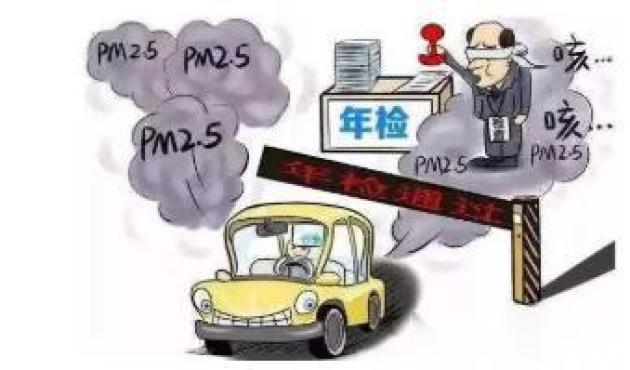
Attention, car owners! From November 1, 2019, new regulations on vehicle environmental protection testing were launched-If the OBD test fails, it will fail to pass the annual inspection (mandatory).!
Policy review
On May 1, 2019, China began to implement two new national standards for automobile testing, namely, Limits and Measurement Methods of Pollutants Emission from Gasoline Vehicles (Double Idle Speed Method and Simple Working Condition Method) (GB18285-2018) and Limits and Measurement Methods of Pollutants Emission from Diesel Vehicles (Free Acceleration Method and Loading Deceleration Method) (GB3847-2018), among which the requirements for OBD testing will be in 2018. What is OBD? OBD(On-Board Diagnostics), translated as "On-board Automatic Diagnosis System" in Chinese. It is a computer system installed in the car to read the engine and various data immediately. Simply put, it is to read the vehicle data with a data acquisition instrument to see if there is any fault or disqualification.
We can also understand the OBD interface of the car as the USB interface of the computer. As long as you plug in the OBD during the annual review, the data and parameters of your engine operation and the fault code reported by the vehicle can be found.
OBD detection object
Light gasoline vehicles (below 3500kg) produced after July 1, 2011
Heavy-duty gasoline vehicles (3500kg and above) produced after July 1, 2013
Diesel vehicles produced after January 1, 2018
OBD detection content
OBD detection is mainly divided into two parts: OBD inspection and exhaust pollutant detection (OBD is not stopped).
1. OBD inspection
The detection station will read the vehicle data by connecting the OBD, and the fault lamp or the detected fault code will not pass the OBD inspection;
2. Exhaust pollutant detection (OBD is not stopped)
The detection station will read real-time exhaust data by connecting OBD, and carry out dynamic monitoring in the whole process. If the exhaust emission exceeds the standard, it will also be regarded as the OBD is unqualified.
Tips for OBD detection
It can be said that OBD detection is to minimize the influence of human subjective factors, directly judge the car condition through computer data, and ensure the objective test results!
Of course, car owners don’t have to worry too much about their cars not meeting the emission standards. As long as you do the following, it is not so difficult to pass the annual review.
1. Go to the regular gas station and add the fuel with the applicable label according to the requirements of the vehicle manual;
2. For vehicles with selective catalytic reduction device (SCR), it is necessary to purchase and use qualified urea produced by regular manufacturers;
3. According to the requirements of the vehicle manual, go to the regular maintenance unit for regular maintenance and use regular spare parts;
4. When doing maintenance in a 4S shop or repair shop, be sure to find out the location of the OBD interface (especially for imported or rare vehicles), so as not to delay the time due to finding the OBD interface (especially for the location of the OBD interface, which requires the disassembly of parts or decorative boards);
5. Pay attention to the status of OBD fault light before the annual review. When the vehicle OBD fault light is on, it should be repaired at the maintenance unit in time, and then detected at the inspection station after it is eliminated;
6. Normal use of vehicles, no overload and overrun;
7. Do not modify, shield or remove the pollution control device without permission.
Therefore, the year is approaching, and the number of vehicles for annual inspection will increase. In order to avoid all car owners from going back and forth, it is suggested that car owners go to the repair shop or 4S shop to check with OBD fault diagnosis instrument before going to the inspection station for annual inspection, and mark the OBD interface of vehicles in advance, thus saving the inspection time of riders.