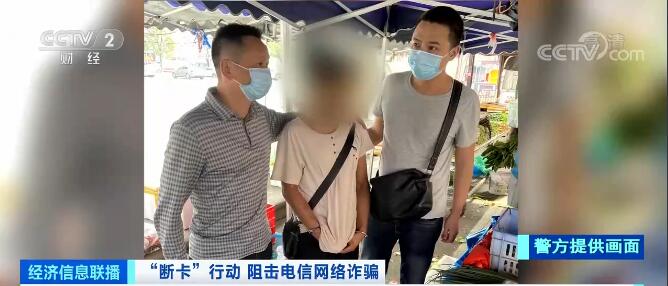
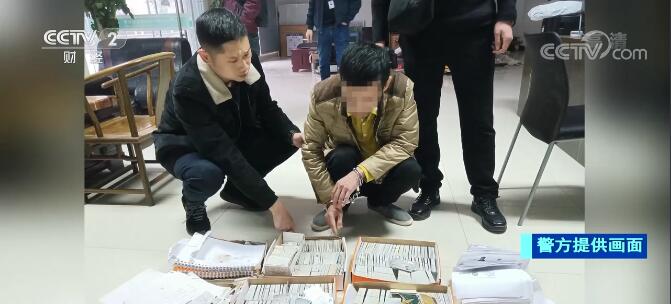
The man’s discovery of "making money" attracted the police’s attention. Police: We were very shocked at that time.

CCTV News:In recent years, telecommunication network fraud has become a serious social problem. In the crime of fraud, mobile phone cards and bank cards are important tools for committing crimes, so the action of "breaking cards" is also a key link to stop telecommunication network fraud. Recently, the police in Jingzhou, Hubei successfully destroyed a bank card trafficking gang formed by relatives and friends.

In October, 2020, Hubei police found in the special campaign against telecom fraud that 352 bank cards involved pointed to the same person — — Hubei Shishou nationality man Fu Mou.

Instructor of Criminal Investigation Brigade of Shishou Public Security Bureau Liu Chuanhai:We were also very shocked at that time. If all these cards flowed to the society, how much property losses would be caused to the people.

After research, the special police locked Fu in a market activity in Shunde District, Foshan City, Guangdong Province, and immediately rushed to Shunde overnight. This is the largest bazaar in the local area, and hundreds of vendors come in and out, which brings great challenges to the investigation work. The police wear casual clothes and repeatedly grope in the market.

Li Yi, deputy head of the Criminal Investigation Brigade of Shishou City Public Security Bureau:At that time, many people wore masks because of the epidemic. After two or three hours of searching in the morning, Fu was not found. Later, the battalion chief reported that he found a middle-aged man with messy hair and a full face of beard (and Fu Mou) somewhat similar.

The investigator quietly approached and called Fu’s name. At the moment when Fu subconsciously promised, the police arrested him in one fell swoop.

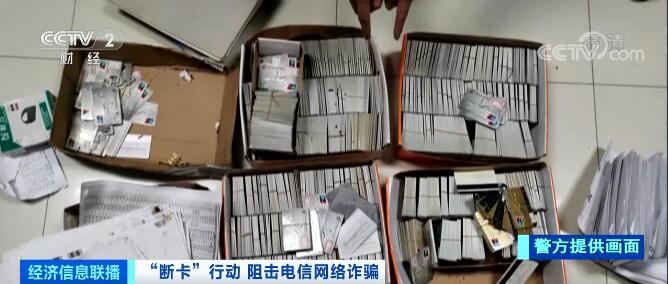
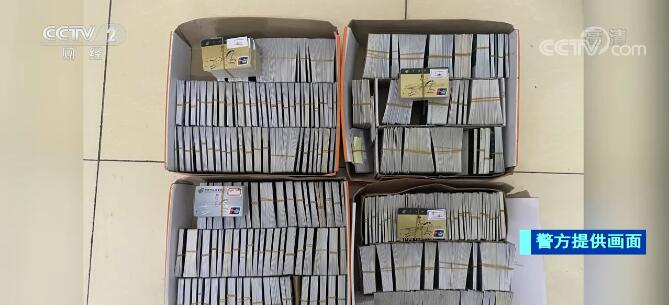
In the following investigation, the police found that there were more than 300 bank cards under Fu’s name. After verification, from 2012 to 2016, Fu and his relatives and friends handled a total of 17,438 bank cards, of which 9,207 were paid by a certain person. According to the criminal suspect Fu, these bank cards were successively issued from a number of banks when he was working in Guangdong in the early years.

The criminal suspect Fu Mou:How many cards are opened at this outlet, and then another outlet, and by changing cards, the old cards are changed to new cards at most 20 at a time, usually 5. These cards have been accumulated over several years.

Paying a bank card only costs 5 yuan money. When he changed hands, he sold these cards to online Wang Mokai at the price of one in 10 yuan, earning tens of thousands of dollars a year. When he found that selling cards could easily make money, Fu brought in his wife and two other relatives and formed a family card-opening group to sell bank cards. The police investigation confirmed that the cards sold finally reached the hands of a money laundering and withdrawal gang in Shantou, Guangdong Province, and were used to commit telecom fraud.

Read more:

Pretending to be a leader and pretending to be a "rich second generation" to defraud money, don’t step on these telecommunication network fraud traps!

"Kill the pig plate" and "unsecured lending" beware of the telecom network fraud trap!

Strengthen the deep integration of scientific and technological innovation and industrial innovation-State-owned Assets Supervision and Administration Commission of the State Council

During the 11th collective study in the Political Bureau of the Central Committee, General Secretary of the Supreme Leader emphasized that "scientific and technological innovation can give birth to new industries, new models and new kinetic energy, which is the core element of developing new quality productive forces" and "it is necessary to apply scientific and technological innovation achievements to specific industries and industrial chains in time, transform and upgrade traditional industries, cultivate and expand emerging industries, lay out and build future industries, and improve the modern industrial system"; During the deliberation of the Jiangsu delegation at the Second Session of the 14th National People’s Congress, it was emphasized that "the deep integration of scientific and technological innovation and industrial innovation should be strengthened". These important expositions clarify the internal development logic of scientific and technological innovation and industrial innovation, and point out the important significance and practical path of deep integration of scientific and technological innovation and industrial innovation. Strengthening the deep integration of scientific and technological innovation and industrial innovation is an inevitable choice for the transition of productive forces, which is related to the efficiency, kinetic energy and advantages of China’s high-quality development.

Strengthening the deep integration of scientific and technological innovation and industrial innovation is the essential requirement for developing new quality productivity.

Scientific and technological innovation is the endogenous power of industrial innovation. Industrial innovation is usually based on a key technological innovation to revolutionize the industry or form a new industry. In this process, scientific and technological innovation is the source of living water. As the primary productive force, scientific and technological innovation, on the one hand, crosses the technical threshold of key fields from the beginning of scientific research chain through basic research innovation, generally improves the basic technical level that affects economic and social development, and lays a solid foundation for industrial innovation; On the other hand, through applied research and innovation, the specific scientific and technological innovation achievements are connected with the core technological breakthroughs of specific industries, which directly promotes industrial upgrading and even transformation, and transforms scientific and technological strength into industrial competitive advantage. Historically, scientific and technological innovation and industrial transformation have always complemented each other. Facing the new situation of global industrial chain reconstruction, we must strengthen the leading role of scientific and technological innovation in industrial innovation and promote China’s industry to move towards the middle and high end of the global value chain.

Industrial innovation is the fundamental way to realize the value of scientific and technological innovation. Only when the achievements of scientific and technological innovation are transformed into real productive forces and the industrial system is optimized and upgraded can they reflect their value and have sustainable capabilities. Playing the leading role of scientific and technological innovation in traditional industries will promote the deep integration of digital intelligence technology and traditional industries, improve production efficiency and product quality, promote the intelligent, high-end and green transformation of traditional industries, and consolidate the "basic disk" status of traditional industries; Giving play to the leading role of scientific and technological innovation in emerging industries will promote the leap-forward development of important scientific and technological fields, accelerate the deep integration of innovation chain’s industrial chain capital chain talent chain, realize the independent control of key core technologies, further enhance the original innovation capability, create more new breakthroughs from 0 to 1, and strengthen the new kinetic energy of emerging industries; Giving play to the leading role of scientific and technological innovation in the future industry will accelerate the original and subversive technological innovation, lead the future industry development with cutting-edge technological breakthroughs, create an important source of the world’s future industry, and cultivate new competitive advantages in the future industry.

The deep integration of scientific and technological innovation and industrial innovation can promote the development of new quality productivity. Scientific and technological innovation is the core element of developing new quality productivity, and industry is the main carrier of developing new quality productivity. The deep integration of scientific and technological innovation and industrial innovation will improve the innovation ability of enterprises, improve the innovation system, stimulate innovation vitality, and strengthen the division of labor and cooperation of various enterprises in the fields of industrial chain innovation chain integration, scientific research and transformation of scientific and technological achievements; It will help the research and development of original and subversive technologies, speed up the solution of the "stuck neck" problem, achieve industrial leap-forward development with breakthroughs in important areas and key links, and enhance the resilience of the industrial chain and supply chain; We will improve the matching efficiency between the supply of science and technology resources and market demand, break through the "blocking point" between scientific research achievements and industrialization with the scene application of new technologies, improve the reform of the incentive mechanism for the transformation of scientific and technological achievements, optimize the allocation of scientific and technological resources, enhance the efficiency of scientific and technological investment, realize the deep integration of the capital chain and talent chain of innovation chain industrial chain, and accelerate the transformation of scientific and technological innovation achievements into new quality productivity.

China has achieved remarkable results in promoting the deep integration of scientific and technological innovation and industrial innovation.

The deep integration of scientific and technological innovation and industrial innovation helps transform and upgrade traditional industries. Traditional industry is the base of modern industrial system, and its transformation and upgrading are related to the overall situation of modern industrial system construction. Scientific and technological innovation is conducive to promoting the process reengineering of traditional industries, accelerating equipment renewal, process upgrading and management innovation, and improving the high-end, intelligent and green level of traditional industries. With the continuous increase of investment in technological transformation, advanced technologies in steel, petrochemical, cement, electrolytic aluminum and other industries are gradually popularized, which promotes the high-end development of traditional industries. In 2023, the investment in technological transformation of China’s manufacturing industry increased by 3.8%, and the added value of industrial enterprises above designated size increased by 4.6% over the previous year. The proportion of equipment manufacturing and high-tech manufacturing in the added value of industrial enterprises above designated size has further increased, reaching 33.6% and 15.7% respectively. The R&D and industrialization of key technologies such as 5G, edge computing, industrial Internet and general artificial intelligence are accelerating, which promotes the digital transformation and intelligent transformation of traditional industries. In 2023, nearly 8,000 digital workshops and smart factories have been built nationwide, and the scale of the core industry of industrial Internet has exceeded 1.2 trillion yuan, the product development cycle has been significantly shortened, and the production efficiency has been significantly improved. Green development is implanted into the "gene" of industrial development to promote the green transformation of traditional industries. In 2023, the green investment of industrial enterprises in China increased rapidly, and the purchase of environmental protection management services increased by 17.7% year-on-year; Compared with 2022, the sales revenue of high energy-consuming manufacturing industry accounted for 1.5 percentage points lower.

The deep integration of scientific and technological innovation and industrial innovation focuses on cultivating and expanding emerging industries. Strategic emerging industries are one of the main positions to develop new quality productivity. In recent years, the investment in strategic emerging industries in China has been increasing, and breakthroughs have been made in invention patents in key areas. In 2023, the investment in high-tech industries, mainly strategic emerging industries such as new generation communication technology, biotechnology, new energy and new materials, increased by 10.3% year-on-year, 7.3 percentage points faster than the total investment. The effective invention patents in the fields of information technology management methods, computer technology and basic communication programs grew rapidly, with year-on-year growth of 59.4%, 39.3% and 30.8% respectively, far higher than the domestic average growth level. Scientific and technological innovation has also pushed strategic emerging industries to expand scale, optimize layout and improve quality, and new growth poles have emerged constantly. From the perspective of key industries, in 2023, the output of new energy vehicles in China increased by 30.3%, solar cells increased by 54.0%, service robots increased by 23.3%, and 3D printing equipment increased by 36.2%. At the same time, the operating income of strategic emerging service enterprises increased by 7.7% over the previous year, and the added value of information transmission, software and information technology services increased by 11.9%.

Deep integration of scientific and technological innovation and industrial innovation, making efforts to lay out and build future industries. The future industry represents the future development direction of science and technology and industry, is the strategic focus of competition among big countries, and is also the key force to reshape the world pattern. China’s investment scale in future industries continues to expand, and breakthroughs have been made in some future industrial segments. The development of the future industry is inseparable from the solid promotion of basic scientific research. The updating iteration of general basic technology will empower the whole industrial chain and provide technical support for seizing the commanding heights of future industrial development. With the scientific and technological innovation and research and development of frontier industries such as quantum information, deep-sea aerospace development, life science, metauniverse and humanoid robot, it will vigorously promote new industrialization and form new advantages.

Strengthen the deep integration of scientific and technological innovation and industrial innovation, and build new advantages for high-quality development.

Promote the synergy and mutual promotion of basic research and applied research, and lay a solid foundation for the deep integration of scientific and technological innovation and industrial innovation. The study of basic theories and principles can solve key technologies from the source and the bottom, and is the cornerstone to achieve breakthrough technological innovation. Carry out basic research in key technical fields, from applied research to basic research, systematically promote the focus on key scientific issues, and carry out frontier-oriented exploration research and market-oriented applied basic research. Strengthen the integration of basic research and applied research, constantly optimize the layout of basic and applied disciplines, deepen the reform of institutional mechanisms and incentive policies, and enhance China’s original innovation ability. In view of the key technologies of industrial transformation and upgrading, we will accelerate the implementation of industrial base reconstruction projects, strengthen the synergy between basic technologies and common technologies, major key technologies and future frontier technologies, lay a solid battle for key core technologies, and cultivate new kinetic energy for developing new quality productivity.

Promote the interaction between scientific and technological innovation and market application, and set up a stage for the deep integration of scientific and technological innovation and industrial innovation. Grasp the global scientific and technological innovation trends, accurately identify the frontier trends of technology, build a future industrial observatory, predict and evaluate the breakthrough points and opportunities of scientific and technological development in key areas, and match, analyze and screen the points where science and technology meet the market demand with the help of artificial intelligence and big data mining, so as to provide scientific guidance for the rational transformation of technology. Publish the promotion catalogue of cutting-edge technology applications, build an "online publishing hall" for future industrial achievements, expand the promotion and application of innovative products, and promote the demonstration and application of the first set, the first batch and the first edition. Create a deep docking platform for technical requirements and application scenarios, and accelerate the landing and iterative application of major technological achievements. Give full play to China’s super-large-scale market advantages, expand domestic and foreign markets, and create market space for new technologies and new products.

Promote the exchange of scientific and technological talents and industrial talents, and build a solid foundation for the deep integration of scientific and technological innovation and industrial innovation. Adhere to the "four orientations", vigorously cultivate leading entrepreneurs and scientists, train and use strategic scientists, and build a large number of scientific and technological innovation teams and outstanding engineers. We will improve the development channels for the exchange and interaction between scientific and technological talents and industrial talents, highlight the innovation-oriented scientific and technological evaluation system and incentive mechanism, and further stimulate the innovation vitality and potential of talents. Break down the barriers of disciplines and specialties in colleges and universities, set up a training system for compound talents in science and technology industry, reform the training mode for compound talents, establish a guiding mechanism for interdisciplinary development, and train high-level and multi-level compound talents. We will implement a more active and effective policy of introducing compound talents in science and technology industry to attract high-level compound leading talents in science and technology industry around the world.

Promote the coordination and complementarity between science and technology policies and industrial policies, and strengthen the guarantee of deep integration of science and technology innovation and industrial innovation. Strengthen the construction of science and technology extension service system, build a number of pilot platforms and concept verification centers, and successfully build a bridge from "experimental line" to "production line" for product innovation. Build a number of innovative enterprise incubation bases, support the rapid development of new R&D institutions, and improve the transformation efficiency of scientific and technological achievements. Guide enterprises to integrate independent intellectual property rights with technical standards and strengthen the construction of independent intellectual property rights system in key areas. Improve the investment and financing mechanism of scientific and technological innovation, and take effective measures to guide financial institutions to help transform and apply scientific and technological innovation achievements. Optimize the ecology of innovation and development, implement inclusive and prudent supervision of emerging fields, and promote the rational and effective allocation of scientific and technological innovation resources and industrial factor resources. Through the mutual promotion and support of science and technology innovation policy and industrial innovation policy, the sustainable emergence and rapid development of new quality productivity can be empowered.

[Editor: Yu Qian]

Sweep and open the current page on your mobile phone.

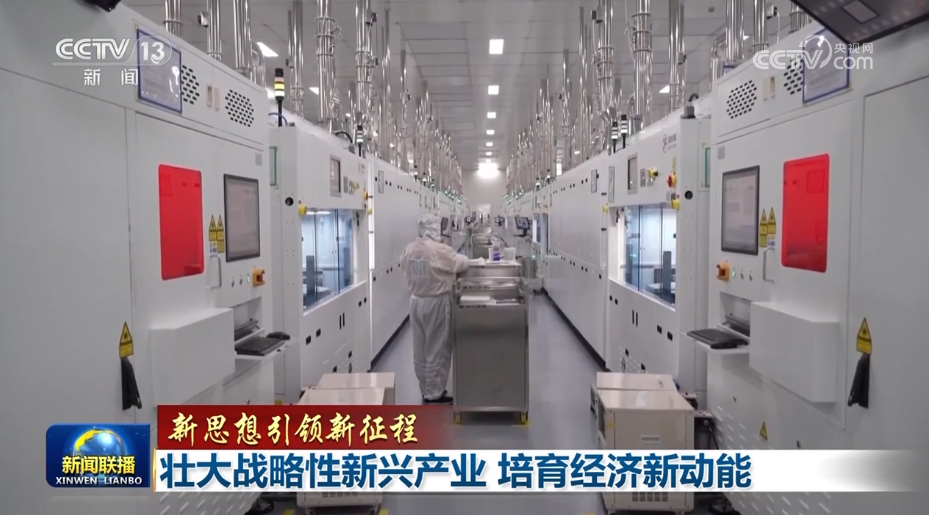
[New ideas lead a new journey] Expand strategic emerging industries and cultivate new economic kinetic energy

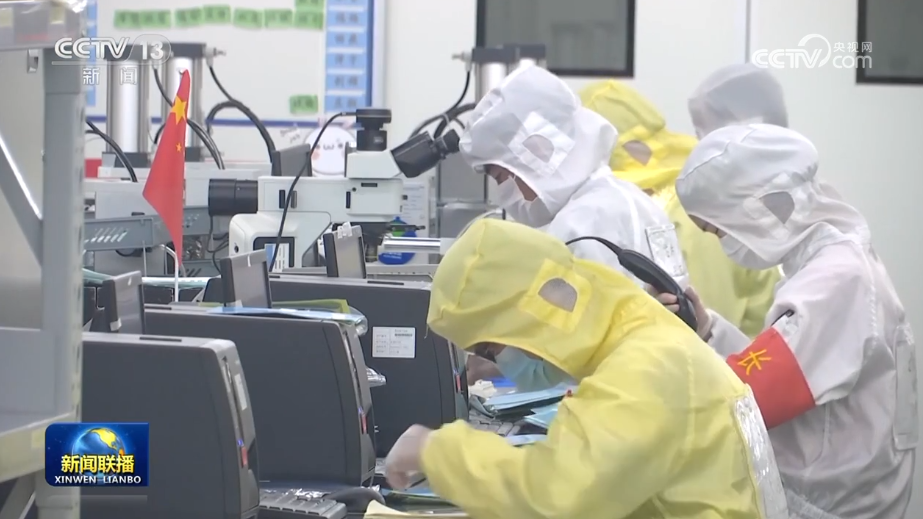
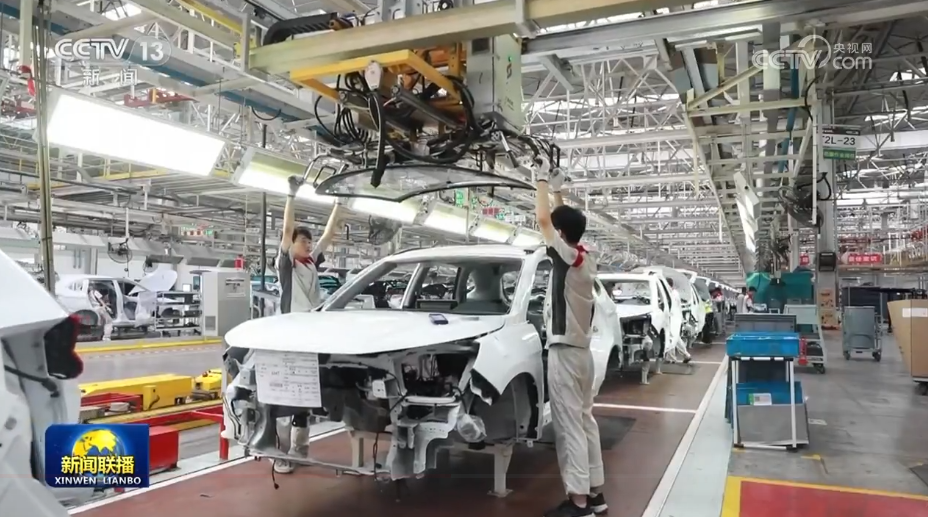
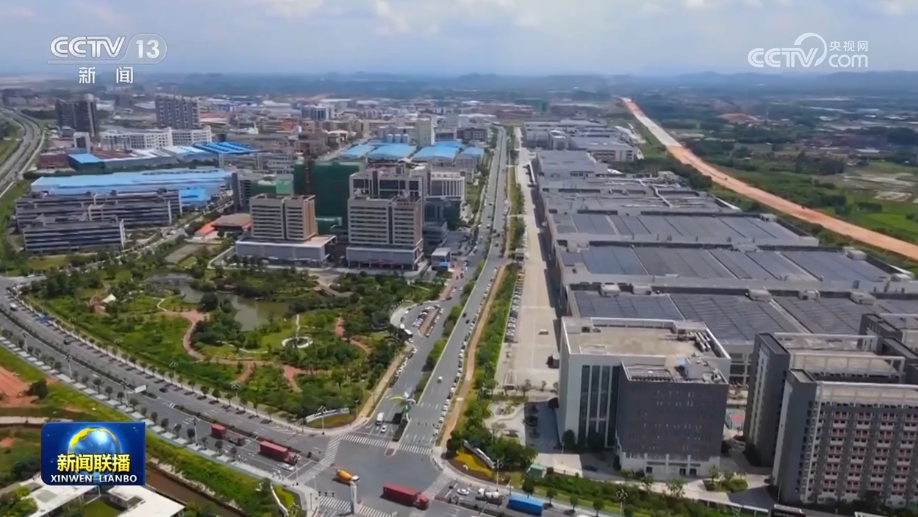
  Cctv news(News Network): General Secretary of the Supreme Leader pointed out that strategic emerging industries are new pillars and new tracks leading the future development. Since the beginning of this year, China’s strategic emerging industries have flourished, and innovation breakthroughs in key areas such as lithium batteries, photovoltaics and new energy vehicles have been accelerating, which has become an important support for high-quality economic development.

  The latest data show that in the first half of this year, the investment in high-tech industries in China increased by 12.5%, which was 8.7 percentage points higher than the total investment in fixed assets. At present, the added value of China’s strategic emerging industries has accounted for more than 13% of GDP, and the strategic emerging industries have a strong development momentum.

  The General Secretary of the Supreme Leader has always attached great importance to the cultivation of strategic emerging industries. Since the beginning of this year, the General Secretary’s many domestic inspections have paid attention to the development of local strategic emerging industries. In Shaanxi, the general secretary asked the local authorities to be brave enough to open up new fields and new tracks and cultivate new competitive advantages; In Jiangsu, the general secretary pointed out that it is necessary to constantly cultivate new industries with new technologies; The the Political Bureau of the Communist Party of China (CPC) Central Committee Conference held not long ago once again pointed out that it is necessary to vigorously promote the construction of a modern industrial system, accelerate the cultivation and expansion of strategic emerging industries, and create more pillar industries.

  Pay attention to practical work and implementation, and keep in mind the instructions of the General Secretary. Since the beginning of this year, the state and local governments have increased their support for strategic emerging industries. The Ministry of Industry and Information Technology initiated the cultivation and upgrading of national advanced manufacturing clusters to promote the cluster development of strategic emerging industries. The State Council State-owned Assets Supervision and Administration Commission (SASAC) deployed special actions such as revitalizing the central enterprises’ industries and setting sail for future industries, focusing on the layout and construction of 15 key industries such as new generation mobile communication, artificial intelligence and new materials.

  In Xi ‘an, Shaanxi Province, this photovoltaic manufacturer has repeatedly set a new world record for the efficiency of silicon solar cells by continuously increasing investment in scientific and technological innovation. Since this year, the company’s shipments have once again ranked first in the world.

  Nowadays, China’s strategic emerging industries have ushered in a series of breakthroughs: the cumulative production of new energy vehicles has exceeded 20 million, the total installed capacity of industrial robots has exceeded 50% in the world, the scale of ultra-high-definition video industry has exceeded 3 trillion yuan, and the first batch of national strategic emerging industrial clusters has reached 66.

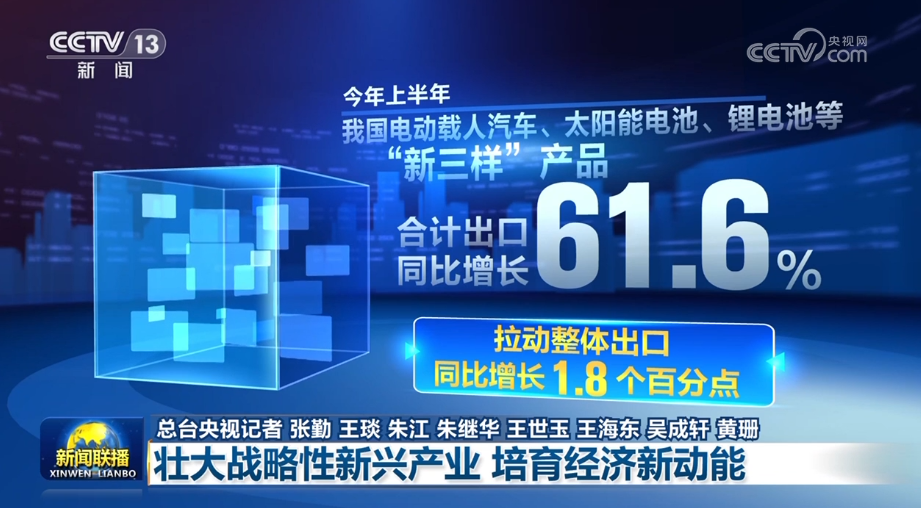
  According to the latest data, in the first half of this year, China’s "new three products" such as electric manned vehicles, solar cells and lithium batteries, the total export increased by 61.6% year-on-year, driving the overall export growth by 1.8 percentage points year-on-year.

  This year, China will further cultivate world-class advanced manufacturing clusters. At the same time, focus on artificial intelligence, new materials and other fields, increase investment in original and leading technology research and development, further lay a solid foundation, fill shortcomings, enhance the scale and innovation ability of China’s strategic emerging industries, and inject inexhaustible power into building a modern industrial system and promoting the high-quality development of China’s economy.

What happened to the actresses in the 94 edition of Romance of the Three Kingdoms? Chen Hong turned behind the scenes, and He Qingcheng became the goddess of frozen age.

As a classic among the classics, the adaptation of Romance of the Three Kingdoms naturally attracts much attention. The 94th edition of Romance of the Three Kingdoms was directed by Wang Fulin, starring Sun Yanjun, Tang Guoqiang, Bao Guoan and Wu Xiaodong, and was well received.

In addition to several prominent male roles, the actress’s plays are also particularly brilliant. The Story Of Diu Sim, Xiao Qiao and Sun Shangxiang are all important characters in the play.Some are famous for their beauty, while others have won admiration for their extraordinary courage.. The 94th edition of Romance of the Three Kingdoms can be described as a collection of beautiful women, and those beautiful, courageous and intelligent female images are deeply imprinted in the audience’s minds and become a generation of classics.

I. Mrs. Gump Xu Di

Among Liu Bei’s wives, Mrs. Gan holds a special position among the wives and concubines by virtue of her status as Liu Chan’s biological mother. Xu Di, the actor of Mrs. Gan, conquered the audience with excellent acting skills and highly restored Mrs. Gan in history.

As a national first-class actor, Xu Di can be seen in many film and television dramas, such as Look at the Two Houses with Zhang Guoli, The Man with Li Xiaoran, and once played Ceng Shuai’s biological mother in Andy Lau’s classic Lonely.

Although there are many works, Xu Di’s role is still based onThe image of mother, mother-in-law and mother-in-lawMostly, in recent years, Luo Zijun’s mother is well-known in My First Half of Life.

II. Chen Hong, The Story Of Diu Sim

As one of the four famous beauties in ancient times, it is no exaggeration to describe The Story Of Diu Sim with her beauty. She entered Dong Zhuo’s mansion as Wang Yun’s adopted daughter, followed Wang Yun’s arrangement to alienate Dong Zhuo from Lu Bu, and left a name for herself through the ages.

The actor who plays The Story Of Diu Sim is Chen Hong, a classical beauty recognized by the film and television circles. When I was young, I participated in many large-scale film and television dramas. The film version of Dream of Red Mansions played Zi Juan, and the poem of Daming Palace played Princess Taiping. Later, I gained more attention with the role of Chang ‘e in Pig Eight Rings in Spring.

After marrying Chen Kaige, Chen Hong’sThe focus of work is behind the scenes.. She is the producer of Promise, Mei Lanfang and Orphan of Zhao, and her achievements and reputation are good, which has laid a certain foundation for the transformation of Chen Hong.

Now, Chen Hong works behind the scenes with peace of mind, and occasionally performs variety shows. It is worth mentioning that The Battle at Lake Changjin, which caused a sensation in public opinion, was produced by Chen Hong.

III. Linjun Gong, Da Qiao

In The Romance of the Three Kingdoms, there are beautiful women like clouds, among which Big Xiao Qiao is the best. Linjun Gong, the actor of Da Qiao, was originally a drama actor. Thunderstorm, Peking Man, Teahouse and Hamlet are all her representative works.

In the same year after the Romance of the Three Kingdoms, Linjun Gong had an accident and had to say goodbye to his beloved stage performance. During this period, she shot several TV plays, with little splash and mediocre response.

After the comeback,She continued to devote herself to the stage play., has appeared in Lao She’s masterpiece Teahouse, the drama South Courtyard of North Street with the theme of SARS, Hamlet rehearsed by China and Japan, and the drama Home adapted from Ba Jin’s original work and Cao Yu. Up to now, Linjun Gong is still exploring in the field of drama, and has also participated in the Beijing People’s Art Reading Conference, and is active in the front line of performance.

IV. Little Joe He Qing

Xiao Qiao, one of Er Qiao, is as beautiful as her sister, who married Sun Ce, and Xiao Qiao was accepted by Zhou Yu. Since ancient times, literati have favored beauty, and Xiao Qiao has legendary beauty praised by Su Shi and admired by Du Mu, so it is hard not to make people daydream.

He Qing, the actor of Xiao Qiao, is also an out-and-out beauty, known as "the first classical beauty in mainland China", and has played all the beauties in Four Great Classical Novels TV series. Whether it’s The Journey to the West’s touching pity, Qin Keqing’s sentimental spare hate in A Dream of Red Mansions, or Li Shishi, a famous geisha in Water Margin, He Qing’s beauty is shared by all.

The career is smooth and smooth,The feelings are full of twists and turns.. He Qing and Liu Wei lived together for five years and broke up, and married Xu Yajun, who had been married for three times. After giving birth to their son Xu He, the two parted ways for various reasons. Now, He Qing, 56, and her current husband Liao Jingsheng live a very low-key life, which can be seen from her photos.

V Zhao Yue, Sun Shangxiang

Sun Shangxiang in history is Sun Quan’s younger sister. She is smart and tough, and has what women in that era lacked.Courage and courageQuite a bit of a maverick.

In the 94th edition of Romance of the Three Kingdoms, Zhao Yue played Sun Shangxiang. In high school, she won the Flying Award for Best Supporting Actress for How Time Wasted, and later won the "Miss Asian World 1992" and "Miss Most Photographed" in the United States. The film and television dramas are equally prolific, such as new york Beauty, Let’s Get Married Again, The Storm in Shanghai and the Battle of Kunlun, etc., which have gained more popularity.

After the filming of "Military Kiss", Zhao Yue and the drama actor Tong Fan gradually developed a good impression and established a love relationship. The two wereA famous loving couple in the circleTraveling and exercising together often in leisure time is passed down as a much-told story in the circle.

Years have never been unbeaten, and these actresses have become the goddess of frozen age that many people want to be, drifting away from the new track of life.

China Film Co., Ltd. signed a contract to cooperate with Twentieth Century Flowserve and Oriental DreamWorks

The movie Trolls


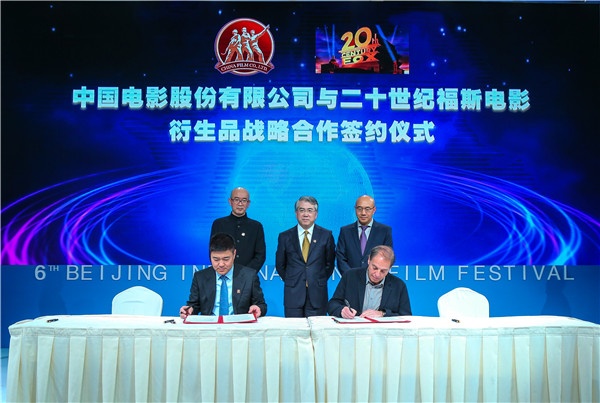
1905 movie network news On April 18th, the signing ceremony of the 6th Beijing International Film Festival-China Film Co., Ltd. was held in Beijing International Hotel. At the event site, China Film Co., Ltd. signed strategic cooperation contracts for 18 major projects, including film and television production, film distribution and marketing, film screening, film and television services and other major business sectors. Chairman La Peikang, General Manager Jiang Ping, Deputy General Manager Fu Guochang, Deputy General Manager Hai Cheng Zhao, Chief Financial Officer Gu Qin, Secretary of Discipline Inspection Commission Zhang Yuejun and Deputy General Manager Zhou Baolin attended the signing ceremony. Wang Fanghuai, President of Guoguang Global Media Holdings Co., Ltd.; Hou Zhiming, President of Emei Film Group; Fang Gan, CEO of Oriental DreamWorks; Yu Dong, President of Bona Film Group; Jeffrey Godsick, President of 20th Century Flowserve Licensing and Derivatives Department; Feng Wei, Vice President of Asia Pacific Region of American Film Association; Wang Haifeng, President of Xinghao Film; Yang Xianghua, Senior Vice President of Aiqiyi; Huang Wei, Vice President of Bona Cinema Group; Li Tianyue, Party Secretary of Sichuan Film Company; Tang Liang, General Manager of CIC Zhongcai Fund Management Co., Ltd

China film co., ltd. joins hands with 20th century FOSS.


China Film Co., Ltd. joined hands with 20th Century Fox and Oriental DreamWorks to build the first brand of domestic film derivative industry.


Since 2015, China Film Co., Ltd. has invested capital to establish a specialized company that independently operates derivative industries, and has extensively conducted cooperation and negotiations with major domestic film institutions, six major Hollywood film companies and famous film companies in Japan, South Korea, India, France, Russia and other countries in the field of film derivatives. In the 20th century, Fox Film Company is one of the major film producers and distributors in Hollywood, and has produced such classic films. At the signing ceremony, China Film Co., Ltd. and 20th Century Fox Film Company reached a strategic cooperation agreement on film derivatives. The two sides will give full play to their high-quality resources, jointly promote the authorization of excellent film works of Fox Company and the development of derivatives business in China, and promote the cooperation and development of Chinese and American film industries. In 2015, following the cooperation between China Film Co., Ltd. and Oriental DreamWorks in the field of film derivative products, the two sides once again joined hands to sign a strategic agreement on Trolls, another masterpiece of Oriental DreamWorks in 2016, and carried out in-depth cooperation in film derivative products and offline channels.

China film co., ltd. cooperates with Shenzhen merchants and commercial houses


China Film Co., Ltd. cooperated with eight major enterprises across banks, and the film projection business sector was upgraded again.


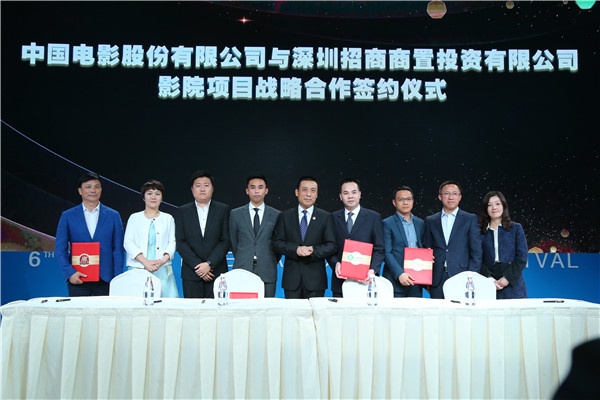
As the aircraft carrier of China film industry, China Film Co., Ltd. attaches great importance to cooperation with various industries and fields, aiming at integrating resources and achieving a win-win situation. At the signing ceremony, China Film Cinema Investment Co., Ltd. completed the signing ceremony with eight enterprises, including Shenzhen Merchants Commercial Investment Co., Ltd., Shenzhen Metro Group Co., Ltd., over the rainbow Shopping Mall Co., Ltd., Fujian Zhaoxiang Lingang Real Estate Co., Ltd., Shenzhen Rong De Real Estate Development Group Co., Ltd., Shanghai Zhengshen Industrial Co., Ltd., Dayin Culture and Art Development (Shanghai) Co., Ltd. and Shenzhen Vision Technology Co., Ltd., to realize all-round cooperation in cinema investment, cinema construction and film screening.

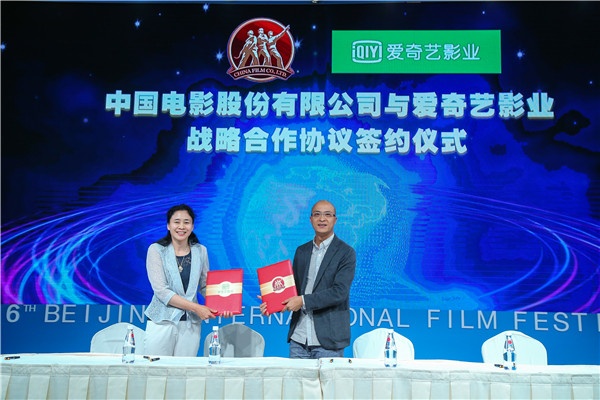
China Film Co., Ltd. signed a contract with iQiyi Film

The film industry has entered the Internet era, and China Film Co., Ltd. has comprehensively promoted the marriage between film and the Internet.


China Film Guoguang (Beijing) Culture and Technology Co., Ltd. is jointly established by China Film Co., Ltd. and Guoguang Global Media Holdings Co., Ltd., and is committed to developing the "internet plus Film and Television" business with China characteristics, focusing on building a cinema management platform in the era of mobile internet, serving hundreds of domestic producers, connecting with mainstream domestic network service providers and related manufacturers, and covering mobile internet users nationwide. The listing ceremony of China Film Guoguang (Beijing) Culture Technology Co., Ltd. is a milestone in promoting the development of China film and television culture industry. In addition, China Film Co., Ltd. and iQiyi Film signed a strategic cooperation agreement, which indicates that China Film Co., Ltd. has comprehensively promoted the marriage between film and the Internet. The two sides will give full play to their respective advantages and share resources, which is bound to bring more surprises to industrial development.

Zhongying shares join hands with Bona.


"China Giant Screen" further expanded its market share and presented the ultimate "Giant Screen" movie viewing experience. 


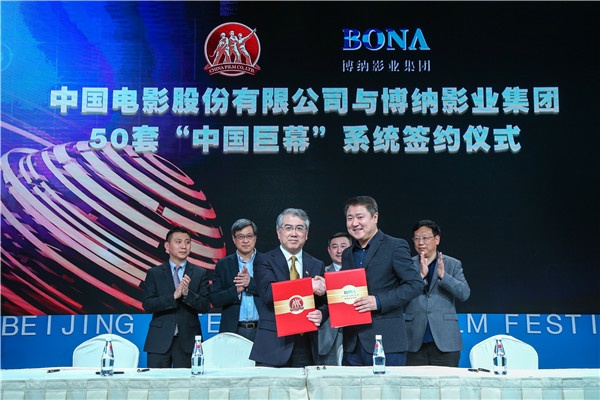
China Film Co., Ltd.’ s high-end giant screen brand "China Giant Screen" has joined hands with Emei Film Group and Bona Film Group to further accelerate the deployment of "China Giant Screen" cinemas in hot studios in key areas. During this Beijing International Film Festival, China Film Co., Ltd. signed an agreement with Emei Film Group to deploy 30 sets of "China Giant Screen" systems, and signed an agreement with Bona Film Group to deploy 50 sets of "China Giant Screen" systems. On the occasion of the great development of China’s film industry, the signing of these two agreements has further expanded the market share of "China Giant Screen" and presented the ultimate movie-watching experience with the world’s advanced level to more movie audiences.

In addition, China Film Co., Ltd. has also completed a number of other important contracts, and signed strategic agreements on film and television bases and film and television projects with Hengda Huadao and Xinghao Film respectively, and signed a cooperation agreement on the film cooperation of "Ice Fire". At the scene, the "China Cinema Multi-dimensional Sound 100th Awarding Ceremony" was held, which marked the completion of a new round of strategic deployment and industrial upgrading.

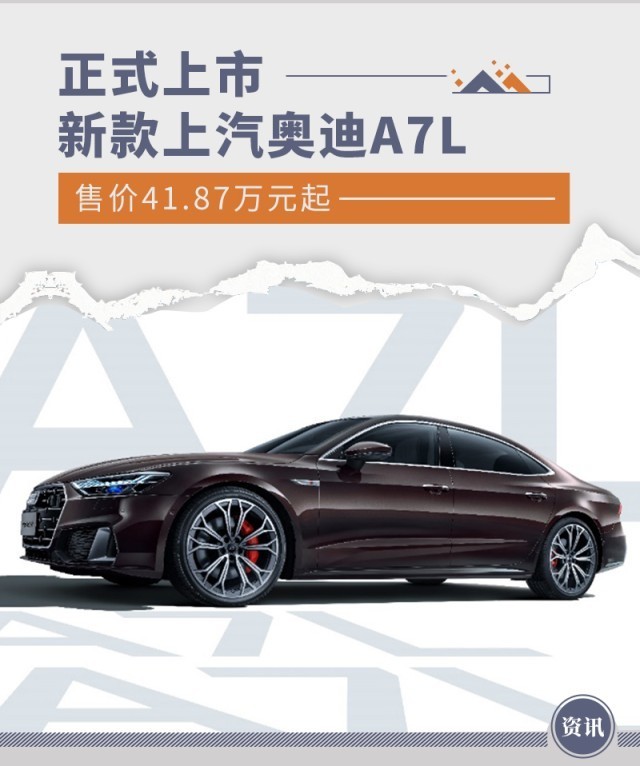
The new SAIC Audi A7L is on the market, starting from 418,700 yuan Get this luxury car

  When it comes to SAIC Audi, people often think of luxury and high-end. Because of this, Audi cars have become the dream car in the hearts of countless car fans. With its consistent adherence to quality, SAIC Audi has firmly sat on the high-end market throne. Recently, SAIC Audi once again lived up to expectations and launched a new generation of C +-class performance luxury flagship – the new SAIC Audi A7L, with dynamic exterior design, technological interior, and surging power, to meet users’ needs for luxury cars and start a new journey.

  Renewal of two appearance sets, high recognition

  In terms of appearance, the new SAIC Audi A7L adopts two different styles of appearance design: dynamic suit and trendy suit. In the front face part, the new car uses the iconic hexagonal air intake grille design. In addition, the dynamic suit has newly upgraded the design of the middle grid, side air intake and rear diffuser, combined with the four prisms on the engine cover for great visual impact. LED headlights on both sides of the front use a matrix design, which is highly recognizable when lit.

  The side lines of the new car are loose and powerful, and the slender body shape is quite dynamic. In addition, the wheel hub shape adds 21-inch double V-shaped 5-spoke aluminum alloy wheels and red calipers. In the rear part of the car, the lighting effect of the through-type LED taillight group is very technological, and the duck-tail shape spoiler above the trunk is full of movement with the bottom blackened rear surrounding components.

  The interior is sporty and full of technology

  The overall design of the interior of the new car is sporty. The through-air conditioner is trended with chrome-plated trim, which is more delicate. The car adopts a three-screen design, including a multimedia entertainment display screen, an air-conditioning control panel and a full LCD meter. The overall sense of technology is full. At the same time, the Dream Youth Edition model is also equipped with a comfort key and a mobile phone battery life set, and the Dream Future Edition is equipped with a winter warm set and a keyless entry and electric tailgate set.

  In addition, the new car also adds a new interior color, shadow gray, which is also exclusive to the RS kit racing version. The super sports seat in the car is equipped with Wagner leather seat fabric with diamond rhombus pattern contrasting stitches, engraved with RS Logo, forming a layered overall color match.

  A variety of power configurations are available, surging and abundant

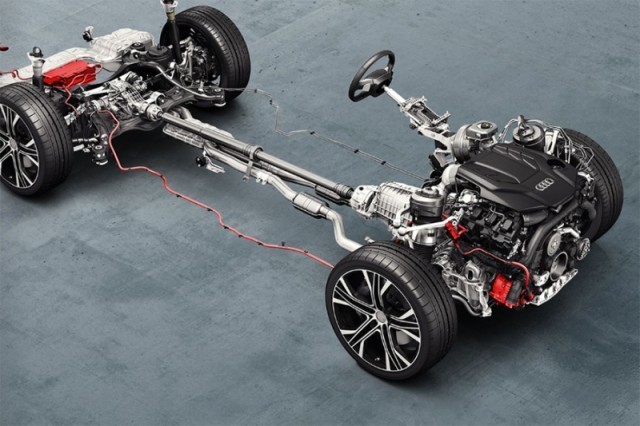
  In terms of power, the new car offers two options: 2.0T engine and 3.0T V6 + 48V light hybrid system. Among them, the 3.0T V6 + 48V light hybrid power system has a maximum power of 250 kW, a peak torque of 500 Nm, and a 0-100km/h acceleration of 5.6 seconds. It matches a 7-speed wet dual-clutch gearbox. The 2.0T engine has a maximum power of 180 kW and a peak torque of 370 Nm. It also matches a 7-speed wet dual-clutch gearbox. The 2.0T model offers two-wheel drive and four-wheel drive for selection, and the 3.0T model comes standard with a four-wheel drive system.

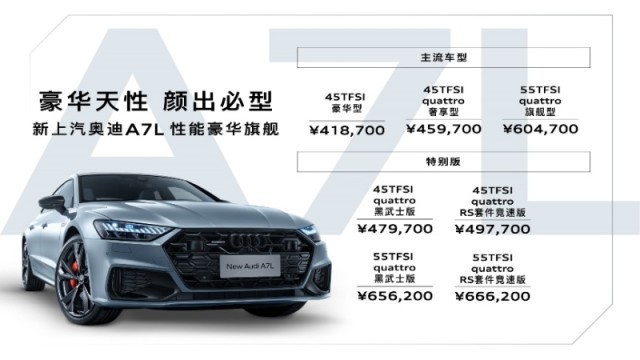
  It is understood that the new SAIC Audi A7L has launched a total of 7 models this time, including the regular version, the special version Darth Vader version and the RS kit racing version, with a price range of 418,700 – 666,200 yuan. Such a rich product line not only meets the diverse car purchase needs of different consumers, but also shows SAIC Audi’s deep strength in the luxury car market. I believe that with the launch of the new SAIC Audi A7L, it will further promote the development of the domestic luxury car market and bring you a more distinguished driving experience.

For the first time, zero-carbon methanol was used as torch fuel in large-scale events.

The fuel of the main torch of Hangzhou Asian Games is "green" methanol, which is called "green" because the preparation process of methanol is "zero carburetion", that is, the amount of carbon dioxide produced and consumed is completely neutralized from methanol production to methanol combustion. This is also the first time that zero-carbon methanol has been used as torch fuel in large-scale events. When the main torch was lit, the bright and elegant flame posture added a lot of color to the opening ceremony. Under normal circumstances, the combustion of methanol is light blue, which is not easy to see. In order to make the flame look more beautiful, the research team added a small amount of special "salt" into methanol, and the flame reaction of calcium ions and sodium ions in the salt ensured the flame to produce bright yellow and reddish colors, making the ignition ceremony more ornamental. (Science and Technology Daily reporter Liang He, Photography/Science and Technology Daily reporter Zhou Weihai)

Regulations of Shenzhen Special Economic Zone on Comprehensive Control of Anti-smuggling

Regulations of Shenzhen Special Economic Zone on Comprehensive Control of Anti-smuggling

  On January 20, 2006, the fourth meeting of the Standing Committee of the Fourth Shenzhen Municipal People’s Congress passed the first amendment according to the Decision of the 15th meeting of the Standing Committee of the Fifth Shenzhen Municipal People’s Congress on April 27, 2012 on Amending the Regulations on Comprehensive Anti-smuggling in Shenzhen Special Economic Zone, and the 36th meeting of the Standing Committee of the Sixth Shenzhen Municipal People’s Congress on October 31, 2019 on Amending the Regulations on Human Organ Donation and Transplantation in Shenzhen Special Economic Zone.

Catalogue

  Chapter I General Principles

  Chapter II Duties and Responsibilities

  Chapter III Precaution

  Chapter iv investigation

  Chapter V Handling

  Chapter VI Reward and Punishment

  Chapter VII Supplementary Provisions

Chapter I General Principles

  Article 1 In order to effectively prevent and crack down on smuggling and maintain the order of socialist market economy, these Regulations are formulated in accordance with the Customs Law of People’s Republic of China (PRC) and the basic principles of relevant laws and administrative regulations, combined with the reality of Shenzhen Special Economic Zone.

  Article 2 Anti-smuggling work adheres to the principle of combining crackdown with prevention and giving priority to prevention; Follow the principles of joint anti-smuggling, unified handling and comprehensive management.

  Article 3 Customs, public security, frontier defense and market supervision departments shall perform their anti-smuggling duties according to law, and other state organs shall provide support and cooperation.

  Article 4 The municipal and district people’s governments shall, in accordance with these regulations and the relevant provisions of the state, carry out comprehensive anti-smuggling management.

  City and district anti-smuggling comprehensive management institutions (hereinafter referred to as comprehensive management institutions) are specifically responsible for the organization, guidance, coordination, supervision and inspection of comprehensive anti-smuggling management.

  City comprehensive management agencies to conduct business guidance and supervision of the work of district comprehensive management agencies.

  Article 5 The funds needed for the comprehensive control of anti-smuggling shall be included in the financial budget by the municipal and district people’s governments and guaranteed.

  The special funds allocated by the state and the province for the comprehensive control of anti-smuggling shall be earmarked for special purposes and shall not be used for other purposes.

Chapter II Duties and Responsibilities

  Article 6 The Customs is the national supervision and administration organ for entry and exit of customs territory, and independently performs the duties of smuggling investigation according to law.

  The municipal and district people’s governments and their departments shall support the customs in exercising their functions and powers according to law and shall not interfere with the customs’ law enforcement activities.

  Article 7 Public security organs shall perform the following duties:

  (1) Investigating and handling non-tax-related smuggling crimes outside the customs supervision area according to law;

  (2) Stop smuggling activities outside the customs supervision area in time and handle them according to the division of labor under the jurisdiction of the case;

  (3) When encountering resistance in the performance of anti-smuggling duties by customs, frontier defense, market supervision and other departments, assisting them and handling them according to law;

  (four) other duties as prescribed by laws and regulations.

  The public security frontier defense department shall perform the duties of anti-smuggling work in accordance with the relevant provisions of the state.

  Article 8 The market supervision department shall perform the following duties:

  (a) to investigate and deal with the behavior of importing goods and articles without legal sources outside the customs supervision area;

  (two) to cooperate with the relevant functional departments to investigate and deal with suspected smuggling in import and export enterprises and special industries;

  (three) other duties as prescribed by laws and regulations.

  Ninth comprehensive management institutions shall perform the following duties:

  (1) Organizing the publicity of laws, regulations, guidelines and policies related to anti-smuggling;

  (two) to formulate the comprehensive anti-smuggling control work plan, and organize the implementation after the approval of the people’s government at the same level;

  (3) Organizing, guiding and coordinating relevant units to carry out the work of preventing smuggling;

  (four) to organize and coordinate the relevant functional departments to carry out joint operations and special operations of comprehensive anti-smuggling management, coordinate and supervise the investigation of major and complex smuggling cases;

  (five) to coordinate the relevant functional departments to deal with emergencies such as resisting and obstructing the investigation of smuggling;

  (six) to supervise, inspect and assess the comprehensive anti-smuggling work of the relevant units;

  (seven) to coordinate and deal with the relevant matters that need the cooperation of local departments in the customs investigation of smuggling;

  (eight) to organize and carry out comprehensive anti-smuggling cooperation with the surrounding areas;

  (nine) other duties as prescribed by laws and regulations.

  Article 10 The relevant departments or units of industry and information technology, culture, radio, film, television, tourism and sports, marine fisheries, taxation, tobacco monopoly, liquor management, finance, etc. shall promptly notify the customs or comprehensive management agencies when they discover smuggling clues when performing their duties.

Chapter III Precaution

  Eleventh comprehensive anti-smuggling management to implement the responsibility system. The relevant functional departments or units to carry out comprehensive anti-smuggling work should be included in the scope of performance appraisal.

  The specific measures for the responsibility system for the comprehensive management of anti-smuggling shall be formulated separately by the Municipal People’s Government.

  Article 12 The municipal comprehensive management institution shall regularly publish reports on the comprehensive management of anti-smuggling, summarize the comprehensive management of anti-smuggling in the whole city, analyze the characteristics and laws of smuggling activities, and put forward specific measures to prevent smuggling.

  Article 13 The municipal comprehensive management organization shall guide the trade associations of import and export enterprises to establish an anti-smuggling credit system, and coordinate relevant departments to classify and manage import and export enterprises according to their credit ratings.

  Fourteenth the establishment of anti smuggling monitoring and early warning mechanism, by the city comprehensive management agencies to coordinate the relevant departments, analysis and prediction of smuggling trends, to guide the relevant units to carry out preventive work.

  Fifteenth the establishment of anti smuggling emergency response mechanism, by the city comprehensive management agencies to coordinate the relevant departments, formulate emergency response plans, do a good job in emergency preparedness.

  Sixteenth comprehensive management institutions should strengthen anti-smuggling publicity and education, and relevant state organs, enterprises and institutions and other organizations should give support and cooperation.

  Seventeenth news media should, according to the needs, strengthen the publicity and reporting of comprehensive anti-smuggling control.

Chapter iv investigation

  Article 18 A joint meeting system for comprehensive management of anti-smuggling shall be established, and the municipal comprehensive management agency shall convene relevant departments to hold regular meetings to study and deal with the following matters:

  (a) analysis of smuggling dynamics and situation;

  (two) put forward specific measures for comprehensive management of anti-smuggling;

  (3) Deploying joint actions and special actions for comprehensive anti-smuggling management;

  (four) other matters that need to be coordinated.

  Article 19 An anti-smuggling information exchange and processing mechanism shall be established, and the municipal comprehensive management agency shall coordinate with relevant departments such as customs, public security, frontier defense and market supervision to exchange information and realize information sharing.

  Article 20 Comprehensive management institutions shall organize and coordinate relevant departments to carry out special treatment on areas with high smuggling incidence, key smuggling channels and smuggled hot commodities.

  Twenty-first key areas shall, according to the needs, establish a grass-roots anti-smuggling inspection mechanism, organize patrol teams, and cooperate with relevant departments to strengthen comprehensive anti-smuggling management.

  Specific measures for grassroots anti-smuggling inspections shall be formulated separately by the municipal comprehensive management agency.

  Twenty-second to establish an incentive mechanism for anti-smuggling intelligence information, the relevant departments should strengthen the collection of intelligence information, timely handle the obtained intelligence information, and reward the intelligence information providers in accordance with relevant regulations.

  The specific measures for the reward shall be formulated separately by the municipal comprehensive management institution in conjunction with the relevant departments.

Chapter V Handling

  Article 23 When performing the duties of anti-smuggling work, the market supervision department may exercise the following functions and powers:

  (a) ask the relevant parties;

  (2) consulting and copying the contracts, invoices, account books and other materials related to the operation of imported goods and articles without legal sources;

  (3) Conducting on-site inspection on the places where the parties are suspected of dealing in imported goods and articles without legal sources.

  Twenty-fourth smuggling cases under the jurisdiction of the customs according to law, the relevant departments shall, in accordance with the relevant provisions of the state, transfer them to the customs anti-smuggling department for handling.

  In case of smuggling cases with jurisdiction disputes or unclear jurisdiction, the relevant departments shall promptly submit them to the municipal comprehensive management agency for coordination and handling.

  Twenty-fifth relevant functional departments in the process of law enforcement, seized suspected smuggled goods and articles, but the owner and the illegal facts of smuggling can not be ascertained, it shall hand over the goods and articles to the municipal comprehensive management agency; City comprehensive management institutions shall issue a claim announcement for a period of sixty days. If the announcement expires unclaimed, it shall be transferred to the municipal finance department for handling in accordance with relevant regulations. The specific measures shall be formulated separately by the municipal comprehensive management institution in conjunction with the relevant functional departments.

  If the dangerous goods in the goods and articles mentioned in the preceding paragraph are fresh, perishable and ineffective, etc., which should not be preserved for a long time, the relevant departments shall hand them over to the municipal finance department within 24 hours after being seized, and the municipal finance department shall handle them in time in accordance with relevant regulations, and the proceeds shall be deposited into the account designated by the municipal finance department; If the announcement expires unclaimed, it shall be turned over to the state treasury.

  Article 26 The means of transport specially or repeatedly used for smuggling shall be handled by the customs according to law; Other means of transport used for smuggling shall be registered and put on record by the municipal comprehensive management agency, and it is suggested that the relevant departments deal with it according to law.

  For the means of transport used for smuggling that need to be destroyed centrally, the municipal comprehensive management organization shall organize relevant departments to destroy them in accordance with relevant regulations.

  Article 27. Anyone who deals in imported goods and articles without legal sources outside the customs supervision area shall be confiscated by the market supervision department and be fined the same amount as the value of the goods and articles. Where laws and regulations provide otherwise, such provisions shall prevail. If a crime is constituted, criminal responsibility shall be investigated according to law.

Chapter VI Reward and Punishment

  Twenty-eighth units and individuals that meet one of the following conditions shall be commended and rewarded by the municipal and district people’s governments:

  (a) the implementation of the comprehensive anti-smuggling management responsibility system, with remarkable achievements;

  (2) Having made outstanding contributions in investigating and handling major and extraordinarily serious smuggling cases;

  (3) Actively assisting in the seizure of smuggling cases and making outstanding contributions;

  (four) investigate and deal with reactionary, obscene, intellectual property infringement and other smuggled goods and articles, a large number;

  (5) The research results or rationalization proposals of comprehensive anti-smuggling management have been adopted and achieved remarkable results;

  (6) Having made other outstanding contributions to the anti-smuggling work.

  The specific measures for recognition and reward shall be formulated separately by the municipal comprehensive management organization and implemented after being approved by the Municipal People’s government.

  Twenty-ninth relevant units in any of the following circumstances, the comprehensive management agency shall order rectification, and shall be informed:

  (1) Failing to effectively implement the responsibility system for comprehensive management of anti-smuggling, resulting in serious smuggling activities in the region and its jurisdiction or having a bad influence;

  (2) Failing to properly handle emergencies such as violent resistance to anti-smuggling or obstruction of anti-smuggling in accordance with the emergency response plan;

  (3) Failing to effectively perform other duties as stipulated in these Regulations.

  Article 30 If the relevant departments fail to perform their duties in accordance with the provisions of these Regulations, if the circumstances are serious, the directly responsible person in charge and other directly responsible personnel shall be punished by the unit to which they belong or the supervisory organ shall give administrative sanctions to the directly responsible person in charge and other directly responsible personnel according to law.

  If the staff of the relevant departments abuse their powers, neglect their duties or engage in malpractices for selfish ends, the unit to which they belong shall be punished according to law or the supervisory organ shall give administrative sanctions according to law; If a crime is constituted, criminal responsibility shall be investigated according to law.

Chapter VII Supplementary Provisions

  Article 31 The term "imported goods and articles without legal sources" as mentioned in these Regulations refers to imported goods and articles that cannot provide proof of legal sources such as import procedures, invoices from legal distribution units or legal and effective administrative punishment decisions within ten working days from the date of investigation.

  Article 32 These Regulations shall come into force as of March 1, 2006.

Notice of China Banking and Insurance Regulatory Commission Municipality on Printing and Distributing the Measures for Capital Management of Financial Asset Investment Companies (Trial) Measures for C

China Banking and Insurance Regulatory Commission on printing and distributing financial assets investment companies

Notice of Measures for Capital Management (for Trial Implementation)

Yin Bao Jian Gui [2022] No.12

All banking insurance regulatory bureaus, Industrial and Commercial Bank of China, Agricultural Bank of China, China Bank, China Construction Bank, Bank of Communications, and all financial asset investment companies:

"Measures for Capital Management of Financial Asset Investment Companies (Trial)" has been adopted at the second ministerial meeting in China Banking and Insurance Regulatory Commission in 2022, and is hereby issued to you, please follow it.

China Banking and Insurance Regulatory Commission

June 17, 2022

Measures for capital management of financial asset investment companies (for Trial Implementation)

Chapter I General Principles

the first In order to strengthen the capital supervision of financial asset investment companies and promote the stable operation of financial asset investment companies, these Measures are formulated in accordance with the Banking Supervision Law of the People’s Republic of China, the Administrative Measures for Financial Asset Investment Companies (Trial) (Order No.4 of the Bank of China Insurance Regulatory Commission in 2018) and other laws and regulations.

the second These Measures shall apply to groups composed of financial asset investment companies and their subsidiaries.

The term "financial asset investment company" as mentioned in these Measures refers to a non-bank financial institution established within the territory of People’s Republic of China (PRC) with the approval of China Banking and Insurance Regulatory Commission, which is mainly engaged in bank debt-to-equity swap (hereinafter referred to as debt-to-equity swap) and supporting business. The term "affiliated institutions" as mentioned in these Measures refers to institutions that are directly or indirectly held by financial asset investment companies and should be included in the scope of consolidated capital supervision in accordance with the provisions of Section V of Chapter II of these Measures.

Article A financial asset investment company shall ensure that the capital it holds can withstand the risks it faces, including group risks, individual risks and systemic risks.

Article 4 A financial asset investment company shall continuously meet the regulatory requirements and indicators of capital adequacy as stipulated in these Measures.

Article 5 The term "capital adequacy ratio" as mentioned in these Measures refers to the ratio between capital and risk-weighted assets held by financial asset investment companies that meet the requirements of these Measures.

Tier 1 capital adequacy ratio refers to the ratio between tier 1 capital and risk-weighted assets held by financial asset investment companies that meet the requirements of these Measures.

Core Tier 1 capital adequacy ratio refers to the ratio between core Tier 1 capital and risk-weighted assets held by financial asset investment companies that meet the requirements of these Measures.

Article 6 A financial asset investment company shall calculate the consolidated and non-consolidated capital adequacy ratio in accordance with the provisions of these Measures.

Article 7 The term "net capital" as mentioned in these Measures refers to the capital balance after deduction from all levels of capital held by financial asset investment companies and affiliated institutions that meet the provisions of these Measures.

Article 8 In addition to the above regulatory requirements for capital adequacy ratio, financial asset investment companies should also meet the regulatory requirements for leverage ratio.

The term "leverage ratio" as mentioned in these Measures refers to the ratio between the net Tier 1 capital held by a financial asset investment company and the adjusted balance of assets on the balance sheet and the balance of off-balance sheet items.

Article 9 A financial asset investment company shall establish a comprehensive risk management framework and internal capital adequacy management and evaluation procedures.

Article 10 China Banking and Insurance Regulatory Commission and its dispatched offices shall, in accordance with these Measures, conduct daily supervision and on-site inspection on the capital adequacy and capital management of financial asset investment companies, and may take corresponding supervision measures as appropriate.

Chapter II Capital Supervision Requirements

Section 1 Calculation of Capital Adequacy Ratio and Regulatory Requirements

Article 11 The formula for calculating the capital adequacy ratio of a financial asset investment company is:


Article 12 The total capital of a financial asset investment company includes core tier 1 capital, other tier 1 capital and tier 2 capital. A financial asset investment company shall calculate all levels of capital and deductions in accordance with the provisions of Section II of this chapter.

Article 13 The risk-weighted assets of financial asset investment companies include credit risk-weighted assets, market risk-weighted assets, operational risk-weighted assets and asset management business risk-weighted assets. A financial asset investment company shall separately measure credit risk-weighted assets, market risk-weighted assets, operational risk-weighted assets and asset management business risk-weighted assets in accordance with the provisions of Section III of this chapter.

Article 14 The capital adequacy ratio of financial asset investment companies at all levels shall not be lower than the following requirements:

(1) The core tier-one capital adequacy ratio shall not be less than 5%;

(2) The Tier 1 capital adequacy ratio shall not be less than 6%;

(3) The capital adequacy ratio shall not be less than 8%.

Article 15 Under certain circumstances, a financial asset investment company shall accrue countercyclical capital above the minimum capital requirement. The countercyclical capital requirement is 0-2.5% of risk-weighted assets, which is met by core Tier 1 capital. The countercyclical capital requirement is determined by China Banking and Insurance Regulatory Commission according to the actual situation.

Section 2 Definition of Capital

Article 16 Core Tier 1 capital includes:

(1) Paid-in capital or common stock;

(2) Capital reserve;

(3) Surplus reserve;

(4) General risk preparation;

(5) Undistributed profits;

(6) Other parts that can be included.

Article 17 Other Tier 1 capital includes:

(1) Other Tier 1 capital instruments;

(2) Premium of other Tier 1 capital instruments.

Article 18 Tier 2 capital includes:

(1) Tier 2 capital instruments;

(2) Premium of secondary capital instruments;

(3) Reserve for excess losses.

Financial asset investment companies should use the weight method to measure credit risk-weighted assets, and the excess loss reserve can be included in tier 2 capital, but it shall not exceed 1.25% of credit risk-weighted assets.

A financial asset investment company shall carry out impairment accounting treatment on financial instruments that need impairment accounting treatment in strict accordance with the requirements of accounting standards and confirm the loss reserve. The excess loss reserve mentioned in the preceding paragraph refers to the part of the loss reserve actually withdrawn by a financial asset investment company that exceeds the balance of non-performing assets.

Article 19 When calculating the capital adequacy ratio, a financial asset investment company shall fully deduct the following items from the core Tier 1 capital:

(1) Goodwill;

(2) Other intangible assets (except land use rights);

(3) Net deferred income tax assets caused by operating losses;

(4) The gap of loss provision for credit risk assets.

The gap of loss reserve refers to the part where the loss reserve actually accrued by a financial asset investment company is lower than the balance of non-performing assets.

Article 20 Capital instruments at all levels held by financial asset investment companies and other financial institutions through agreements, or capital investments at all levels identified by China Banking and Insurance Regulatory Commission and its dispatched offices as inflated capital, should be deducted from the corresponding regulatory capital.

Financial asset investment companies directly or indirectly hold capital instruments at all levels issued by the company, which should be deducted from the corresponding regulatory capital. Financial asset investment companies should deduct the capital investment in affiliated institutions from the capital at all levels when calculating the capital adequacy ratio without consolidation.

Corresponding deduction refers to a one-time full deduction from the corresponding capital of the financial asset investment company. If the net capital of a financial asset investment company at a certain level is less than the amount to be deducted, the gap shall be deducted from the net capital at a higher level.

Article 21 The small minority capital investment made by a financial asset investment company to financial institutions that are not included in the scope of capital supervision, which exceeds 30% of the company’s core tier-one net capital, shall be deducted from the supervision capital at all levels.

Small minority capital investment refers to the capital investment (including direct and indirect investment) of a financial asset investment company to all levels of financial institutions, which accounts for less than 10% (excluding) of the paid-in capital (common stock plus common stock premium) of the invested financial institution, and can be excluded from the scope of capital supervision according to the provisions of Section 5 of this chapter.

Article 22 Among the large minority capital investments made by financial asset investment companies to financial institutions that are not included in the scope of capital supervision, the part where the total core tier-one capital investment exceeds 30% of the company’s net core tier-one capital shall be deducted from the company’s core tier-one capital; Other tier-1 capital investments and tier-2 capital investments shall be fully deducted from the corresponding level of capital.

Large minority capital investment refers to the capital investment (including direct and indirect investment) made by a financial asset investment company to all levels of financial institutions, which accounts for more than 10% (inclusive) of the paid-in capital (common stock plus common stock premium) of the invested financial institution, and may not be included in the scope of capital supervision according to the provisions of Section 5 of this chapter.

Article 23 Except for the net deferred income tax assets specified in Article 19 of these Measures, other net deferred income tax assets that depend on the company’s future earnings, which exceed 10% of the company’s net core tier 1 capital, shall be deducted from the core tier 1 capital.

Article 24 According to the provisions of Article 22 and Article 23 of these Measures, the total amount of large minority capital investment in financial institutions and the corresponding net deferred income tax assets not deducted from the core tier 1 capital of a financial asset investment company shall not exceed 35% of the company’s net core tier 1 capital.

Section 3 Measurement of Risk-weighted Assets

Article 25 Financial asset investment companies use the weight method to measure credit risk-weighted assets.

Article 26 When measuring the risk-weighted assets of various on-balance-sheet assets, a financial asset investment company should first deduct the corresponding impairment reserve from the book value of the assets, and then multiply it by the risk weight.

A financial asset investment company shall measure the credit risk-weighted assets of various on-balance-sheet assets in accordance with the provisions of Annex 1 to these Measures.

Article 27 When a financial asset investment company uses the weighting method to measure credit risk-weighted assets, it may consider the risk mitigation effect of the risk mitigation clause in accordance with the provisions in Annex 1 of these Measures, and the calculation method is as follows:

Credit risk weighted assets = (book value of assets-impairment reserve-book value of risk mitigation tools) × risk weight of assets+book value of risk mitigation tools× risk weight of risk mitigation tools.

Article 28 Financial asset investment companies should adopt the standard method to measure the market risk capital requirements.

Article 29 A financial asset investment company shall formulate clear criteria for the division of trading books and bank books, specify the positions of financial instruments included in trading books and the conditions for transfer between trading books and bank books, and ensure the consistency of implementation.

Article 30 The market risk-weighted assets of financial asset investment companies are 12.5 times of the market risk capital requirements, that is, market risk-weighted assets = market risk capital requirements ×12.5.

Article 31 A financial asset investment company shall separately measure the capital requirements of various asset market risks in accordance with the provisions of Annex 2 to these Measures.

Article 32 Financial asset investment companies should adopt the basic index method to measure the operational risk capital requirements.

Article 33 The operational risk-weighted assets of financial asset investment companies are 12.5 times of the operational risk capital requirements, that is, operational risk-weighted assets = operational risk capital requirements ×12.5.

Article 34 A financial asset investment company shall measure the operational risk capital requirements based on the average total income in the last three years.

Total income shall be confirmed in accordance with the provisions of Annex 3 of these Measures, including investment income, net fee and commission income, net interest income, net income from disposal of non-performing assets and other income.

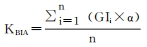
Operational risk capital shall be measured according to the following formula:

Among them:

KBIAIt is the operational risk capital requirement measured by the basic index method;

GI is the positive total income in each of the past three years;

N is the number of years with positive total income in the past three years;

α is 15%.

Article 35 Financial asset investment companies should measure the risk capital requirements of asset management business.

Article 36 The risk-weighted assets of the asset management business of a financial asset investment company are 12.5 times the risk capital requirement of the asset management business, that is, the risk-weighted assets of the asset management business = the risk capital requirement of the asset management business ×12.5.

Article 37 A financial asset investment company shall measure the risk capital requirements of asset management business in accordance with the provisions of Annex 4 of these Measures.

Article 38 A financial asset investment company shall carefully judge the risk situation faced by its asset management business and ensure that the capital can cover the risk of asset management business.

Section 4 Calculation of Leverage Ratio and Regulatory Requirements

Article 39 The formula for calculating the leverage ratio of a financial asset investment company is:

Leverage ratio = net Tier 1 capital/(adjusted balance of on-balance-sheet assets+balance of off-balance-sheet items) ×100%

Article 40 The adjusted balance of on-balance-sheet assets is the balance of on-balance-sheet assets after deducting Tier 1 capital deduction from the total assets in the table.

Article 41 Off-balance sheet items do not include asset management business. The balance of off-balance-sheet items is the risk exposure calculated by the off-balance-sheet business of financial asset investment companies according to the corresponding credit conversion coefficient, and the credit conversion coefficient of various off-balance-sheet items shall be implemented in accordance with Annex 5 of these Measures.

Article 42 The leverage ratio of a financial asset investment company shall not be less than 6%.

Section 5 Calculation Scope of Consolidated Capital Supervision Indicators

Article 43 The calculation scope of consolidated capital supervision indicators shall include financial asset investment companies and institutions that directly or indirectly invest in them in accordance with the provisions of these Measures.

Article 44 A financial asset investment company shall follow the principle of "substance is more important than form", take control as the basis, and take into account the risk correlation, and include the invested institutions that meet one of the following conditions into the consolidated calculation scope:

(1) The investee directly owned by the financial asset investment company or its affiliated institutions, or jointly owned by the financial asset investment company and its affiliated institutions with more than 50% of the voting rights.

(2) An investee whose financial asset investment company has less than 50% of the voting rights, but is under any of the following circumstances:

1. Having more than 50% of the voting rights of the institution through agreements with other investors;

2. According to the articles of association or agreement, have the right to decide the financial and operating policies of the institution;

3. Have the right to appoint or remove most members of the board of directors of the institution or similar authority;

4. Have a majority of voting rights in the board of directors of the institution or similar authority.

When determining the voting right of the invested institution, we should consider the potential voting factors such as the current convertible corporate bonds and current executable warrants held by the financial asset investment company. The potential voting rights that can be realized in the current period shall be included in the voting rights of the financial asset investment company to the invested institution.

(3) There is other evidence that the invested institution is actually controlled by the financial asset investment company.

Control means that the investor has the power over the investee, enjoys variable returns by participating in the related activities of the investee, and has the ability to influence the amount of returns by using the power over the investee.

Article 45 A financial asset investment company does not have the majority voting rights or control rights of the invested institution, and it shall be included in the calculation range of consolidated capital supervision indicators under any of the following circumstances:

(1) Although the asset size of a single institution accounts for a small proportion of the overall asset size of a financial asset investment company, according to the risk correlation, the overall risk of such institutions is enough to have a significant impact on the financial position and risk level of a financial asset investment company;

(2) The harm and loss caused by the compliance risk and reputation risk of the invested institution are sufficient to have a significant impact on the financial asset investment company.

Article 46 The following invested institutions may not be included in the calculation scope of consolidated capital supervision indicators:

(a) closed or declared bankrupt institutions;

(2) Institutions that have entered liquidation procedures due to termination;

(3) Invested institutions that have evidence to prove that they have decided to sell within three years, and the equity capital of financial asset investment companies or affiliated institutions is more than 50%;

(4) A subsidiary non-financial institution that meets any of the following conditions:

1. The proportion of financial assets in total assets is less than 50% (the scope of financial assets shall conform to the relevant provisions of Accounting Standards for Enterprises No.22-Recognition and Measurement of Financial Instruments);

2. The asset-liability ratio is lower than 70%;

3. It is recognized by China Banking and Insurance Regulatory Commission and its agencies that it has no investment and financing function.

The conditions stipulated in this paragraph are mainly judged according to the arithmetic average of the audited year-end financial statements of the affiliated non-financial institution in the last two years. If it is established less than two years, it can be judged according to the audited financial statements from the date of establishment to the latest period.

Article 47 If a financial asset investment company and its affiliated financial institutions provide long-term repayment guarantee to affiliated non-financial institutions, the non-financial institutions shall be included in the scope of capital supervision; If there is no repayment guarantee or the repayment guarantee can be unconditionally revoked, the financial asset investment company shall handle it according to the principle of prudence. Equity investment through structured entities such as asset management plans and funds should be managed according to the penetrating principle.

Article 48 A financial asset investment company shall strengthen the capital management of its subsidiaries, determine the management requirements for the capital adequacy of its subsidiaries at all levels according to its actual situation, and urge the subsidiaries to continuously meet the capital management and supervision requirements.

Article 49 China Banking and Insurance Regulatory Commission and its dispatched offices have the right to determine and adjust the scope of capital supervision according to the changes in equity structure and risk categories of financial asset investment companies and their investment institutions.

Chapter III Internal Capital Adequacy Assessment Procedures

Article 50 A financial asset investment company shall, in accordance with the regulatory requirements, establish a sound risk management framework and a robust internal capital adequacy assessment procedure, clarify the risk governance structure, carefully assess various risks, capital adequacy levels and capital quality, and formulate capital planning and capital management plans to ensure that capital can fully resist the risks it faces and meet the needs of business development.

Article 51 The board of directors of a financial asset investment company bears the primary responsibility for capital management of the company. The board of directors shall perform the following duties:

(1) Set the risk preference and capital adequacy target suitable for the company’s development strategy and external environment, and examine and approve the internal capital adequacy assessment procedures to ensure that the capital fully covers the major risks.

(2) Examining and approving the company’s capital management system, and ensuring that the capital management policies and control measures are effective.

(3) Examining and approving and supervising the implementation of capital planning. Examine and approve the capital management plan at least once a year, review the capital management report and the internal capital adequacy assessment report, and listen to the audit report on the implementation of the capital management and internal capital adequacy assessment procedures.

(4) Examining and approving the policies, procedures and contents of capital information disclosure, and ensuring the truthfulness, accuracy and completeness of the disclosed information.

(five) to ensure that financial asset investment companies have sufficient resources to independently and effectively carry out capital management.

Article 52 When making a capital plan, a financial asset investment company shall comprehensively consider the results of risk assessment, stress test, future capital demand, capital regulatory requirements and capital availability to ensure that the capital level continuously meets the regulatory requirements. Capital planning should set at least a three-year target of internal capital level.

Article 53 A financial asset investment company shall improve its reporting system, regularly monitor and report the changing trend of the company’s capital level and main influencing factors, and the report shall at least include the following contents:

(1) Assessing the impact of major risks and development trends, strategic objectives and external environment on the capital level;

(2) Assessing whether the capital actually held is sufficient to resist major risks;

(3) Put forward suggestions to ensure that capital can fully cover major risks.

According to the different importance and purpose of the report, a financial asset investment company shall specify the sending scope, contents and details of all kinds of reports, and ensure that the reporting information and frequency meet the needs of the capital management of the financial asset investment company.

A financial asset investment company shall submit a report on capital management and internal capital adequacy assessment to China Banking and Insurance Regulatory Commission within four months after the end of the year.

Chapter IV Supervision and Administration

Article 54 China Banking and Insurance Regulatory Commission and its agencies shall supervise and inspect the capital adequacy of financial asset investment companies to ensure that the capital can fully cover all kinds of risks.

Article 55 China Banking and Insurance Regulatory Commission and its dispatched offices have the right to put forward more prudent additional capital requirements according to the daily supervision and on-site inspection to ensure that the capital fully covers risks, including:

(a) according to the function orientation of a single financial asset investment company, the implementation of development strategy, the operation and development of debt-to-equity swap, etc., the additional capital requirements put forward;

(2) According to the judgment of the risk of a specific asset portfolio and its relevance to the main business, the additional capital requirements for a specific asset portfolio are put forward by adjusting the risk weight and other methods;

(3) According to the fact that a single financial asset investment company has not established an internal capital adequacy assessment procedure, or the internal capital adequacy assessment procedure fails to meet the relevant requirements, combined with the assessment results of the risk situation, the additional capital requirements are put forward for the financial asset investment company;

(4) According to the operational risk management level of a single financial asset investment company and the occurrence of operational risk events, the additional capital requirements for operational risk put forward by the financial asset investment company;

(five) according to the results of supervision and inspection, the additional capital requirements for financial asset investment companies.

Article 56 According to the capital adequacy, China Banking and Insurance Regulatory Commission and its agencies will be divided into three categories of financial asset investment companies:

(1) Class I financial asset investment companies: the capital adequacy ratio, tier 1 capital adequacy ratio and core tier 1 capital adequacy ratio all meet the capital requirements at all levels as stipulated in these Measures.

(2) Type II financial asset investment companies: the capital adequacy ratio, tier 1 capital adequacy ratio and core tier 1 capital adequacy ratio are not lower than the minimum capital requirements and countercyclical capital requirements, but any one of them fails to meet the additional capital requirements.

(3) Category III financial asset investment companies: any one of the capital adequacy ratio, tier 1 capital adequacy ratio and core tier 1 capital adequacy ratio fails to meet the minimum capital requirements and countercyclical capital requirements.

Article 57 For the first type of financial asset investment companies, in order to prevent the rapid decline of their capital adequacy level, China Banking and Insurance Regulatory Commission and its dispatched offices may put forward the following regulatory requirements:

(a) to strengthen the analysis and prediction of the reasons for the decline in the level of capital adequacy;

(2) Formulating a feasible capital adequacy management plan;

(3) Improve risk control capability.

Article 58 For the second kind of financial asset investment companies, in addition to the regulatory measures stipulated in Article 57 of these Measures, China Banking and Insurance Regulatory Commission can also take the following regulatory measures according to law according to different situations:

(1) Prudent talks with the board of directors and senior management of the financial asset investment company.

(2) Issuing supervision opinions, including: problems existing in capital management, corrective measures to be taken, and opinions on meeting the standards within a time limit, etc.

(3) Require financial asset investment companies to formulate feasible capital replenishment plans and plans to meet the standards within a time limit.

(4) Increase the frequency of supervision and inspection on the capital adequacy of financial asset investment companies.

(5) Require financial asset investment companies to take risk mitigation measures in specific risk areas.

Article 59 For the third kind of financial asset investment companies, in addition to the regulatory measures stipulated in Articles 57 and 58 of these Measures, China Banking and Insurance Regulatory Commission can also take the following regulatory measures according to law according to different situations:

(1) Restrict financial asset investment companies from distributing dividends and other income. Dividends and other income include: items that can be used for profit distribution, stock repurchase, independent income from other Tier 1 capital instruments and independent payment to employees.

(2) Restrict financial asset investment companies from offering any form of incentives to directors and senior managers.

(3) Restrict financial asset investment companies from making equity investments or repurchasing capital instruments.

(four) to limit the important capital expenditure of financial asset investment companies.

(5) Require financial asset investment companies to control the growth of risky assets.

When dealing with such financial asset investment companies, China Banking and Insurance Regulatory Commission can also take other necessary measures in consideration of external factors.

Article 60 For financial asset investment companies whose leverage ratio is lower than the minimum regulatory requirements, China Banking and Insurance Regulatory Commission can put forward the following regulatory requirements:

(1) Replenishing Tier 1 capital within a limited period;

(2) Controlling the growth rate of assets on and off the balance sheet;

(3) Reduce the scale of off-balance-sheet assets.

Chapter V Information Disclosure

Article 61 A financial asset investment company shall disclose information related to capital adequacy to investors and the public through open channels to ensure the centralization, accessibility and openness of information disclosure.

Article 62 The frequency of information disclosure of financial asset investment companies is divided into temporary, semi-annual and annual disclosures. Among them, temporary information shall be disclosed in a timely manner, and the semi-annual information disclosure time shall be within the last 60 working days and the annual information disclosure time shall be within four months after the end of the fiscal year. If it cannot be disclosed on time due to special reasons, it shall apply to China Banking and Insurance Regulatory Commission and its dispatched offices for delayed disclosure at least 15 working days in advance.

Article 63 A financial asset investment company shall disclose relevant information at the following frequency:

(1) Changes in paid-in capital or common stock and other capital instruments shall be disclosed in a timely manner.

(2) Important information such as net core tier-one capital, net tier-one capital, net capital, core tier-one capital adequacy ratio, tier-one capital adequacy ratio, capital adequacy ratio and leverage ratio shall be disclosed once every six months.

(3) Relevant important information such as the calculation range of capital adequacy related indicators, total credit risk exposure, total non-performing assets, provision for impairment of credit risk assets, risk exposure balance after slow release of credit risk portfolio, market risk, operational risk, asset management business risk and debt-to-equity swap business risk shall be disclosed once a year.

Article 64 With the consent of China Banking and Insurance Regulatory Commission, the content of information disclosure can be appropriately simplified on the basis of meeting the overall requirements of information disclosure.

Chapter VI Supplementary Provisions

Article 65 China Banking and Insurance Regulatory Commission is responsible for the interpretation of these measures.

Article 66 These Measures shall come into force as of the date of issuance.

Attachment: 1. Assets credit risk weight in the balance sheet and risk mitigation tools for qualified equity investment.

   2. Measurement rules of market risk standard method

   3. Measurement rules of basic index method of operational risk

   4. Risk capital measurement rules for asset management business

   5. Credit conversion coefficient of off-balance sheet items

(The above attachment is omitted, please visit the website of China Banking and Insurance Regulatory Commission for details.)
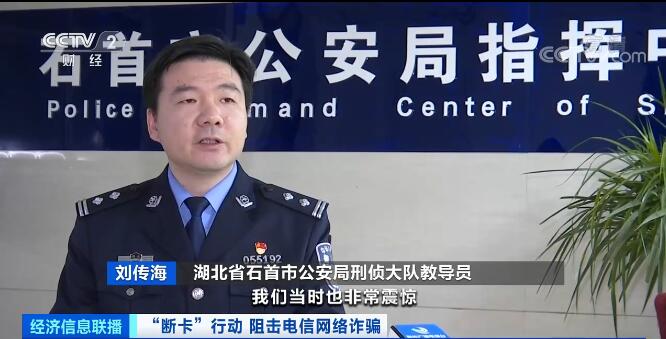
Into thin air concept poster exposure Ada cherry blossom stills released.


Into thin air concept poster


Ada is under the cherry tree.

    The mystery of the mystery thriller films directed by the famous Hong Kong director Chen Desen and starring Chinese and foreign stars such as Ada, Christy Chung, Li Cansen and Jun Kunimura is being unveiled one after another. This domestic film was shot abroad with a record investment scale. Jun Kunimura, an old Japanese actor who starred in "Kill Bill" and other films, played the villain in the play. This is also his first time to work for a China film. Recently, the film exposed a group of Ada’s stills. In the vast sea of cherry blossoms, Liu Yan is a virgin and beautiful. With the falling of cherry blossoms, the picture is extremely beautiful, as if it also indicates the ultimate fate of the film starring.


Ada stills

Into thin air stopped work for half a month waiting for cherry blossoms to fall.

    It is reported that into thin air was filmed in the spring of 2012, and most of the scenes in the film were taken in downtown Tokyo and Wenquan Villa in Mount Fuji. The film tells the story of a China girl who mysteriously disappeared while traveling to Japan, and her good sister went to Japan alone to rescue her friends. It can be said that it is a China version. The director of this film is Tak-Sam Leong, a Hong Kong director who has been studying in Japan for many years. Director Tak-Sam Leong once studied under Shohei Imamura, movie master, and was a proud disciple of Shohei Imamura. He once directed the very commercial films "Forbidden Room for Sexual Desire" and "Old Corpse in Mountain Village", and there have been such films with both commercial selling points and artistic pursuits. The director has very high requirements for shooting, which is also the reason why this film invested in creating a domestic reasoning thriller record. It is reported that in order to shoot the film’s finale, the crew stopped working in Japan for half a month, waiting for the sad feeling created by the falling cherry blossoms. During the shutdown, the actors and creators were very happy and enjoyed the world-famous beauty one after another, but they were bitter for the producer of this film and had a cold war with the director every day. But in the end, the director waited for the magnificent scenery of cherry blossoms falling and achieved his artistic pursuit.

The flowers in Ada are as beautiful as a fairy.

    This is also the first time that Ada came to work in Tokyo during the cherry blossom season. In addition to physical suffering during filming, Ada was in high spirits. She said that living and working in the sea of flowers will not get bored even if she is tired. After filming, she will pick up the camera and assistant to record the moving moments every day. When shooting the most important ending scene, the blue long skirt provided by the crew was very beautiful, and it was accompanied by an overwhelming sea of pink cherry blossoms. Charming Ada feels like a fairy. But it is not difficult to see from the stills that with the falling of cherry blossoms, this beauty is a kind of sadness. The final shot of this group of dramas also seems to indicate that the ending of the whole film is not sunny and family reunion. What is the specific outcome? Ada also refused to disclose it to reporters, only stressing that everyone should wait patiently. No one can guess the result.