[New ideas lead a new journey] Expand strategic emerging industries and cultivate new economic kinetic energy

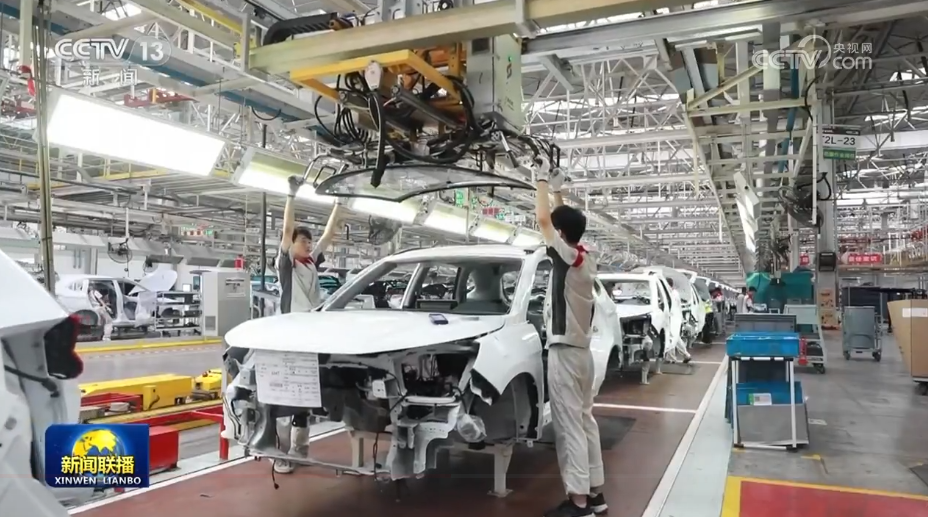
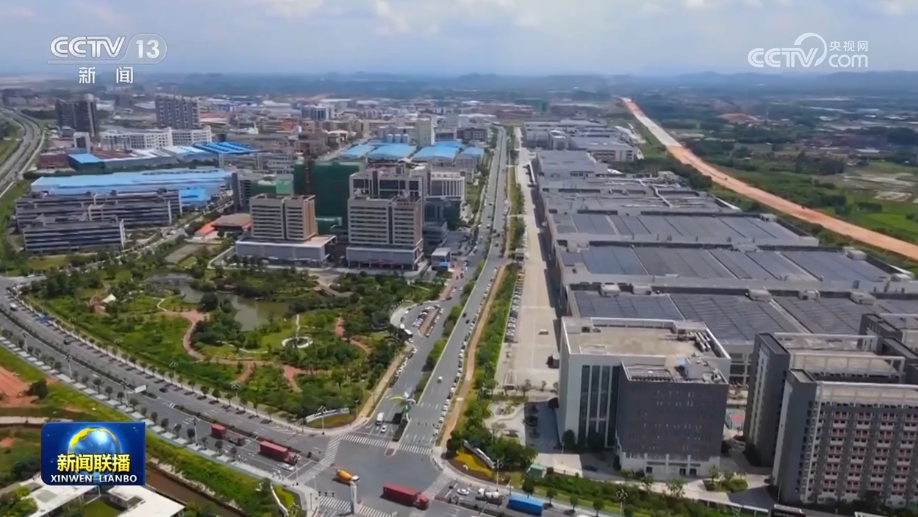
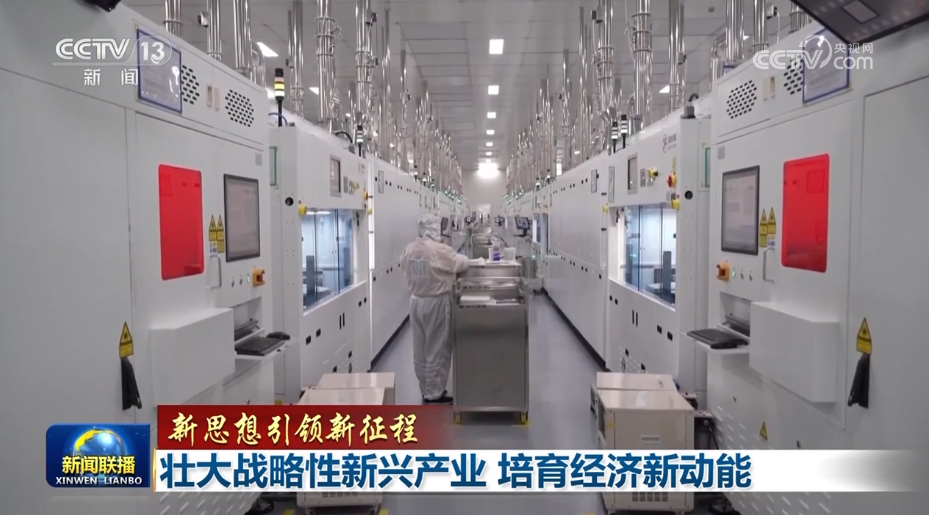
  Cctv news(News Network): General Secretary of the Supreme Leader pointed out that strategic emerging industries are new pillars and new tracks leading the future development. Since the beginning of this year, China’s strategic emerging industries have flourished, and innovation breakthroughs in key areas such as lithium batteries, photovoltaics and new energy vehicles have been accelerating, which has become an important support for high-quality economic development.

  The latest data show that in the first half of this year, the investment in high-tech industries in China increased by 12.5%, which was 8.7 percentage points higher than the total investment in fixed assets. At present, the added value of China’s strategic emerging industries has accounted for more than 13% of GDP, and the strategic emerging industries have a strong development momentum.

  The General Secretary of the Supreme Leader has always attached great importance to the cultivation of strategic emerging industries. Since the beginning of this year, the General Secretary’s many domestic inspections have paid attention to the development of local strategic emerging industries. In Shaanxi, the general secretary asked the local authorities to be brave enough to open up new fields and new tracks and cultivate new competitive advantages; In Jiangsu, the general secretary pointed out that it is necessary to constantly cultivate new industries with new technologies; The the Political Bureau of the Communist Party of China (CPC) Central Committee Conference held not long ago once again pointed out that it is necessary to vigorously promote the construction of a modern industrial system, accelerate the cultivation and expansion of strategic emerging industries, and create more pillar industries.

  Pay attention to practical work and implementation, and keep in mind the instructions of the General Secretary. Since the beginning of this year, the state and local governments have increased their support for strategic emerging industries. The Ministry of Industry and Information Technology initiated the cultivation and upgrading of national advanced manufacturing clusters to promote the cluster development of strategic emerging industries. The State Council State-owned Assets Supervision and Administration Commission (SASAC) deployed special actions such as revitalizing the central enterprises’ industries and setting sail for future industries, focusing on the layout and construction of 15 key industries such as new generation mobile communication, artificial intelligence and new materials.

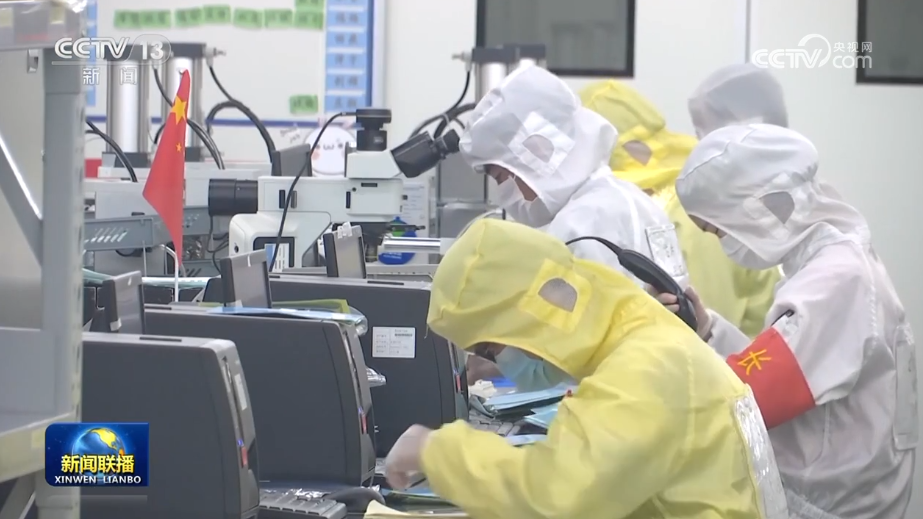
  In Xi ‘an, Shaanxi Province, this photovoltaic manufacturer has repeatedly set a new world record for the efficiency of silicon solar cells by continuously increasing investment in scientific and technological innovation. Since this year, the company’s shipments have once again ranked first in the world.

  Nowadays, China’s strategic emerging industries have ushered in a series of breakthroughs: the cumulative production of new energy vehicles has exceeded 20 million, the total installed capacity of industrial robots has exceeded 50% in the world, the scale of ultra-high-definition video industry has exceeded 3 trillion yuan, and the first batch of national strategic emerging industrial clusters has reached 66.

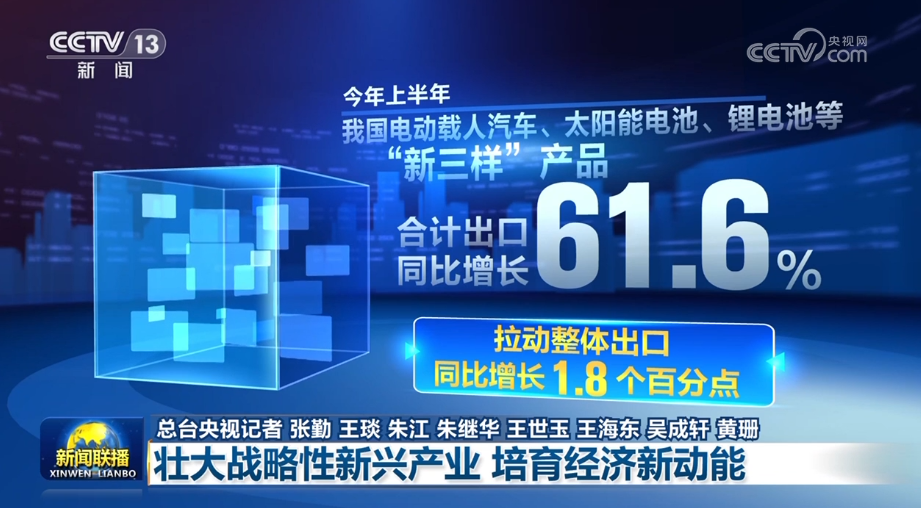
  According to the latest data, in the first half of this year, China’s "new three products" such as electric manned vehicles, solar cells and lithium batteries, the total export increased by 61.6% year-on-year, driving the overall export growth by 1.8 percentage points year-on-year.

  This year, China will further cultivate world-class advanced manufacturing clusters. At the same time, focus on artificial intelligence, new materials and other fields, increase investment in original and leading technology research and development, further lay a solid foundation, fill shortcomings, enhance the scale and innovation ability of China’s strategic emerging industries, and inject inexhaustible power into building a modern industrial system and promoting the high-quality development of China’s economy.

The takeaway said that it takes more than 10 hours to earn more than 10,000 yuan a month. Some riders said that they have never seen the high temperature allowance.

Since August, many areas in China have been hit by high temperature, and the temperature in many cities has climbed to 40 degrees, which has not stopped the pace of takeaway buddies traveling through the city. As outdoor workers, their income and high temperature allowance in extreme climate have become the focus of attention.

Xiaozhuang in Jiangsu is a rider with two years’ take-away experience. He revealed that despite the severe high temperature challenge, he still works for more than ten hours a day and can only take a break in the afternoon. He takes orders for more than 50 times a day and earns about 10,000 yuan a month, including extra activity subsidies. Xiaozhuang stressed that it is necessary to drink plenty of water to avoid heatstroke under such work intensity, and the continuous high temperature makes the food delivery environment more and more difficult.

Pippi, a takeaway in Shanghai, shared that the hot weather in the city has lasted for several days and is expected to continue in the short term. He works 10 hours a day, and his monthly income also exceeds 10,000 yuan, while the monthly income of his more hardworking peers can reach about 13,000 yuan. Pippi described his work with a helpless and tenacious attitude: "As long as he can run, he will go all out."

Xiaole in Fujian adopted a flexible strategy to cope with the high temperature. He chose to avoid the hot noon sun and work in the cooler hours in the morning and evening. By adjusting his working hours, he also achieved the goal of earning more than 10,000 yuan a month, thanks to the flexibility and incentive policies of the crowdsourcing mode of Meituan.

However, the income of take-away riders is not so optimistic in all regions. Some riders in Henan and other places reported that due to the low unit price, the monthly income usually fluctuates between 4,000 and 6,000 yuan, and the high-intensity work is in sharp contrast with the meager remuneration. They think that high income often means extreme physical overdraft.

Regarding the high temperature allowance, the feedback from riders varies significantly from place to place. Some riders said that although they should enjoy the high temperature allowance according to the regulations, they actually rarely receive it, or the allowance is converted into an order reward and other forms, and the amount is meager. Although Meituan and Hungry have introduced high-temperature care measures, in terms of specific implementation, there are great differences in subsidy standards and implementation between different cities and different sites, and some riders even have never heard of high-temperature subsidies.

Generally speaking, the work environment of take-away riders in hot weather is complex and changeable, and their income and welfare benefits are affected by regions, platform policies and personal work patterns. Ensuring the legitimate rights and interests of outdoor workers, especially reasonable subsidies in hot weather, is still an urgent social issue.

"Two Worlds of Happiness" will usher in the finale, and the story of Alan Yu and Yukee Chen”s heart abuse will attack

1905 movie network news Because of the obscurity, the sweet love drama in ancient costume starring Yukee Chen’ is being broadcasted exclusively by iQiyi. Since its launch on February 21, it has been in the forefront of the major rankings inside and outside the station. Last Friday to Sunday, the fourth week’s update was ushered in. The enjoyable drama of "Ayuan is hard and Wang Zesheng" was well received by the audience, and the porcelain bowl couple’s sadomasochism escalated.


On March 20th, "Two Worlds of Happiness" is about to close its membership. The "two generations" bumpy porcelain bowl couple will also accept new challenges. In addition, Qi Xin punishes the evil King Yeh, knowing how the feud between Aunt Xia and Ayuan will develop, and whether the couple with sweet and abusive porcelain bowls can have a happy ending as the audience wishes?


In the fourth week, the topic of heat continued to go high, and the porcelain bowl couple abused their hearts.

Since the broadcast of "Two Worlds of Happiness", the results of each list have been rising. The highest heat in the iQiyi station is as high as 8032, ranking among the best in the total list of TV dramas. In addition, it has been in the forefront of the list of cat’s eye, Detawen, Guduo, Yunhe and other industries. It has been on the hot search for four weeks since its launch, and the discussion on tap water topics on non-update days has been heated. Last week, the couple in porcelain bowls cried tears with high energy, and # Jingci vomited blood again # soared to the hot search list in Weibo, showing the netizens’ concern about the plot.

In addition, updating the interaction of artists on the same day, Yukee Chen’ and Ayuan released an expression pack of "good spirit" in Lanyue Lake: "Ignore me tonight, and I will …" Subsequently, Zhang Sifan, Ma Yue, Wang Gongliang and other actors forwarded it one after another to "feel aggrieved" for Ayuan. Netizens spontaneously changed their names to Ayuan’s support: "Today he ignores you, tomorrow you will abuse him", "The Qinhe team is standing in Ayuan, and the scene is so miserable" and "Ayuan really has personality" …… The scene is very lively.


Last week, the porcelain bowl couple entered Heart Abuse 2.0, and the plot was full of high-energy tears. Aunt Zhixia got in the way, and Ayuan didn’t receive the letter left by Jingci before leaving Qinhe, which led to the misunderstanding between the couple, and Ayuan was chilling. Jingci clearly knew everything, but he didn’t tell Ayuan, and even "resigned" to accept Ayuan’s marriage with Mu Beiyan. In particular, Ayuan was framed by Wang Zesheng in Lanyuehu, and Jing Ci stood on Wang Zesheng’s side to protect Ayuan. This move broke Ayuan’s heart and proved his innocence. Ayuan chopped his purse and wanted to "past lives, make a clean break".This episode made netizens cry their hearts out, leaving messages: "I’ll forget about the abuse", "My eyes are swollen and I feel sorry for the porcelain bowl couple" and "Please explain the scene quickly".


Later, Ayuan learned the mystery of his life experience, and was framed and imprisoned by the king of Ye. Even the closest deer died tragically in prison. For a time, Ayuan suffered multiple blows, and the story of heart abuse attracted hot discussion from netizens: "The name of Ershi Huan was changed to Ershi Abuse, and every episode was crying."


Apart from the story of the heart abuse of the porcelain bowl couple, Wang Zesheng designed to frame Ayuan, and Ayuan, a strong woman, went online, which not only made Wang Zesheng mad, but also proved that Wang Zesheng deliberately framed the "Moon Lake Incident". Then, she threw away the medicine that Wang Zesheng gave her to restore her memory, and angered Wang Zesheng: "I won’t let you bully me again." Ayuan’s "revenge" plot made netizens applaud.


The MV of "No Regret" shows Mu Beiyan’s infatuation, and the ending of "Two Worlds" this week triggered expectations.

Recently, Ershihuan released the episode "No Regret" MV, in which Zhang Sifan, the actor of Mu Beiyan, was specially invited to sing, and "Xiao He Wang Ye" used a low voice to tell Mu Beiyan’s infatuation with Yuan Qingyi: Yuan Qingyi, a childhood friend, ruined his reputation for love, but he was desperate to protect this girl; Later, Feng Mian started his "Second" life as the original Qing Li, and Qinhe lived together day and night, which made him hopelessly fall in love with Ayuan, who was more independent, and stayed with her. ……

The sad melody sings Xiao He Wang Ye’s infatuation to protect the heart of "Two Worlds": "Planting two words in your heart is called not regretting". Ruthless infatuation, infatuation and ruthlessness, Prince Xiaohe’s infatuation and devotion can only bless the two sisters of the original family to find happiness. This contrast is even more cruel than the sadomasochism of the porcelain bowl couple.


This week, VIP members are about to close, and the finale is multi-line, with continuous reversal and continuous high-energy plot. Along the way, the porcelain bowl couple experienced a tortuous process of sweetness, heart abuse and heart abuse 2.0. The roller coaster-style love hung the appetite of the audience. Can the porcelain bowl couple who have been thinking about it for a month reap the "two-world joy" ending?

In addition, the suspense line of the series "brain burning" will also be uncovered one by one. When did King Ye, who dressed as a pig and ate a tiger, start planning everything, and what was his purpose? In addition, there is a high-energy tear point — — The two sisters of the original family, who were separated from the original Qing Dynasty on a windy night, finally reunited after 20 years. More "Two Worlds of Happiness" was finally declassified, so please look forward to the final update of iQiyi this weekend.


"Two Worlds of Happiness" is adapted from the novel of the same name "Lonely Moon and Bright Moon", which is produced by iQiyi and produced by iQiyi Artist Studio. Every Friday to Sunday at 8: 00 pm, 2 episodes will be updated, and members will watch one week (6 episodes) first.


Today’s latest soybean oil futures price inquiry (November 4, 2024)

disclaimerThis article is submitted by a third party. All the information (including but not limited to text, video, audio, data and charts) published by the contributor on Jintou.com only represents his personal views, and does not guarantee the accuracy, authenticity, completeness, effectiveness, timeliness and originality of the information. The copyright belongs to the original author. If there is no intention to infringe on the media or personal intellectual property rights, please call or write to inform him. This website will handle it as soon as possible. The purpose of publishing this article by Jintou.com is to promote information exchange, and there is no profit-making purpose. This article has nothing to do with the position of this website and does not assume any responsibility. Unconfirmed information is for reference only, and does not provide any basis for investment and trading. Therefore, the operation risk is at your own risk. Infringement and false information reporting email address: tousu@cngold.org.

Protecting the same river and surging new kinetic energy (magnificent 70-year struggle, new era and new pattern of regional coordinated development)

  Out of the snow-capped mountains, across the plateau, across the canyons, and rushing up to Wan Li, the Yangtze River is full of soup, giving birth to a long-standing Chinese civilization.

  Since the founding of New China, especially since the reform and opening-up, the economy and society in the Yangtze River Basin have developed rapidly, and the comprehensive strength has improved rapidly, which is the focus and vitality of China’s economy. However, the Yangtze River is overwhelmed by the long-term extensive development: Dongting Lake and Poyang Lake, the "two kidneys" of the Yangtze River, have frequently bottomed out, nearly 30% of the important lakes and reservoirs are still in the state of eutrophication, and the Yangtze River’s biological integrity index has reached the worst "no fish" grade … … General Secretary of the Supreme Leader pointed out: "‘ The Yangtze River is ill ’ And he is still very ill. "

  "Never allow the ecological environment of the Yangtze River to continue to deteriorate in the hands of our generation, and we must leave a clean and beautiful Yangtze River for future generations!" Since the 18th National Congress of the Communist Party of China, the CPC Central Committee with the Supreme Leader as the core has made overall plans and scientific plans, and deployed and implemented the development strategy of the Yangtze River Economic Belt.

  "Make great efforts to protect, not to develop" and "explore a new path of ecological priority and green development". In January 2016 and April 2018, General Secretary of the Supreme Leader held two symposiums to promote the development of the Yangtze River Economic Belt in Chongqing in the upper reaches of the Yangtze River and Wuhan in the middle reaches, profoundly expounding the major issues that need to be correctly grasped and making work arrangements.

  For more than three years, the Office of the Leading Group for Promoting the Development of the Yangtze River Economic Belt, together with the relevant departments of the State Council and 11 provinces and cities along the Yangtze River, has firmly adhered to the principle of "putting the restoration of the ecological environment of the Yangtze River in an overwhelming position", made great efforts to strengthen the top-level design, improve the ecological environment, promote the transformation and development, and explore the reform of the system and mechanism, so as to protect a mighty river.

  Vitality reappears and "color" is improving.

  Put the restoration of the ecological environment of the Yangtze River in an overwhelming position, and "great protection" will strike hard

  With a click, Huang Yuyang pressed the shutter to freeze the finless porpoise at the moment when a plaster white jumped out of the river.

  In recent years, every summer, Huang Yuyang, a citizen of Yichang, Hubei Province, went to the Yangtze River to photograph the finless porpoise. This year, he even photographed a "three porpoises in the same frame". "The frequent appearance of finless porpoises is a great improvement ‘ Chemical wai Jiang ’ Silent praise for continuing to repair the ecology. "

  The finless porpoise is an indicator species of the Yangtze River ecosystem. The scientific investigation report of Yangtze finless porpoise released by the Ministry of Agriculture and Rural Affairs in 2018 confirmed Huang Yuyang’s statement: The number of Yangtze finless porpoise is about 1012 in the main stream of Yangtze River from Yichang to Shanghai and in Dongting Lake and Poyang Lake basins. Although the extremely endangered situation has not changed, the sharp decline in population has been curbed.

  Walking along the Yangtze River, more gratifying improvements in the ecological environment are taking place — —

  The continuous returning farmland to the lake has increased the storage area of Dongting Lake by 779 square kilometers compared with 1978. More than 200 wetland protection projects have increased the wetland area in the Yangtze River basin by 303,600 mu; The rectification of 1,361 illegal wharves along the Yangtze River trunk line was completed, of which 1,254 were demolished and all of them were greened, so that the banks of the Yangtze River were dressed in green again … …

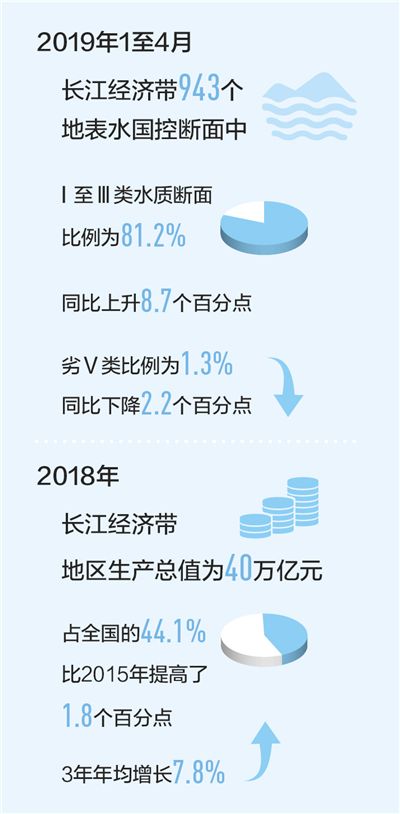
  The "mother river", which was seriously overdrawn, finally got a chance to breathe. In the past few decades, the Yangtze River Economic Belt has supported 45% of the country’s total economic output and cultivated over 40% of the population. However, the development mode of pursuing scale and speed in the past led to serious overdraft of the Yangtze River ecological account. According to the information released by the Yangtze River Committee of the Ministry of Water Resources, from 2005 to 2015, the wastewater discharge in the Yangtze River basin increased from 29.64 billion tons to 34.67 billion tons.

  To promote the development of the Yangtze River Economic Belt, the urgent task is to "stop bleeding" and do a good job in the protection and restoration of the Yangtze River ecological environment. The provinces and cities along the Yangtze River insist on continuously improving the water quality of the Yangtze River, and strike hard to solve outstanding ecological and environmental problems.

  Solidly promote the control of water pollution, "strong medicine to eliminate furuncle, scraping bones to treat poison."

  In 2017, Yichang picked up the "scalpel" and waved to the chemical industry, the first local industry with an output value of over 100 billion yuan. By the end of this year, it will complete the goal of "clearing" the installations of 134 chemical enterprises within 1 km of the coastline of the Yangtze River and its tributaries. Anhui has clearly defined the hierarchical control measures for the coastline of 1 km, 5 km and 15 km along the river, and carried out seven major actions of "prohibiting new construction, reducing storage, turning off pollution sources, entering the park, building new green buildings, accepting unified management and strengthening the mechanism".

  Strive to promote water ecological restoration, "consolidating the foundation and cultivating the yuan, nourishing blood and defending qi".

  On the banks of Taixing River in Jiangsu Province, small chemicals and shipyards that have been entrenched for decades have disappeared, and they have been replaced by natural ecological coastlines that stretch for 12 kilometers. Riverside ecological wetlands and green corridors have become the first choice for Taixing citizens to take a leisurely stroll. In Hubei, the 10-year-old "Honghu Ecological Defence War" also achieved results: all 1,634 professional fishermen landed, and the 155,000-mu lake purse seine was demolished, and the poetic landscape of "Hong Hushui, beating waves" was reappeared.

  Treat the disease before it happens, and protect the "mother river" with the strictest system and the strictest measures.

  Guizhou and Hubei establish a negative list system for industrial access; Hunan has cancelled the per capita GDP assessment for 79 restricted development regions and counties in the province; Jiangsu promotes 22 comprehensive reforms of environmental protection systems; Since the beginning of this year, Yunnan has included 36,000 square kilometers of Jinsha River Basin (Yunnan part) in the red line of ecological protection, accounting for 30.5% of the red line area of ecological protection in the province. Chongqing has fully implemented the river length system and established a three-level "double total river length" structure at city, district, county, street and town levels, covering more than 5,300 rivers and more than 3,000 reservoirs in the city.

  The "Great Protection" struck hard and solved a number of "long-standing problems", and the color of "Mother River" gradually improved.

  In January this year, the Ministry of Ecology and Environment issued a bulletin on the quality of water resources. Of the 1,155 water functional zones in the Yangtze River Basin, 1,032 reached the standard, with a compliance rate of 89.4%, an increase of nearly 4 percentage points year-on-year.

  Strengthen cooperation and integrate organically.

  Put your own development into the overall situation of coordinated development, play a good game of chess and protect a river together.

  At the beginning of this year, counties and districts in Yichun City, Jiangxi Province agreed on 14 compensation agreements for cross-county horizontal ecological protection. The water quality of the handover section shall be assessed on a monthly basis, and if it meets the requirements of the agreement, the downstream counties shall compensate the upstream counties; If the agreement is not met, the upstream will compensate the downstream.

  Water is flowing. In the past, the Yangtze River could not get out of the "strange circle" of pollution control. An important factor was that the upstream and downstream "played their own trumpets and sang their own tunes". Nowadays, "whoever pollutes will be treated" and "whoever benefits will be compensated". Responsibility comes first, benefit sharing is postponed, and responsibilities and rights are tied to each other. The governance situation of inter-provincial and inter-city basins in the main and tributary of the Yangtze River has changed.

  Anhui and Zhejiang provinces carried out the first pilot project of ecological compensation in inter-provincial river basins in China, and protected an underwater Qiantang River in Qing Jiang for seven years in succession with the "water quality" of Xin ‘anjiang River. Up to now, Huangshan City and Jixi County in Anhui Province, which are located in the upper reaches of Xin ‘anjiang River, have received relevant compensation of nearly 4 billion yuan. In Chishui River in the upper reaches of the Yangtze River, Yunnan, Guizhou and Sichuan provinces jointly set up a compensation fund for horizontal ecological protection in the basin of 200 million yuan to protect this tributary of the Yangtze River, which is known as the "Wine River".

  The upstream and downstream, the left and right banks and the main tributaries of the Yangtze River Economic Belt are an organic whole, and the key to great protection lies in the word "common", but it is also difficult to do so. Under the pattern of a chess game in the whole basin, both ecological management and industrial development must correctly grasp the relationship between their own development and coordinated development.

  Only by eliminating "blocking points", breaking regional barriers and accelerating river basin coordination can the "golden waterway" be smooth — —

  From 1,500 containers a day to 2,500 containers a day, it only took more than a year for Chenglingji Port in Yueyang, Hunan. Deng Longbiao, head of the comprehensive department of Hunan Port Group, introduced that Chenglingji Port cooperated with Shanghai Port Group to set up Hunan Chenglingji Port Group, which opened up the "blocking point" of integrated water transport in the province and strengthened cooperation with upstream and downstream terminals. In the past, "the big ship was not satisfied, and the small boat could not fit". Now, "the small boat went to the tributary, and the big ship entered the Yangtze River, and the size was full".

  From Taicang Port in Jiangsu to Shuifu Port in Yunnan, the tide of port integration is surging inland along the Yangtze River waterway. Logistics alliances and port alliances have been formed one by one, and the comprehensive three-dimensional transportation corridor has been accelerated. Hot metal combined transport and river-sea combined transport & HELIP; … Under multimodal transport, the gold content of the "golden waterway" with the largest freight volume of the Yangtze River in the world continues to increase.

  Only by clearing market barriers, promoting the free flow and optimal allocation of labor, capital, technology and other factors across regions, dislocation development and coordinated development can the Yangtze River Economic Belt be built into an organically integrated and efficient economy — —

  A new energy electric vehicle is designed and developed in Shanghai. The battery materials and battery packs come from Changzhou, Jiangsu, Ganzhou, Jiangxi and other places, and the whole vehicle assembly is in Hubei, Sichuan and Chongqing. Electronic information, equipment manufacturing and other industrial chains are longer, with more flowers in the upper, middle and lower reaches, dislocation competition and gratifying division of labor and cooperation, which has become an important support for the high-quality development of the Yangtze River Economic Belt.

  At present, the "1+3" inter-provincial consultation and cooperation mechanism of the Yangtze River Economic Belt, led by the Office of the Leading Group for Promoting the Development of the Yangtze River Economic Belt and attended by 11 provinces and cities along the Yangtze River, has been fully established, and four provinces and cities in the lower reaches of the Yangtze River, three provinces in the middle reaches and four provinces and cities in the upper reaches have also established inter-provincial consultation and cooperation mechanisms respectively, and the system and mechanism for coordinated development have been continuously improved.

  Upstream, the Yangtze River Basin Park Cooperation Alliance, established with the participation of 48 cities and 59 parks, is making great efforts to promote collaborative innovation between intelligent manufacturing and robot industry chain elements. Overlooking the Yangtze River, the regional integration development of the Yangtze River Delta has become a national strategy, and the integration development level of urban agglomerations in the middle reaches of the Yangtze River and Chengdu-Chongqing urban agglomerations has been continuously improved … … Jumping out of the "thinking of three points in one acre", playing a good game of chess and protecting a river together, the endless Yangtze River is scouring out a coordinated development zone.

  Reform leads and innovation drives.

  Change and innovate the traditional development mode and path, and promote the transformation of the development power of the Yangtze River Economic Belt

  Many people didn’t expect that Guizhou, an underdeveloped inland province, had devoted several years to "making something out of nothing" and built a famous "China Valley" at home and abroad.

  Guided by Gui ‘an New District, Guizhou relies on abundant hydropower resources to cut into the "big data industry". A number of Fortune 500 companies such as Intel, Dell and Apple gathered here, and a number of domestic big data leaders such as CLP, Alibaba and Huawei took root here.

  Han Shaobo, deputy director of the Big Data Development Administration of Guizhou Province, introduced that Guizhou takes innovation as the engine to accelerate the "stock change" to achieve the "variable breakthrough" of the digital economy. At present, 33.9% of industrial enterprises in the province have fully integrated big data with key business links such as R&D, production, sales and management, and the growth rate of the digital economy has ranked among the best in the country for four consecutive years.

  The success or failure of ecological environment protection depends on the economic structure and economic development mode in the final analysis. Grasping great protection and not engaging in great development is not to develop, but to force the transformation and innovation of traditional development models and paths, and to seek higher quality development with green and innovation as the keynote.

  The transformation and upgrading of traditional industries, the cultivation of emerging industries and the optimization and upgrading of manufacturing structure are promoting the transformation of the development momentum of the Yangtze River Economic Belt.

  Walking into the No.18 Workshop of Sany Heavy Industry in Changsha Economic and Technological Development Zone is like walking into a garden. A traditional production line usually produces only one product, but in this well-known intelligent manufacturing demonstration workshop in Asia, more than 30 kinds of construction machinery and equipment can be assembled, and an excavator can be off the assembly line in 5 minutes.

  "We must take the initiative to cross the threshold of intelligent and digital transformation!" Liang Wengen, chairman of Sany Heavy Industry, said. Facing the once depressed market, Changsha construction machinery enterprises, including Sany Heavy Industry, have built intelligent manufacturing workshops, laid out intelligent logistics systems and built a big data cloud platform to seize the commanding heights of industrial chain and value chain in the increasingly fierce market competition.

  Faced with the huge stock of traditional industries, the provinces and cities along the Yangtze River insisted on deepening the structural reform of the supply side. On the one hand, resolutely go to production capacity, the decisive elimination of the elimination, the complete withdrawal of the withdrawal, and the strong man broke his wrist to crack the "chemical encirclement of the river." On the other hand, we will persist in upgrading traditional industries with modern technology and accelerate the "stock change": Hubei has rolled out the "10,000-enterprise trillion-dollar technological transformation project", with an investment of more than 500 billion yuan in industrial technological transformation; In 2018, Guizhou implemented technological transformation for 1,688 industrial enterprises through the "transformation of thousands of enterprises", and made Shangyun enterprises exceed 10,000 through the "integration of all enterprises"; Jiangxi has thoroughly implemented the three-year action plan for technological transformation of industrial enterprises, and strived to increase the investment in technological transformation by 30% in 2019 & hellip; … In 2018, the main business income of industrial enterprises above designated size in the Yangtze River Economic Belt was 46.7 trillion yuan, accounting for 45.7% of the national industry, an increase of 4.1 percentage points compared with 41.6% in 2014.

  Walking through Zuoling Avenue at the edge of Wuhan Optical Valley, just 8 kilometers, Yangtze River Storage (National Storage Base), Huaxing Optoelectronics, tianma microelectronics and other "new Wuhan-made" are row upon row, and the total investment of emerging industries exceeds 400 billion yuan.

  Wuhan Optical Valley started from an optical fiber 40 years ago and developed into a national optoelectronic industry base. Only optical fiber occupies 25% of the global market share. Today’s Optics Valley, from network transmission to display, from intelligent terminals to chips, a trillion-dollar industrial cluster with "core screen end network" has taken shape.

  From "Optical Valley" in Wuhan to "Digital Valley" in Guizhou and "Smart Valley" in Chongqing, from "Huigu" in Wuxi, Jiangsu and "Sound Valley" in Hefei, Anhui to "Power Valley" in Zhuzhou, Hunan, which leads the industry with rail transit equipment, all areas along the Yangtze River insist on innovation-driven and "incremental rise", and new technologies, new formats, new models and new industries are surging, and a number of them are competitive and influential in the country and the world.

  What is more exciting than the optimization and upgrading of manufacturing structure is that creating an innovative environment and stimulating endogenous power are injecting inexhaustible power into accelerating the transformation of old and new kinetic energy along the Yangtze River.

  "Elsewhere, parks are built in urban areas, and we are building new cities in parks, changing ‘ Production — City — People ’ The development logic of is ‘ People — City — Production ’ 。” Liu Yang, deputy director of Chengdu Science City Management Committee in Tianfu New District, Sichuan, said that it took only four years for Tianfu New District to develop from a blank sheet of paper to become the core area of innovation and development in Sichuan.

  Nanjing Jiangbei New District has carried out the pilot reform of "Regional Environmental Assessment+Environmental Standards" in Industrial Technology Research and Innovation Park, put forward the project access standards, and formulated a "negative list" to provide environmental support for building a "city of chips" and a "city of genes". In the first four months of this year, the main business income of integrated circuits and life and health industries in Jiangbei New District increased by 52% and 40.5% respectively.

  Chongqing Liangjiang New District stipulates that social investment projects that do not involve land and financial subsidy policies only need to be filed and no longer approved; For foreign-invested projects that meet the requirements of industrial layout, the foreign-funded authorities will no longer pre-approve them … … Chongqing Liangjiang New Area Digital Economy Industrial Park, which has been listed for only one year, has attracted investment of 52.9 billion yuan and accepted 3,865 digital economy enterprises.

  The construction of Shanghai Science and Technology Innovation Center has been launched in an all-round way, and the comprehensive innovation and reform experiments in Anhui, Sichuan and other regions have been further promoted. The pilot reform of Shanghai, Zhejiang, Hubei, Chongqing and Sichuan Pilot Free Trade Zones has accumulated experience & HELIP; … The "Golden Waterway" connects the "Belt and Road", and the reform and innovation and opening up have increased their efforts, anchoring the "innovation drive belt that leads the national transformation and development". The Yangtze River Dragon is taking off with a new attitude. (Reporter He Guanghua, Cheng Yuanzhou, Sun Chao)
Personnel adjustment in three cities of Jiangsu: three acting mayors take up new posts

  BEIJING, Beijing, May 15 (Wei Xianghui) On April 28 this year, the Organization Department of jiangsu provincial party committee issued a number of pre-service announcements for leading cadres in provincial administration. Among them, Zhang Mingkang, Pan Guoqiang and Liu Hao intend to recommend and nominate candidates as mayors of districts and cities. As of May 15th, the whereabouts of the above three people have been made clear.

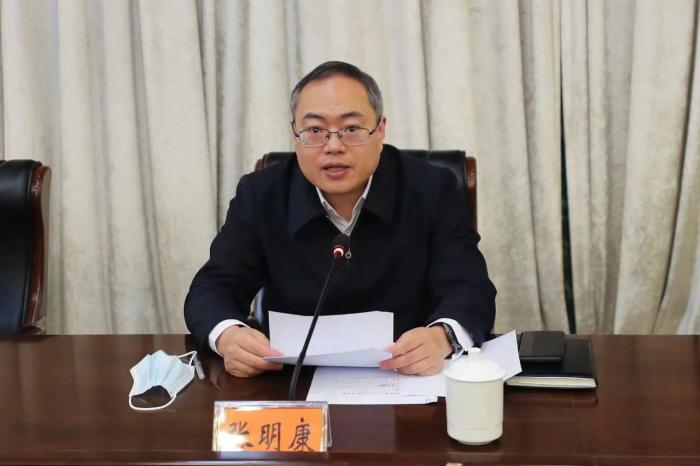
The picture shows Zhang Mingkang Image source: WeChat WeChat official account "Suqian Release"

  According to the website of the Organization Department of the CPC jiangsu provincial party committee, the 11th meeting of the Standing Committee of the Ninth Yancheng Municipal People’s Congress decided on May 15th to accept Zhou Bin’s request to resign as the mayor of Yancheng Municipal People’s Government and appointed Zhang Mingkang as the deputy mayor and acting mayor of Yancheng Municipal People’s Government.

  On May 13th, the 9th meeting of the Standing Committee of the Ninth People’s Congress of Yangzhou decided to accept Wang Jinjian’s request to resign as mayor of Yangzhou Municipal People’s Government and appointed Pan Guoqiang as deputy mayor and acting mayor of Yangzhou Municipal People’s Government.

Pan Guoqiang took the constitutional oath. Image source: WeChat WeChat official account "Yangzhou Release"

  On May 12th, the 10th meeting of the Standing Committee of the Sixth Suqian Municipal People’s Congress decided to accept Chen Zhongwei’s request to resign as mayor of Suqian Municipal People’s Government and appointed Liu Hao as deputy mayor and acting mayor of Suqian Municipal People’s Government.

  According to the information published on the website of jiangsu provincial party committee Organization Department, all three are "post-70s".

  Zhang Mingkang, male, Han nationality, born in July 1973, university, bachelor’s degree, party member, CPC.

  Pan Guoqiang, male, Han nationality, born in October 1974, graduate student of Party School of Provincial Party Committee, bachelor’s degree, party member, CPC.

  Liu Hao, male, Han nationality, born in May 1973, holds an in-service postgraduate degree, and holds an MBA in party member, CPC.

  Zhang Mingkang has worked in Wuxi for a long time. He used to be the director of Wuxi Statistics Bureau, the party secretary, the director of Wuxi Development and Reform Commission and the party secretary.

  In January 2019, Zhang Mingkang was appointed Secretary-General of Wuxi Municipal Government, a member of the party group, and concurrently served as the director of the research office of the municipal government. In July 2020, he served as the deputy mayor of Wuxi. In 2021, Zhang Mingkang was transferred to the Standing Committee of Suqian Municipal Committee and executive deputy mayor until this time in Yancheng.

  Pan Guoqiang has worked in Suzhou for a long time. He used to be the director, office director and deputy researcher of the Research Office of the Organization Department of Suzhou Municipal Committee, the member of the Standing Committee of Wuzhong District Committee, the director of the United Front Work Department, the deputy secretary-general of Suzhou Municipal Committee and the director of the Municipal Reception Office.

  In 2018, Pan Guoqiang was appointed as the acting mayor of Zhangjiagang City, and later as the mayor. In 2020, he was appointed as the secretary of the Zhangjiagang Municipal Party Committee. In 2021, he served as member of the Standing Committee and Secretary General of Suzhou Municipal Committee, and was transferred to Yangzhou this time.

  Suqian City, Liu Hao, is the youngest prefecture-level city in Jiangsu Province. According to official website, the local government, Suqian, located in the north of Jiangsu Province, belongs to the cross-radiation area of Huaihai Economic Belt, Coastal Economic Belt and Riverside Economic Belt.

The picture shows Liu Hao Source: WeChat WeChat official account "Chongchuan Online"

  Liu Hao once worked in the general office of jiangsu provincial party committee for a long time, and served as the secretary of the Economic Department of the General Office of the Provincial Party Committee, the deputy director and researcher of the Economic Department of the General Office of the Provincial Party Committee, the deputy director and director of the General Office, and the deputy inspector of the Research Office of the Provincial Party Committee.

  In July 2017, Liu Hao was transferred to the Standing Committee of Nantong Municipal Committee and Minister of Propaganda Department. In 2018, he served as the Standing Committee of Nantong Municipal Committee and Secretary of Chongchuan District Committee. In 2021, Liu Hao became the Standing Committee of Taizhou Municipal Committee, Deputy Secretary of the Party Group and Executive Deputy Mayor of the Municipal People’s Government. Today, he goes to Suqian. (End)

National Disaster Reduction Committee: The national natural disaster risk survey identified the disaster resistance of key areas.

  Cctv newsOn the morning of February 15th, the State Council Press Office held a press conference to introduce the first national comprehensive risk survey of natural disasters and answer reporters’ questions.  

  Zheng Guoguang, Secretary-General of the National Disaster Reduction Committee and Director of the Office of the First National Comprehensive Risk Survey of Natural Disasters in the State Council, said that in the past three years, all the member units and regions of the first national comprehensive risk survey of natural disasters in the State Council organized nearly 5 million professional and technical personnel nationwide, and obtained billions of national disaster risk factor data, and completed the tasks of general survey, data quality inspection and submission. At present, the survey data are being used to carry out disaster risk assessment and zoning at the national, provincial, municipal and county levels.

  The task of disaster risk survey is to comprehensively obtain the data of disaster-causing factors of 23 kinds of disasters in 6 categories, including earthquake disasters, geological disasters, meteorological disasters, floods and droughts, marine disasters and forest and grassland fires, the data of 27 kinds of disaster-bearing bodies in 6 categories, including population, housing, infrastructure, public service system, industry, resources and environment, and the data of 16 kinds of comprehensive disaster reduction capabilities in 3 categories, including government, society and grass-roots families. Since 1978,

  In the past three years, under the unified organization and leadership of the leading group for the first national comprehensive risk survey of natural disasters in the State Council, the survey task has been fully completed through the concerted efforts of all parties. For example, the housing and urban-rural construction industry has obtained the construction data of nearly 600 million urban and rural houses and more than 800,000 municipal facilities nationwide. The transportation industry has completed the investigation of more than 5 million kilometers of road network, more than 900,000 bridges and tunnels, more than 6,000 coastal berths above 10,000 tons and inland river berths above 1,000 tons, and 15,000 kilometers of third-class and above inland river channels. The forestry and grass industry has completed more than 110 thousand forest and grassland combustible sample surveys, and nearly 800 thousand laboratory samples have been tested. The natural resources geological industry has carried out geological disaster risk surveys in 2081 counties (autonomous regions and municipalities), and has mastered more than 280,000 hidden danger data of geological disasters in China. The marine industry has completed the investigation of 13,900 (segment) marine disaster-bearing bodies and more than 6,000 key hidden dangers. The water conservancy industry has completed the investigation of reservoirs, sluices, dikes and other water conservancy facilities in China, and obtained more than 70,000 data of drought-induced disasters. The emergency management industry cooperated with education, health, cultural tourism and other industries to obtain more than 700,000 public service facilities, nearly 150,000 hazardous chemical enterprises (including gas filling stations), more than 30,000 non-coal mines (including tailings ponds) and coal mines, 4.5 million pieces of comprehensive disaster reduction capacity data, and more than 2.3 million pieces of annual historical natural disaster data. The eco-environmental industry has obtained 23,000 pieces of national survey data on civil nuclear facilities.The meteorological industry has obtained 6.64 million pieces of information on disaster-causing factors of 10 meteorological disasters. The seismic industry has obtained drilling data of seismic engineering geological conditions of more than 27,000 sites.

  In addition, the Ministry of Industry and Information Technology, the Ministry of Agriculture and Rural Affairs, the Bureau of Statistics, China Banking and Insurance Regulatory Commission, China State Railway Group Co.,Ltd. and other departments and units organize relevant investigations or provide relevant data according to the division of tasks, and share relevant data such as communication facilities, crop distribution, population census and economic census, insurance enterprises and railways. The Ministry of Finance arranges special funds to support the census work. The Development and Reform Commission, the Chinese Academy of Sciences, the Academy of Engineering, the Energy Bureau, and the Central Military Commission’s Joint War Insurance Bureau actively participated in the formulation of census plans and technical specifications, the coordination of investigation work, and the application of results.

  The quality, completeness and standardization of data is the difficulty and focus of general survey, and it is also an important basis for disaster risk assessment and zoning. According to the work plan and the division of tasks, the industry departments and localities involved in the survey carried out quality inspection of survey data at different levels and by industry. The industry departments of natural resources, ecological environment, housing and urban and rural construction, transportation, water conservancy, emergency, meteorology, forestry and grass, earthquake and other industries respectively formulated quality inspection plans for survey data, developed quality inspection software, and organized a team of experts to carry out quality inspection of survey data, including spot checks. Those who failed the quality inspection were returned for rectification. The survey data submitted to the State Council Census Office should be comprehensively inspected, that is, the integrity and standardization of the data should be checked, and those that fail should be returned to the industry department for rectification, thus ensuring the quality and reliability of the survey data.

  Through the investigation, we have basically found out the hidden dangers of natural disasters in China, identified the disaster resistance of key areas, laid a solid foundation for comprehensive disaster risk assessment and zoning, trained local disaster prevention and mitigation management and technical teams, and created a good social atmosphere in which the whole society cares, participates and supports disaster prevention and mitigation.

Into thin air concept poster exposure Ada cherry blossom stills released.


Into thin air concept poster


Ada is under the cherry tree.

    The mystery of the mystery thriller films directed by the famous Hong Kong director Chen Desen and starring Chinese and foreign stars such as Ada, Christy Chung, Li Cansen and Jun Kunimura is being unveiled one after another. This domestic film was shot abroad with a record investment scale. Jun Kunimura, an old Japanese actor who starred in "Kill Bill" and other films, played the villain in the play. This is also his first time to work for a China film. Recently, the film exposed a group of Ada’s stills. In the vast sea of cherry blossoms, Liu Yan is a virgin and beautiful. With the falling of cherry blossoms, the picture is extremely beautiful, as if it also indicates the ultimate fate of the film starring.


Ada stills

Into thin air stopped work for half a month waiting for cherry blossoms to fall.

    It is reported that into thin air was filmed in the spring of 2012, and most of the scenes in the film were taken in downtown Tokyo and Wenquan Villa in Mount Fuji. The film tells the story of a China girl who mysteriously disappeared while traveling to Japan, and her good sister went to Japan alone to rescue her friends. It can be said that it is a China version. The director of this film is Tak-Sam Leong, a Hong Kong director who has been studying in Japan for many years. Director Tak-Sam Leong once studied under Shohei Imamura, movie master, and was a proud disciple of Shohei Imamura. He once directed the very commercial films "Forbidden Room for Sexual Desire" and "Old Corpse in Mountain Village", and there have been such films with both commercial selling points and artistic pursuits. The director has very high requirements for shooting, which is also the reason why this film invested in creating a domestic reasoning thriller record. It is reported that in order to shoot the film’s finale, the crew stopped working in Japan for half a month, waiting for the sad feeling created by the falling cherry blossoms. During the shutdown, the actors and creators were very happy and enjoyed the world-famous beauty one after another, but they were bitter for the producer of this film and had a cold war with the director every day. But in the end, the director waited for the magnificent scenery of cherry blossoms falling and achieved his artistic pursuit.

The flowers in Ada are as beautiful as a fairy.

    This is also the first time that Ada came to work in Tokyo during the cherry blossom season. In addition to physical suffering during filming, Ada was in high spirits. She said that living and working in the sea of flowers will not get bored even if she is tired. After filming, she will pick up the camera and assistant to record the moving moments every day. When shooting the most important ending scene, the blue long skirt provided by the crew was very beautiful, and it was accompanied by an overwhelming sea of pink cherry blossoms. Charming Ada feels like a fairy. But it is not difficult to see from the stills that with the falling of cherry blossoms, this beauty is a kind of sadness. The final shot of this group of dramas also seems to indicate that the ending of the whole film is not sunny and family reunion. What is the specific outcome? Ada also refused to disclose it to reporters, only stressing that everyone should wait patiently. No one can guess the result.

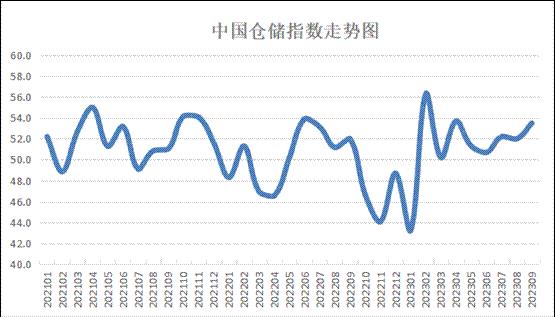
In September, the China storage index showed that the demand increased well, the inventory rebounded sharply, and the industry maintained a relatively fast development level.

  CCTV News:according toChina Federation of Logistics and Purchasing website news,The China warehousing index jointly investigated by China Federation of Logistics and Purchasing and China Storage Development Co., Ltd. was 53.5% in September, 2023, up 1.5 percentage points from last month, and remained in the expansion range for eight consecutive months. The increase this month was obvious and reached the high point in the last five months, indicating that the warehousing industry maintained a relatively rapid development level. New orders, business volume, facility utilization rate, business profit, ending inventory, business activity expectation and other indexes have all rebounded, indicating that the demand for warehousing business has increased well, the profitability of enterprises has improved, the enthusiasm for replenishing warehouses has increased, and the expectations for the future are more optimistic. Specifically, this month’s index has the following characteristics:

image001

  Business demand grew well and the utilization rate of facilities improved significantly.In September, the business volume index was 56.2%, up 3.7 percentage points from the previous month, reaching a high point in the past five months; The new order index was 55.2%, up 1.5 percentage points from last month; The facility utilization index was 56.2%, up 5.3 percentage points from last month, reaching a high point in the past seven months. The three indexes reflecting the business demand are all at a high level in the expansion range, indicating that the warehousing market is running well and the business demand is showing an obvious growth trend. In terms of varieties, affected by the approaching Mid-Autumn Festival and National Day holiday, residents’ willingness to shop has increased, and the business volume of consumer goods and the utilization rate of facilities have greatly improved, especially food, clothing, textiles and daily necessities. Due to the arrival of the peak construction season for bulk commodities, the business volume of steel, building materials, machinery and equipment has also picked up significantly compared with the previous period.

  Business profits rebounded and business conditions improved.In September, the charge price index was 50.6%, although it dropped by 0.6 percentage point from last month, but it was still in the expansion range, indicating that the charge price of warehousing business continued to increase slightly; The business profit index was 51.9%, up 2.2 percentage points from last month, and returned to the expansion range, indicating that the growth of business demand and charging price has strengthened the supporting role of profits, and the business situation of enterprises has improved to some extent.

  Turnover remained efficient and inventory levels rebounded.In September, the average inventory turnover index was 53.8%, which was 0.5 percentage points lower than that of last month, but it still maintained a high level of prosperity in the expansion zone, indicating that the commodity turnover efficiency continued to improve and the upstream and downstream of the supply chain were smoothly connected. The ending inventory index was 54.2%, up 3.9 percentage points from the previous month, indicating that the commodity inventory level increased significantly. The holiday season is approaching, which stimulates the rapid growth of consumer demand, and the commodity market is also picking up during the peak season. The enthusiasm of enterprises for stocking has been greatly improved, and the overall inventory has been significantly improved compared with the previous low level.

  Judging from the quarterly average value of the warehousing index, the overall trend in the first three quarters was on the rise, with the average value reaching 52.6% in the third quarter, and the recovery rate at the end of the quarter was accelerated, and the industry continued to develop well. In the fourth quarter, as the economy maintained a stable recovery trend, both supply and demand rebounded, and the effects of various policies were further manifested. In addition, the warehousing industry is expected to continue to maintain a good development trend.

Do you dare to call apples green when they are exposed and kicked out?

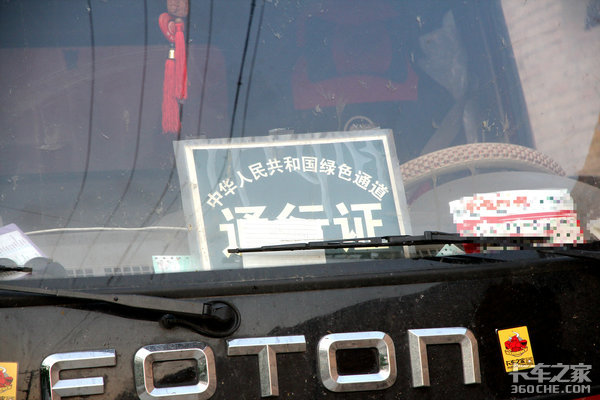
[Original of Truck House] Because pulling agricultural and sideline products can enjoy high-speed and free policy treatment, many card friends are also more willing to pull green links, but we should keep our eyes open about pulling green links.

Do you dare to call apples green when they are exposed and kicked out?

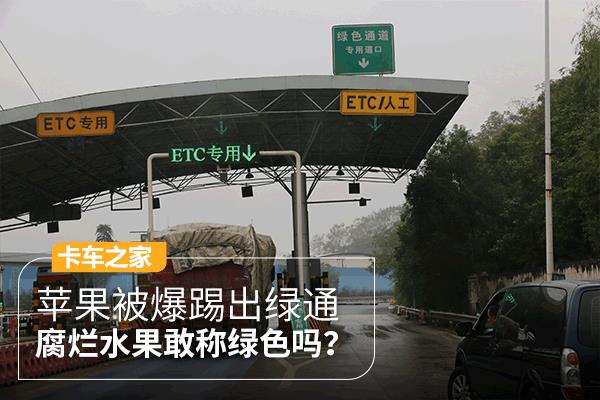
Since it is a "green channel", there must be many restrictions. It is impossible for all agricultural products to take the green channel. Recently, card friends in Shaanxi have suffered in this respect.

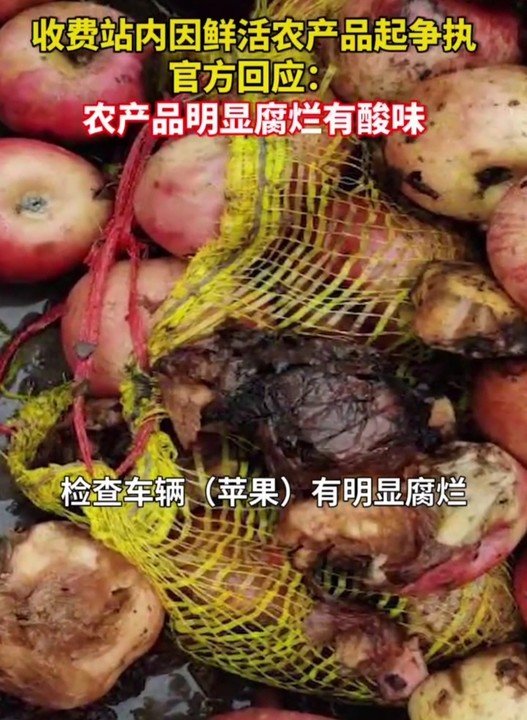
Recently, when a netizen dragged Apple through Shaanxi Ankang Expressway toll station, the toll collector said that the card friend’s vehicle could not enjoy the green channel treatment. Although the load of the vehicle met the requirements of Lutong, the toll must be paid in full.

Here, many card friends are puzzled. Ran He is listed in the catalogue of fresh agricultural products. Why does Ankang toll collector decide that the car apple does not belong to Lutong? Is this apple kicked out of the catalogue of agricultural products by Ankang?

Do you dare to call apples green when they are exposed and kicked out?

The toll collector said that it is true that apples are green products, but the apples on the car have rotted in a large area and do not meet the definition of "fresh".freshIs the first condition to take the green link.Since you don’t meet the requirements, why can you enjoy green treatment?

Do you dare to call apples green when they are exposed and kicked out?

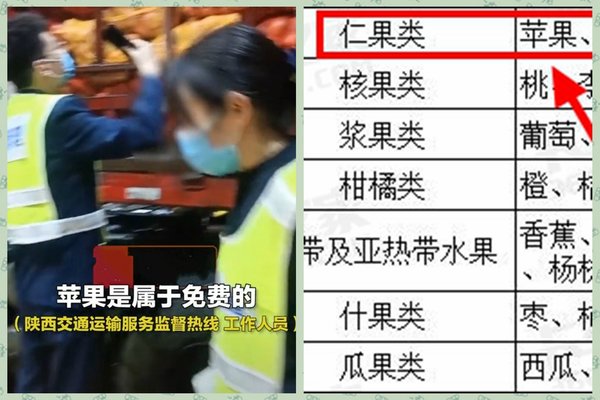
The staff of Shaanxi Traffic and Transportation Service Hotline responded to the incident, saying that there is no dispute that apples belong to Lutong products. According to the on-site toll collector’s inspection, the apples loaded on the vehicle are all rotten apples, commonly known as "falling fruit". Therefore, even if the load of the whole vehicle is within the standard range, the cargo occupies more than 80% of the car volume, but because the fruits on the vehicle are rotting in a large area and are very stale, it is compliant not to let Lutong go.

Do you dare to call apples green when they are exposed and kicked out?

The staff of Shaanxi Expressway Baihe Management Office introduced that enjoying the green channel policy refers to fresh vegetables and fruits, and the staff checked the vehicles, and the loaded goods (apples) had obvious rot.It does not meet the requirements of "liveliness" stipulated in the document, so it is feasible not to give green channel treatment.

Do you dare to call apples green when they are exposed and kicked out?

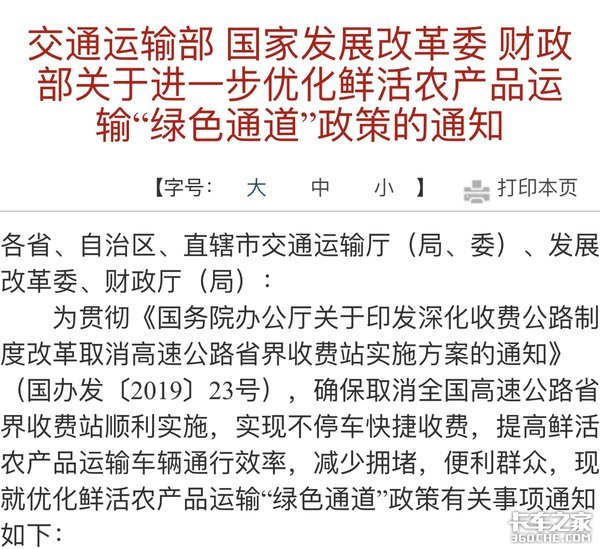
According to the spirit of the document "Notice on Further Optimizing the Green Passage Policy of Fresh Agricultural Products Transportation" issued by the three ministries and commissions, fresh agricultural products enjoying the "green passage" policy refer to fresh vegetables, fruits, fresh aquatic products, live livestock and poultry, fresh meat, eggs and milk. If it is found that it is mixed or counterfeit and does not meet the policy requirements, it needs to be handled according to the regulations.

That is to say, the toll collectors have the right to inspect the vehicles carrying Lutong. As long as the loaded goods do not meet the requirements and specifications in the Catalogue of Fresh Agricultural Products, or the bearing quality does not meet the minimum load requirements of the documents, they are not allowed to take the green channel and must pay the toll.

●  Postscript

Not all green products are green links. There used to be pineapple, pineapple and cherry cherries, but now there are fresh and rotten ones. I wonder what card friends think about the fact that rotten fruits are not green links. You can make your voice heard in the comments section. (Text/Wei Qingbo Source/Shaanxi Expressway Baihe Management Office)


1111 Super Shopping Carnival Feast, reduced by 100 at 599, sent to Kajia jackets at 1800, and found more good goods at Kajia Mall: https://j.youzan.com/k9OEp8.