Strengthen the deep integration of scientific and technological innovation and industrial innovation-State-owned Assets Supervision and Administration Commission of the State Council

During the 11th collective study in the Political Bureau of the Central Committee, General Secretary of the Supreme Leader emphasized that "scientific and technological innovation can give birth to new industries, new models and new kinetic energy, which is the core element of developing new quality productive forces" and "it is necessary to apply scientific and technological innovation achievements to specific industries and industrial chains in time, transform and upgrade traditional industries, cultivate and expand emerging industries, lay out and build future industries, and improve the modern industrial system"; During the deliberation of the Jiangsu delegation at the Second Session of the 14th National People’s Congress, it was emphasized that "the deep integration of scientific and technological innovation and industrial innovation should be strengthened". These important expositions clarify the internal development logic of scientific and technological innovation and industrial innovation, and point out the important significance and practical path of deep integration of scientific and technological innovation and industrial innovation. Strengthening the deep integration of scientific and technological innovation and industrial innovation is an inevitable choice for the transition of productive forces, which is related to the efficiency, kinetic energy and advantages of China’s high-quality development.

Strengthening the deep integration of scientific and technological innovation and industrial innovation is the essential requirement for developing new quality productivity.

Scientific and technological innovation is the endogenous power of industrial innovation. Industrial innovation is usually based on a key technological innovation to revolutionize the industry or form a new industry. In this process, scientific and technological innovation is the source of living water. As the primary productive force, scientific and technological innovation, on the one hand, crosses the technical threshold of key fields from the beginning of scientific research chain through basic research innovation, generally improves the basic technical level that affects economic and social development, and lays a solid foundation for industrial innovation; On the other hand, through applied research and innovation, the specific scientific and technological innovation achievements are connected with the core technological breakthroughs of specific industries, which directly promotes industrial upgrading and even transformation, and transforms scientific and technological strength into industrial competitive advantage. Historically, scientific and technological innovation and industrial transformation have always complemented each other. Facing the new situation of global industrial chain reconstruction, we must strengthen the leading role of scientific and technological innovation in industrial innovation and promote China’s industry to move towards the middle and high end of the global value chain.

Industrial innovation is the fundamental way to realize the value of scientific and technological innovation. Only when the achievements of scientific and technological innovation are transformed into real productive forces and the industrial system is optimized and upgraded can they reflect their value and have sustainable capabilities. Playing the leading role of scientific and technological innovation in traditional industries will promote the deep integration of digital intelligence technology and traditional industries, improve production efficiency and product quality, promote the intelligent, high-end and green transformation of traditional industries, and consolidate the "basic disk" status of traditional industries; Giving play to the leading role of scientific and technological innovation in emerging industries will promote the leap-forward development of important scientific and technological fields, accelerate the deep integration of innovation chain’s industrial chain capital chain talent chain, realize the independent control of key core technologies, further enhance the original innovation capability, create more new breakthroughs from 0 to 1, and strengthen the new kinetic energy of emerging industries; Giving play to the leading role of scientific and technological innovation in the future industry will accelerate the original and subversive technological innovation, lead the future industry development with cutting-edge technological breakthroughs, create an important source of the world’s future industry, and cultivate new competitive advantages in the future industry.

The deep integration of scientific and technological innovation and industrial innovation can promote the development of new quality productivity. Scientific and technological innovation is the core element of developing new quality productivity, and industry is the main carrier of developing new quality productivity. The deep integration of scientific and technological innovation and industrial innovation will improve the innovation ability of enterprises, improve the innovation system, stimulate innovation vitality, and strengthen the division of labor and cooperation of various enterprises in the fields of industrial chain innovation chain integration, scientific research and transformation of scientific and technological achievements; It will help the research and development of original and subversive technologies, speed up the solution of the "stuck neck" problem, achieve industrial leap-forward development with breakthroughs in important areas and key links, and enhance the resilience of the industrial chain and supply chain; We will improve the matching efficiency between the supply of science and technology resources and market demand, break through the "blocking point" between scientific research achievements and industrialization with the scene application of new technologies, improve the reform of the incentive mechanism for the transformation of scientific and technological achievements, optimize the allocation of scientific and technological resources, enhance the efficiency of scientific and technological investment, realize the deep integration of the capital chain and talent chain of innovation chain industrial chain, and accelerate the transformation of scientific and technological innovation achievements into new quality productivity.

China has achieved remarkable results in promoting the deep integration of scientific and technological innovation and industrial innovation.

The deep integration of scientific and technological innovation and industrial innovation helps transform and upgrade traditional industries. Traditional industry is the base of modern industrial system, and its transformation and upgrading are related to the overall situation of modern industrial system construction. Scientific and technological innovation is conducive to promoting the process reengineering of traditional industries, accelerating equipment renewal, process upgrading and management innovation, and improving the high-end, intelligent and green level of traditional industries. With the continuous increase of investment in technological transformation, advanced technologies in steel, petrochemical, cement, electrolytic aluminum and other industries are gradually popularized, which promotes the high-end development of traditional industries. In 2023, the investment in technological transformation of China’s manufacturing industry increased by 3.8%, and the added value of industrial enterprises above designated size increased by 4.6% over the previous year. The proportion of equipment manufacturing and high-tech manufacturing in the added value of industrial enterprises above designated size has further increased, reaching 33.6% and 15.7% respectively. The R&D and industrialization of key technologies such as 5G, edge computing, industrial Internet and general artificial intelligence are accelerating, which promotes the digital transformation and intelligent transformation of traditional industries. In 2023, nearly 8,000 digital workshops and smart factories have been built nationwide, and the scale of the core industry of industrial Internet has exceeded 1.2 trillion yuan, the product development cycle has been significantly shortened, and the production efficiency has been significantly improved. Green development is implanted into the "gene" of industrial development to promote the green transformation of traditional industries. In 2023, the green investment of industrial enterprises in China increased rapidly, and the purchase of environmental protection management services increased by 17.7% year-on-year; Compared with 2022, the sales revenue of high energy-consuming manufacturing industry accounted for 1.5 percentage points lower.

The deep integration of scientific and technological innovation and industrial innovation focuses on cultivating and expanding emerging industries. Strategic emerging industries are one of the main positions to develop new quality productivity. In recent years, the investment in strategic emerging industries in China has been increasing, and breakthroughs have been made in invention patents in key areas. In 2023, the investment in high-tech industries, mainly strategic emerging industries such as new generation communication technology, biotechnology, new energy and new materials, increased by 10.3% year-on-year, 7.3 percentage points faster than the total investment. The effective invention patents in the fields of information technology management methods, computer technology and basic communication programs grew rapidly, with year-on-year growth of 59.4%, 39.3% and 30.8% respectively, far higher than the domestic average growth level. Scientific and technological innovation has also pushed strategic emerging industries to expand scale, optimize layout and improve quality, and new growth poles have emerged constantly. From the perspective of key industries, in 2023, the output of new energy vehicles in China increased by 30.3%, solar cells increased by 54.0%, service robots increased by 23.3%, and 3D printing equipment increased by 36.2%. At the same time, the operating income of strategic emerging service enterprises increased by 7.7% over the previous year, and the added value of information transmission, software and information technology services increased by 11.9%.

Deep integration of scientific and technological innovation and industrial innovation, making efforts to lay out and build future industries. The future industry represents the future development direction of science and technology and industry, is the strategic focus of competition among big countries, and is also the key force to reshape the world pattern. China’s investment scale in future industries continues to expand, and breakthroughs have been made in some future industrial segments. The development of the future industry is inseparable from the solid promotion of basic scientific research. The updating iteration of general basic technology will empower the whole industrial chain and provide technical support for seizing the commanding heights of future industrial development. With the scientific and technological innovation and research and development of frontier industries such as quantum information, deep-sea aerospace development, life science, metauniverse and humanoid robot, it will vigorously promote new industrialization and form new advantages.

Strengthen the deep integration of scientific and technological innovation and industrial innovation, and build new advantages for high-quality development.

Promote the synergy and mutual promotion of basic research and applied research, and lay a solid foundation for the deep integration of scientific and technological innovation and industrial innovation. The study of basic theories and principles can solve key technologies from the source and the bottom, and is the cornerstone to achieve breakthrough technological innovation. Carry out basic research in key technical fields, from applied research to basic research, systematically promote the focus on key scientific issues, and carry out frontier-oriented exploration research and market-oriented applied basic research. Strengthen the integration of basic research and applied research, constantly optimize the layout of basic and applied disciplines, deepen the reform of institutional mechanisms and incentive policies, and enhance China’s original innovation ability. In view of the key technologies of industrial transformation and upgrading, we will accelerate the implementation of industrial base reconstruction projects, strengthen the synergy between basic technologies and common technologies, major key technologies and future frontier technologies, lay a solid battle for key core technologies, and cultivate new kinetic energy for developing new quality productivity.

Promote the interaction between scientific and technological innovation and market application, and set up a stage for the deep integration of scientific and technological innovation and industrial innovation. Grasp the global scientific and technological innovation trends, accurately identify the frontier trends of technology, build a future industrial observatory, predict and evaluate the breakthrough points and opportunities of scientific and technological development in key areas, and match, analyze and screen the points where science and technology meet the market demand with the help of artificial intelligence and big data mining, so as to provide scientific guidance for the rational transformation of technology. Publish the promotion catalogue of cutting-edge technology applications, build an "online publishing hall" for future industrial achievements, expand the promotion and application of innovative products, and promote the demonstration and application of the first set, the first batch and the first edition. Create a deep docking platform for technical requirements and application scenarios, and accelerate the landing and iterative application of major technological achievements. Give full play to China’s super-large-scale market advantages, expand domestic and foreign markets, and create market space for new technologies and new products.

Promote the exchange of scientific and technological talents and industrial talents, and build a solid foundation for the deep integration of scientific and technological innovation and industrial innovation. Adhere to the "four orientations", vigorously cultivate leading entrepreneurs and scientists, train and use strategic scientists, and build a large number of scientific and technological innovation teams and outstanding engineers. We will improve the development channels for the exchange and interaction between scientific and technological talents and industrial talents, highlight the innovation-oriented scientific and technological evaluation system and incentive mechanism, and further stimulate the innovation vitality and potential of talents. Break down the barriers of disciplines and specialties in colleges and universities, set up a training system for compound talents in science and technology industry, reform the training mode for compound talents, establish a guiding mechanism for interdisciplinary development, and train high-level and multi-level compound talents. We will implement a more active and effective policy of introducing compound talents in science and technology industry to attract high-level compound leading talents in science and technology industry around the world.

Promote the coordination and complementarity between science and technology policies and industrial policies, and strengthen the guarantee of deep integration of science and technology innovation and industrial innovation. Strengthen the construction of science and technology extension service system, build a number of pilot platforms and concept verification centers, and successfully build a bridge from "experimental line" to "production line" for product innovation. Build a number of innovative enterprise incubation bases, support the rapid development of new R&D institutions, and improve the transformation efficiency of scientific and technological achievements. Guide enterprises to integrate independent intellectual property rights with technical standards and strengthen the construction of independent intellectual property rights system in key areas. Improve the investment and financing mechanism of scientific and technological innovation, and take effective measures to guide financial institutions to help transform and apply scientific and technological innovation achievements. Optimize the ecology of innovation and development, implement inclusive and prudent supervision of emerging fields, and promote the rational and effective allocation of scientific and technological innovation resources and industrial factor resources. Through the mutual promotion and support of science and technology innovation policy and industrial innovation policy, the sustainable emergence and rapid development of new quality productivity can be empowered.

[Editor: Yu Qian]

Sweep and open the current page on your mobile phone.

What happened to the actresses in the 94 edition of Romance of the Three Kingdoms? Chen Hong turned behind the scenes, and He Qingcheng became the goddess of frozen age.

As a classic among the classics, the adaptation of Romance of the Three Kingdoms naturally attracts much attention. The 94th edition of Romance of the Three Kingdoms was directed by Wang Fulin, starring Sun Yanjun, Tang Guoqiang, Bao Guoan and Wu Xiaodong, and was well received.

In addition to several prominent male roles, the actress’s plays are also particularly brilliant. The Story Of Diu Sim, Xiao Qiao and Sun Shangxiang are all important characters in the play.Some are famous for their beauty, while others have won admiration for their extraordinary courage.. The 94th edition of Romance of the Three Kingdoms can be described as a collection of beautiful women, and those beautiful, courageous and intelligent female images are deeply imprinted in the audience’s minds and become a generation of classics.

I. Mrs. Gump Xu Di

Among Liu Bei’s wives, Mrs. Gan holds a special position among the wives and concubines by virtue of her status as Liu Chan’s biological mother. Xu Di, the actor of Mrs. Gan, conquered the audience with excellent acting skills and highly restored Mrs. Gan in history.

As a national first-class actor, Xu Di can be seen in many film and television dramas, such as Look at the Two Houses with Zhang Guoli, The Man with Li Xiaoran, and once played Ceng Shuai’s biological mother in Andy Lau’s classic Lonely.

Although there are many works, Xu Di’s role is still based onThe image of mother, mother-in-law and mother-in-lawMostly, in recent years, Luo Zijun’s mother is well-known in My First Half of Life.

II. Chen Hong, The Story Of Diu Sim

As one of the four famous beauties in ancient times, it is no exaggeration to describe The Story Of Diu Sim with her beauty. She entered Dong Zhuo’s mansion as Wang Yun’s adopted daughter, followed Wang Yun’s arrangement to alienate Dong Zhuo from Lu Bu, and left a name for herself through the ages.

The actor who plays The Story Of Diu Sim is Chen Hong, a classical beauty recognized by the film and television circles. When I was young, I participated in many large-scale film and television dramas. The film version of Dream of Red Mansions played Zi Juan, and the poem of Daming Palace played Princess Taiping. Later, I gained more attention with the role of Chang ‘e in Pig Eight Rings in Spring.

After marrying Chen Kaige, Chen Hong’sThe focus of work is behind the scenes.. She is the producer of Promise, Mei Lanfang and Orphan of Zhao, and her achievements and reputation are good, which has laid a certain foundation for the transformation of Chen Hong.

Now, Chen Hong works behind the scenes with peace of mind, and occasionally performs variety shows. It is worth mentioning that The Battle at Lake Changjin, which caused a sensation in public opinion, was produced by Chen Hong.

III. Linjun Gong, Da Qiao

In The Romance of the Three Kingdoms, there are beautiful women like clouds, among which Big Xiao Qiao is the best. Linjun Gong, the actor of Da Qiao, was originally a drama actor. Thunderstorm, Peking Man, Teahouse and Hamlet are all her representative works.

In the same year after the Romance of the Three Kingdoms, Linjun Gong had an accident and had to say goodbye to his beloved stage performance. During this period, she shot several TV plays, with little splash and mediocre response.

After the comeback,She continued to devote herself to the stage play., has appeared in Lao She’s masterpiece Teahouse, the drama South Courtyard of North Street with the theme of SARS, Hamlet rehearsed by China and Japan, and the drama Home adapted from Ba Jin’s original work and Cao Yu. Up to now, Linjun Gong is still exploring in the field of drama, and has also participated in the Beijing People’s Art Reading Conference, and is active in the front line of performance.

IV. Little Joe He Qing

Xiao Qiao, one of Er Qiao, is as beautiful as her sister, who married Sun Ce, and Xiao Qiao was accepted by Zhou Yu. Since ancient times, literati have favored beauty, and Xiao Qiao has legendary beauty praised by Su Shi and admired by Du Mu, so it is hard not to make people daydream.

He Qing, the actor of Xiao Qiao, is also an out-and-out beauty, known as "the first classical beauty in mainland China", and has played all the beauties in Four Great Classical Novels TV series. Whether it’s The Journey to the West’s touching pity, Qin Keqing’s sentimental spare hate in A Dream of Red Mansions, or Li Shishi, a famous geisha in Water Margin, He Qing’s beauty is shared by all.

The career is smooth and smooth,The feelings are full of twists and turns.. He Qing and Liu Wei lived together for five years and broke up, and married Xu Yajun, who had been married for three times. After giving birth to their son Xu He, the two parted ways for various reasons. Now, He Qing, 56, and her current husband Liao Jingsheng live a very low-key life, which can be seen from her photos.

V Zhao Yue, Sun Shangxiang

Sun Shangxiang in history is Sun Quan’s younger sister. She is smart and tough, and has what women in that era lacked.Courage and courageQuite a bit of a maverick.

In the 94th edition of Romance of the Three Kingdoms, Zhao Yue played Sun Shangxiang. In high school, she won the Flying Award for Best Supporting Actress for How Time Wasted, and later won the "Miss Asian World 1992" and "Miss Most Photographed" in the United States. The film and television dramas are equally prolific, such as new york Beauty, Let’s Get Married Again, The Storm in Shanghai and the Battle of Kunlun, etc., which have gained more popularity.

After the filming of "Military Kiss", Zhao Yue and the drama actor Tong Fan gradually developed a good impression and established a love relationship. The two wereA famous loving couple in the circleTraveling and exercising together often in leisure time is passed down as a much-told story in the circle.

Years have never been unbeaten, and these actresses have become the goddess of frozen age that many people want to be, drifting away from the new track of life.

Vehicle emergency recall! Involving these brands

On August 11th, the State Administration of Market Supervision issued a batch of recall notices, involving Ford, Porsche, BMW and other brands.

Ford Motor (China) Co., Ltd. recalled some Lincoln Continental, Lincoln Navigator and Lincoln MKC cars.

Recently, Ford Motor (China) Co., Ltd. filed a recall plan with the State Administration of Market Supervision according to the requirements of the Regulations on the Management of Defective Automobile Product Recall and the Implementation Measures of the Regulations on the Management of Defective Automobile Product Recall, and decided to recall the following vehicles.

1. From August 11, 2023, some Lincoln Continental cars produced from June 24, 2016 to December 5, 2019 were recalled, totaling 11,480 vehicles.

Due to the structure of parts, there is a sharp contact surface between the lens and the washer in the rear view camera, which causes the anti-reflection coating on the lens to be damaged, affects the image quality of the camera, interferes with the driver’s observation of the rear of the vehicle, and has potential safety hazards.

Ford Motor (China) Co., Ltd. will entrust an authorized dealer of Lincoln brand to replace rearview cameras for vehicles within the recalled scope free of charge to eliminate potential safety hazards.

2. Since August 11th, 2023, some Lincoln Navigator cars produced from December 4th, 2014 to June 25th, 2017 have been recalled, totaling 2,556 vehicles.

Due to the improper positioning of the brush holder spring of the air conditioner blower motor, the brush spring or brush holder may be short-circuited and overheat locally, which may cause a fire in the passenger compartment of the vehicle in extreme cases, posing a safety hazard.

Ford Motor (China) Co., Ltd. will entrust an authorized dealer of Lincoln brand to replace the improved air conditioner blower motor for the vehicles within the recalled scope free of charge, so as to eliminate potential safety hazards.

3. From August 18, 2023, some Lincoln MKC vehicles produced between June 5, 2014 and June 4, 2019 were recalled, totaling 69,045 vehicles.

Due to the design reasons of some vehicles within the scope of this recall, the printed circuit board of the battery monitoring sensor may be short-circuited due to improper operation during after-sales maintenance, resulting in overheating of surrounding materials, and in extreme cases, the engine compartment will catch fire, which poses a safety hazard.

Ford Motor (China) Co., Ltd. will entrust an authorized dealer of Lincoln brand to install the battery monitoring sensor circuit overload protection fuse for the vehicles within the recalled scope free of charge, so as to eliminate potential safety hazards.

Ford Motor (China) Co., Ltd. will notify the relevant owners of the recall by registered mail or SMS.

Dongfeng Commercial Vehicle Co., Ltd. recalled some Dongfeng brand D560 series trucks.

Recently, Dongfeng Commercial Vehicle Co., Ltd. filed a recall plan with the State Administration of Market Supervision according to the requirements of the Regulations on the Management of Defective Automobile Product Recall and the Implementation Methods of the Regulations on the Management of Defective Automobile Product Recall. From now on, the following vehicles will be recalled.

1. A total of 102 Dongfeng D560 series trucks produced from February 6, 2021 to May 11, 2021 were recalled.

Within the scope of this recall, the lower edge of the rear protection of the vehicle is too high from the ground. When it is rear-ended by a rear vehicle, it cannot effectively prevent the rear vehicle from drilling into the bottom of the vehicle, which poses a safety hazard.

This recall was carried out under the condition that the State Administration of Market Supervision initiated a defect investigation. Affected by the investigation, Dongfeng Commercial Vehicle Co., Ltd. decided to replace the rear protection assembly for the vehicle free of charge to eliminate potential safety hazards.

Two, from April 6, 2021 to April 30, 2021, some Dongfeng brand D560 series trucks were produced, totaling 37 vehicles.

Within the scope of this recall, the distance between the roof poles of vehicles is too large, and in extreme cases, there are security risks.

This recall was carried out under the condition that the State Administration of Market Supervision initiated a defect investigation. Affected by the investigation, Dongfeng Commercial Vehicle Co., Ltd. decided to install roof poles for vehicles and weld them to eliminate potential safety hazards.

Dongfeng Commercial Vehicle Co., Ltd. will notify the relevant owners by registered mail, telephone, SMS, etc., and arrange for free recall and maintenance.

Chengdu Universiade Automobile Group Co., Ltd. recalled some 4×2 pure electric van transport vehicles.

A few days ago, Chengdu Universiade Automobile Group Co., Ltd. filed a recall plan with the State Administration of Market Supervision according to the requirements of the Regulations on the Management of Defective Automobile Product Recall and the Measures for the Implementation of the Regulations on the Management of Defective Automobile Product Recall. From now on, some 4×2 pure electric van transport vehicles produced from September 4, 2017 to December 19, 2018 will be recalled, totaling 71 vehicles.

The electric vacuum pump carried by the vehicles within the scope of this recall may be rusted due to bumping during the assembly process, and the vacuum degree may be reduced, and the power-assisted function may be attenuated, which affects the braking performance and has potential safety hazards.

This recall was carried out under the condition that the State Administration of Market Supervision initiated a defect investigation. Affected by the investigation, Chengdu Universiade Automobile Group Co., Ltd. will carry out free inspection for the vehicles within the recall range. If the appearance bumps and affects the working performance, it will replace it with a new electric vacuum pump to eliminate potential safety hazards.

Emergency measures: At the initial stage of the problem of the electric vacuum pump, it usually presents occasional abnormal function, which is characterized by heavy pedal and strenuous pedaling. Before the recall for maintenance, users are advised to drive as slowly as possible, and check the automatic start and stop of the electric vacuum pump before each departure, and enter the store for maintenance in time after the recall begins. During driving, when the driver notices that the brake pedal is getting heavier, he must step on the brake pedal harder, and pull over in time for investigation. Under the condition of ensuring safety, he should go to the nearest service station for maintenance and replacement of the electric vacuum pump, or call for rescue, and consign the car to the service station for maintenance, and then he can continue to put it into use after troubleshooting.

Chengdu Universiade Automobile Group Co., Ltd. will notify relevant users by telephone, e-mail and registered letter.

Porsche (China) Automobile Sales Co., Ltd. recalled some imported Macan and Panamera series cars.

A few days ago, Porsche (China) Automobile Sales Co., Ltd. filed a recall plan with the State Administration of Market Supervision according to the requirements of the Regulations on the Management of Defective Automobile Product Recall and the Measures for the Implementation of the Regulations on the Management of Defective Automobile Product Recall. From August 14th, 2023, 51 vehicles of Macan and Panamera series with production dates from April 29th, 2014 to September 12th, 2022 were recalled.

The vehicles within the scope of this recall were not tightened according to the regulations because the fastening screws of the seat belt fixing supports on the left and right sides of the rear row were not tightened. In the event of an accident, the support may be loose, which will affect the restraint effect of the seat belt, resulting in an increase in the risk of passenger injury and potential safety hazards.

Porsche (China) Automobile Sales Co., Ltd. will, through authorized dealers, replace the fastening screws of the seat belt fixing supports at the left and right sides of the rear row free of charge for vehicles within the scope of recall, and tighten them according to the specified torque to eliminate potential safety hazards.

Porsche (China) Automobile Sales Co., Ltd. will notify the relevant owners by registered mail.

BMW Brilliance Automobile Co., Ltd. and BMW (China) Automobile Trading Co., Ltd. recalled some domestic and imported BMW cars.

Recently, BMW Brilliance Automobile Co., Ltd. and BMW (China) Automobile Trading Co., Ltd. filed a recall plan with the State Administration of Market Supervision according to the requirements of the Regulations on the Management of Defective Automobile Product Recall and the Implementation Measures for the Regulations on the Management of Defective Automobile Product Recall, and recalled the following vehicles from now on.

I BMW Brilliance Automobile Co., Ltd.

A total of 7 domestic iX3 electric vehicles with production dates from August 29, 2022 to November 23, 2022 were recalled.

Second, BMW (China) Automobile Trading Co., Ltd.

A total of 13 imported i4 electric vehicles with production dates from June 21, 2022 to August 1, 2022 were recalled; A total of 8 iX electric vehicles were imported from June 28th, 2022 to September 1st, 2022. Recall an imported i7 electric vehicle with a production date of September 1, 2022.

Due to the supplier’s production process error, the combined charging unit of the vehicles within the scope of this recall is damaged and abnormal, which may cause charging interruption, resulting in the failure to start the vehicle or the shutdown of the high-voltage system during driving, which has potential safety hazards.

BMW Brilliance Automobile Co., Ltd. and BMW (China) Automobile Trading Co., Ltd. will replace the combined charging units for vehicles within the scope of recall free of charge to eliminate potential safety hazards.

BMW Brilliance Automobile Co., Ltd. and BMW (China) Automobile Trading Co., Ltd. will notify relevant users by registered mail, interconnected driving messages and other forms.

Original title: "Vehicle Emergency Recall! Involving these brands "

Read the original text

Visiting the habitat of "Snow Mountain Elf": The number of Yunnan golden monkeys in Laojun Mountain of Lijiang has increased to more than 330.

Yunnan golden monkey is a rare and endangered species unique to China. It is a national first-class protected animal. Let’s go to Laojun Mountain in Lijiang, Yunnan to visit the habitat of Yunnan golden monkey.

Laojun Mountain in Lijiang, located in Yulong County, northwest of Lijiang City, belongs to the main vein of Yunling Mountain in the southern section of Hengduan Mountain, and has multiple identities such as national geological park, world heritage with three parallel rivers and scenic spots. Here, the geology and landforms are magnificent, and the forest meadows are connected. The beautiful Yunnan golden monkey lives in a virgin forest with an area of about 120 square kilometers at an altitude of about 3200 meters in the hinterland of Laojun Mountain.

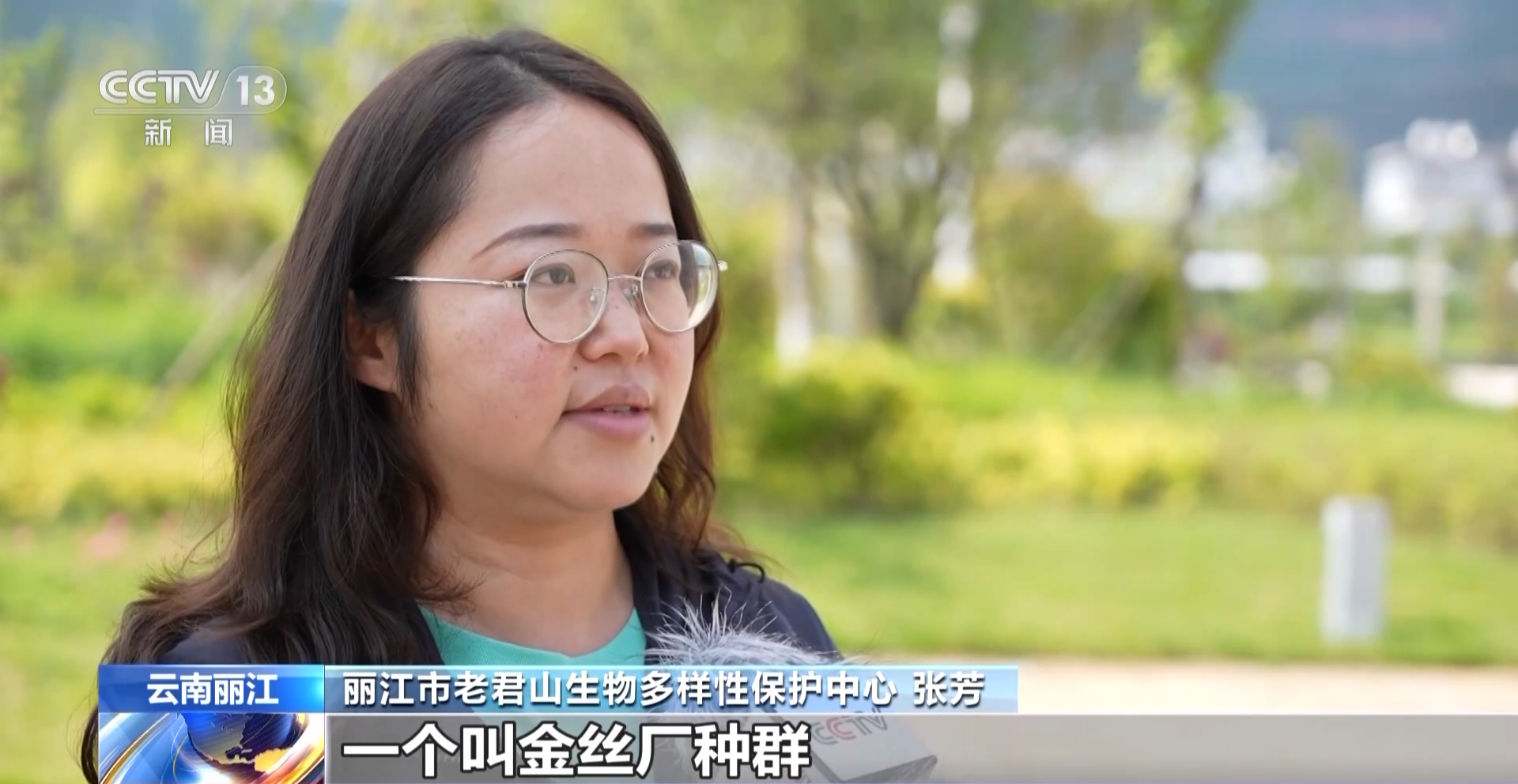
Zhang Fang, Laojunshan Biodiversity Conservation Center, Lijiang City:There are two populations of Yunnan golden monkey in Laojun Mountain of Lijiang, one is called Jinsichang population, and the other is called Dapingzi population. Through our population investigation for many years, it is found that the number of monkeys in Jinsichang has increased from more than 180 at the beginning to about 280 now, and the number of Dapingzi monkeys is about 50.

Clouds are steaming and foggy, old trees are towering, and pineapples are hanging on the ground, which is a portrayal of this forest. Yunnan golden monkeys are called "Snow Mountain Elves". Although they are famous for their "red lips" which are similar to human faces, their living environment is mostly far away from people and unattainable.

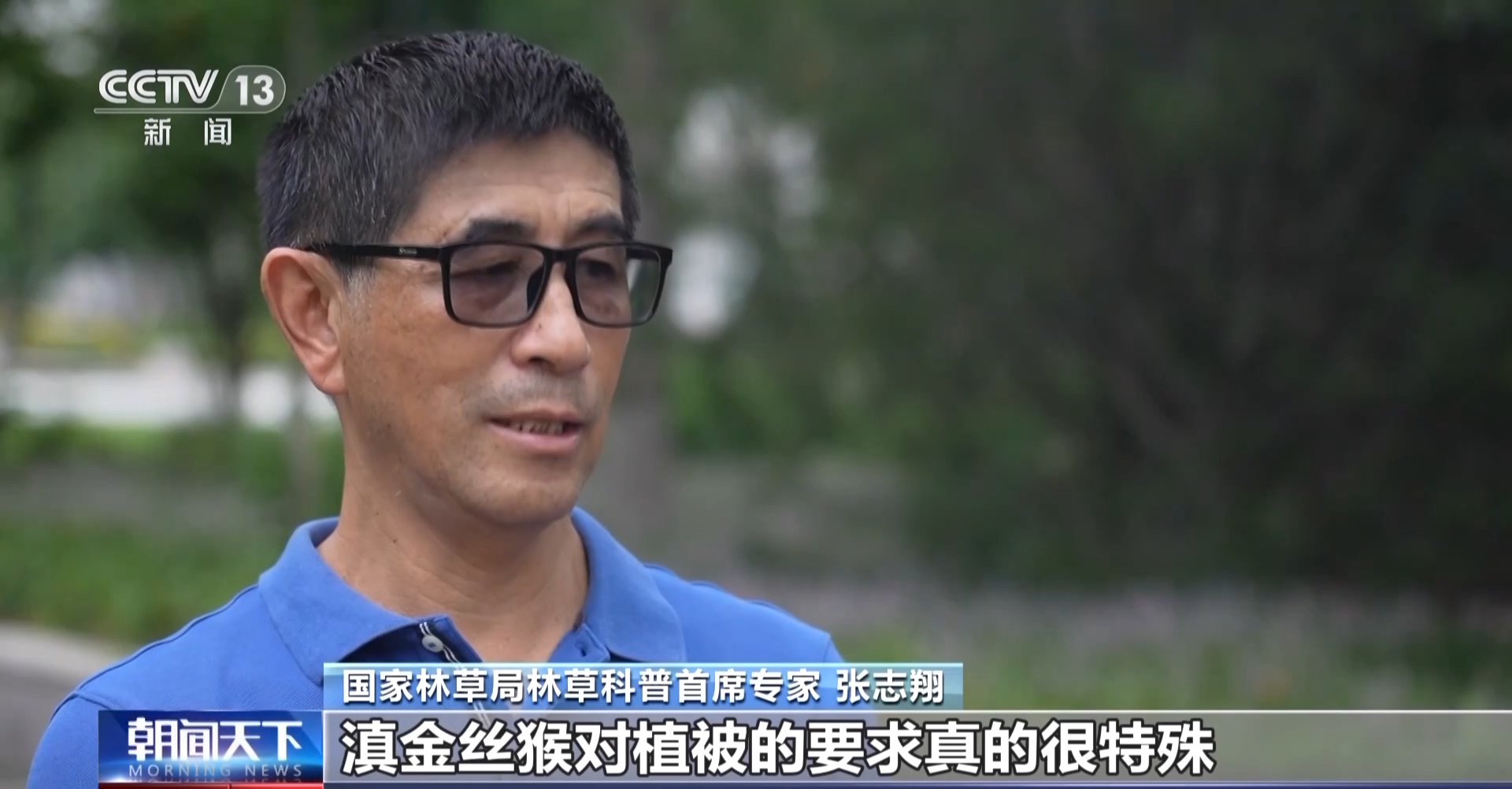
Zhang Zhixiang, Chief Expert of Forestry and Grass Science in National Forestry and Grassland Administration:Yunnan golden monkey’s requirement for vegetation is really special. It wants dark coniferous forest, and only in dark coniferous forest can a large number of pineapples appear. In addition, there are broad-leaved forests in alpine areas, and the fog-filled environment is likely to produce usnea or lichens, mainly dendritic lichens.

Because they only live in virgin forests or virgin secondary forests with little human interference, Yunnan golden monkey is considered as an indicator species of forest authenticity. The habitat they choose must be a pristine and rich world, where many other species live and multiply freely with them.

Zhang Fang, Laojunshan Biodiversity Conservation Center, Lijiang City:More than 80 infrared cameras were installed, and Yunnan golden monkey, black-necked pheasant, yellow-throated pheasant, forest musk deer and other national key protected animals, as well as rare and endangered animals such as yellow-throated mink, red panda, blood pheasant and white-bellied golden pheasant were monitored.

The takeaway said that it takes more than 10 hours to earn more than 10,000 yuan a month. Some riders said that they have never seen the high temperature allowance.

Since August, many areas in China have been hit by high temperature, and the temperature in many cities has climbed to 40 degrees, which has not stopped the pace of takeaway buddies traveling through the city. As outdoor workers, their income and high temperature allowance in extreme climate have become the focus of attention.

Xiaozhuang in Jiangsu is a rider with two years’ take-away experience. He revealed that despite the severe high temperature challenge, he still works for more than ten hours a day and can only take a break in the afternoon. He takes orders for more than 50 times a day and earns about 10,000 yuan a month, including extra activity subsidies. Xiaozhuang stressed that it is necessary to drink plenty of water to avoid heatstroke under such work intensity, and the continuous high temperature makes the food delivery environment more and more difficult.

Pippi, a takeaway in Shanghai, shared that the hot weather in the city has lasted for several days and is expected to continue in the short term. He works 10 hours a day, and his monthly income also exceeds 10,000 yuan, while the monthly income of his more hardworking peers can reach about 13,000 yuan. Pippi described his work with a helpless and tenacious attitude: "As long as he can run, he will go all out."

Xiaole in Fujian adopted a flexible strategy to cope with the high temperature. He chose to avoid the hot noon sun and work in the cooler hours in the morning and evening. By adjusting his working hours, he also achieved the goal of earning more than 10,000 yuan a month, thanks to the flexibility and incentive policies of the crowdsourcing mode of Meituan.

However, the income of take-away riders is not so optimistic in all regions. Some riders in Henan and other places reported that due to the low unit price, the monthly income usually fluctuates between 4,000 and 6,000 yuan, and the high-intensity work is in sharp contrast with the meager remuneration. They think that high income often means extreme physical overdraft.

Regarding the high temperature allowance, the feedback from riders varies significantly from place to place. Some riders said that although they should enjoy the high temperature allowance according to the regulations, they actually rarely receive it, or the allowance is converted into an order reward and other forms, and the amount is meager. Although Meituan and Hungry have introduced high-temperature care measures, in terms of specific implementation, there are great differences in subsidy standards and implementation between different cities and different sites, and some riders even have never heard of high-temperature subsidies.

Generally speaking, the work environment of take-away riders in hot weather is complex and changeable, and their income and welfare benefits are affected by regions, platform policies and personal work patterns. Ensuring the legitimate rights and interests of outdoor workers, especially reasonable subsidies in hot weather, is still an urgent social issue.

"Two Worlds of Happiness" will usher in the finale, and the story of Alan Yu and Yukee Chen”s heart abuse will attack

1905 movie network news Because of the obscurity, the sweet love drama in ancient costume starring Yukee Chen’ is being broadcasted exclusively by iQiyi. Since its launch on February 21, it has been in the forefront of the major rankings inside and outside the station. Last Friday to Sunday, the fourth week’s update was ushered in. The enjoyable drama of "Ayuan is hard and Wang Zesheng" was well received by the audience, and the porcelain bowl couple’s sadomasochism escalated.


On March 20th, "Two Worlds of Happiness" is about to close its membership. The "two generations" bumpy porcelain bowl couple will also accept new challenges. In addition, Qi Xin punishes the evil King Yeh, knowing how the feud between Aunt Xia and Ayuan will develop, and whether the couple with sweet and abusive porcelain bowls can have a happy ending as the audience wishes?


In the fourth week, the topic of heat continued to go high, and the porcelain bowl couple abused their hearts.

Since the broadcast of "Two Worlds of Happiness", the results of each list have been rising. The highest heat in the iQiyi station is as high as 8032, ranking among the best in the total list of TV dramas. In addition, it has been in the forefront of the list of cat’s eye, Detawen, Guduo, Yunhe and other industries. It has been on the hot search for four weeks since its launch, and the discussion on tap water topics on non-update days has been heated. Last week, the couple in porcelain bowls cried tears with high energy, and # Jingci vomited blood again # soared to the hot search list in Weibo, showing the netizens’ concern about the plot.

In addition, updating the interaction of artists on the same day, Yukee Chen’ and Ayuan released an expression pack of "good spirit" in Lanyue Lake: "Ignore me tonight, and I will …" Subsequently, Zhang Sifan, Ma Yue, Wang Gongliang and other actors forwarded it one after another to "feel aggrieved" for Ayuan. Netizens spontaneously changed their names to Ayuan’s support: "Today he ignores you, tomorrow you will abuse him", "The Qinhe team is standing in Ayuan, and the scene is so miserable" and "Ayuan really has personality" …… The scene is very lively.


Last week, the porcelain bowl couple entered Heart Abuse 2.0, and the plot was full of high-energy tears. Aunt Zhixia got in the way, and Ayuan didn’t receive the letter left by Jingci before leaving Qinhe, which led to the misunderstanding between the couple, and Ayuan was chilling. Jingci clearly knew everything, but he didn’t tell Ayuan, and even "resigned" to accept Ayuan’s marriage with Mu Beiyan. In particular, Ayuan was framed by Wang Zesheng in Lanyuehu, and Jing Ci stood on Wang Zesheng’s side to protect Ayuan. This move broke Ayuan’s heart and proved his innocence. Ayuan chopped his purse and wanted to "past lives, make a clean break".This episode made netizens cry their hearts out, leaving messages: "I’ll forget about the abuse", "My eyes are swollen and I feel sorry for the porcelain bowl couple" and "Please explain the scene quickly".


Later, Ayuan learned the mystery of his life experience, and was framed and imprisoned by the king of Ye. Even the closest deer died tragically in prison. For a time, Ayuan suffered multiple blows, and the story of heart abuse attracted hot discussion from netizens: "The name of Ershi Huan was changed to Ershi Abuse, and every episode was crying."


Apart from the story of the heart abuse of the porcelain bowl couple, Wang Zesheng designed to frame Ayuan, and Ayuan, a strong woman, went online, which not only made Wang Zesheng mad, but also proved that Wang Zesheng deliberately framed the "Moon Lake Incident". Then, she threw away the medicine that Wang Zesheng gave her to restore her memory, and angered Wang Zesheng: "I won’t let you bully me again." Ayuan’s "revenge" plot made netizens applaud.


The MV of "No Regret" shows Mu Beiyan’s infatuation, and the ending of "Two Worlds" this week triggered expectations.

Recently, Ershihuan released the episode "No Regret" MV, in which Zhang Sifan, the actor of Mu Beiyan, was specially invited to sing, and "Xiao He Wang Ye" used a low voice to tell Mu Beiyan’s infatuation with Yuan Qingyi: Yuan Qingyi, a childhood friend, ruined his reputation for love, but he was desperate to protect this girl; Later, Feng Mian started his "Second" life as the original Qing Li, and Qinhe lived together day and night, which made him hopelessly fall in love with Ayuan, who was more independent, and stayed with her. ……

The sad melody sings Xiao He Wang Ye’s infatuation to protect the heart of "Two Worlds": "Planting two words in your heart is called not regretting". Ruthless infatuation, infatuation and ruthlessness, Prince Xiaohe’s infatuation and devotion can only bless the two sisters of the original family to find happiness. This contrast is even more cruel than the sadomasochism of the porcelain bowl couple.


This week, VIP members are about to close, and the finale is multi-line, with continuous reversal and continuous high-energy plot. Along the way, the porcelain bowl couple experienced a tortuous process of sweetness, heart abuse and heart abuse 2.0. The roller coaster-style love hung the appetite of the audience. Can the porcelain bowl couple who have been thinking about it for a month reap the "two-world joy" ending?

In addition, the suspense line of the series "brain burning" will also be uncovered one by one. When did King Ye, who dressed as a pig and ate a tiger, start planning everything, and what was his purpose? In addition, there is a high-energy tear point — — The two sisters of the original family, who were separated from the original Qing Dynasty on a windy night, finally reunited after 20 years. More "Two Worlds of Happiness" was finally declassified, so please look forward to the final update of iQiyi this weekend.


"Two Worlds of Happiness" is adapted from the novel of the same name "Lonely Moon and Bright Moon", which is produced by iQiyi and produced by iQiyi Artist Studio. Every Friday to Sunday at 8: 00 pm, 2 episodes will be updated, and members will watch one week (6 episodes) first.


"You are my spring" exposed the "going" version to announce that Huang Xiaoming was splashed.


1905 movie network news The film starring Zhang Hong as the chief producer, Zhang Hong as the chief producer, Zhang Zhang, Zhang Zhang, Zhang Zhang, Zhang Zhang, Zhang Zhang, Zhang Zhang, Zhang Zhang, Zhang Zhang, Zhang Zhang, Zhang Zhang, Zhang Zhang Zhang, Zhang Zhang Zhang, Zhang Zhang Zhang, Zhang Zhang Zhang, Zhang Zhang Zhang, Zhang Zhang Zhang, Zhang Zhang Zhang Zhang, Zhang Zhang Zhang Zhang, Zhang Zhang Zhang Zhang, Zhang Zhang Zhang Zhang Zhang Zhang Zhang, Zhang Zhang Zhang Zhang Zhang Zhang Zhang Zhang Zhang Zhang Zhang Zhang Zhang Zhang, Zhang Zhang Zhang Zhang Zhang Zhang Zhang Zhang Zhang Zhang Zhang Zhang Zhang Zhang Zhang, Zhang Zhang Zhang Zhang Zhang In the trailer, we show the relationships among the characters, such as long-distance lovers who never give up in the epidemic, migrant workers who do not leave their names in Wuhan, community grass-roots workers who stick to their posts, medical workers who fight for the front line and give their lives to themselves, and medical families who help Hubei, which separate the two places. All of them go bravely for their love, and everyone is making an agreement with you in front of the screen.


Zhou Dongyu and YIN FANG interpret the most beautiful appearance of love.

Huang Xiaoming’s humorous interpretation of "fatherly kindness and filial piety"


The trailer starts with Shang Xiaoyu played by Zhou Dongyu and Li Nanfeng played by YIN FANG. With the idea of "Don’t be afraid, I must see you", Li Nanfeng firmly rode to Shang Xiaoyu’s side to meet her. Outside the ward, with the distance between the rooftop and the window, he took Xiaoyu to see the "sea" and fireworks they agreed on in his unique way. The picture of Zhou Dongyu wearing an oxygen mask was real and moving, and he combined various states of discomfort, surprise and emotion with a tearful expression in his smile.


As soon as the camera turns, Liu Erhong (played by Song Xiaobao) and Wang Dapeng (played by Pan Binlong) drive trucks "retrograde" to sick old people in Wuhan and Lu Yu. Although they were worried about the risk more than once, they made up their minds to carry the old man to the hospital, explaining the warm encounter between strangers. Lao Wang (played by Wang Jingchun), the secretary of the community, gained everyone’s understanding and respect when he served the residents in the closed community, including Mai (played by Angel), who lived alone at home because his mother was fighting against the epidemic. When the secretary had to leave his post temporarily, Mai and all the residents saw him off and lit up a "starry sky" with a mobile phone flash, expecting the secretary to meet again after his safe return.


Gong Chen (played by Chao Huang) and Yang Shan (played by yangsi) each wear cool protective clothing to fight against "death" in the hospital, but they always insist on meeting in the warm color of spring; His wife Wang Yaer (played by Song Jia) left home to help Hubei, and her husband Li Jing (played by Huang Xiaoming) stayed in Sichuan to take care of his son alone. However, in the earthquake, his "son" Lele (played by Zhang Hangcheng) splashed his face with instant noodles, which was dubbed by netizens as "Huang Xiaoming turned yellow and poured bright flowers". This humorous scene of "father’s filial piety" revealed a father’s slightly "clumsy" love for his children.


The stars bravely go to the one they love.

Meet the person you want to see on April 2! Take advantage of spring. "


The film "You are my spring" tells the warm story of ordinary people watching each other in difficulties from a down-to-earth perspective. A series of questions in this trailer, such as "You must be distressed", "Will you be flustered" and "Are you still insisting", are not only questions about the situation of each character, but also express the sincere resonance of every audience.


Combined with the newly released stills, the relationship between the characters in the story is more clear, and it also corresponds to the connection between people in real life: long-distance lovers who never leave in the epidemic, migrant workers who do not leave their names in Wuhan, grassroots people who stick to their posts, medical workers who fight for the front line and give themselves up, and medical families who help Hubei & HELIP; …


In a special period, these ordinary people who are still humble and full of hope in the face of the real situation, just like every "you" and "me", are heading for their own hearts, taking pains only to meet the people they want to see. Just like the invitation sent by the whole staff to the audience at the end of the trailer, "Let’s meet! Take advantage of spring. "


The film You Are My Spring was directed by the Chinese Film Association, with Chen Daoming as the chief producer, Huang Bo as the chief producer, Zhang Hong as the chief producer, Zhou Nan, Zhang Chi, Yu-sheng Tian, Dong Yue and Rao Xiaozhi as the directors, Zhou Dongyu, YIN FANG, Song Xiaobao, Pan Binlong, Wang Jingchun, Zhao Jinmai, Huang Chao, Yang Si, Huang Xiaoming, Song Jia and Zhang Hangcheng (in order of appearance).


Protecting the same river and surging new kinetic energy (magnificent 70-year struggle, new era and new pattern of regional coordinated development)

  Out of the snow-capped mountains, across the plateau, across the canyons, and rushing up to Wan Li, the Yangtze River is full of soup, giving birth to a long-standing Chinese civilization.

  Since the founding of New China, especially since the reform and opening-up, the economy and society in the Yangtze River Basin have developed rapidly, and the comprehensive strength has improved rapidly, which is the focus and vitality of China’s economy. However, the Yangtze River is overwhelmed by the long-term extensive development: Dongting Lake and Poyang Lake, the "two kidneys" of the Yangtze River, have frequently bottomed out, nearly 30% of the important lakes and reservoirs are still in the state of eutrophication, and the Yangtze River’s biological integrity index has reached the worst "no fish" grade … … General Secretary of the Supreme Leader pointed out: "‘ The Yangtze River is ill ’ And he is still very ill. "

  "Never allow the ecological environment of the Yangtze River to continue to deteriorate in the hands of our generation, and we must leave a clean and beautiful Yangtze River for future generations!" Since the 18th National Congress of the Communist Party of China, the CPC Central Committee with the Supreme Leader as the core has made overall plans and scientific plans, and deployed and implemented the development strategy of the Yangtze River Economic Belt.

  "Make great efforts to protect, not to develop" and "explore a new path of ecological priority and green development". In January 2016 and April 2018, General Secretary of the Supreme Leader held two symposiums to promote the development of the Yangtze River Economic Belt in Chongqing in the upper reaches of the Yangtze River and Wuhan in the middle reaches, profoundly expounding the major issues that need to be correctly grasped and making work arrangements.

  For more than three years, the Office of the Leading Group for Promoting the Development of the Yangtze River Economic Belt, together with the relevant departments of the State Council and 11 provinces and cities along the Yangtze River, has firmly adhered to the principle of "putting the restoration of the ecological environment of the Yangtze River in an overwhelming position", made great efforts to strengthen the top-level design, improve the ecological environment, promote the transformation and development, and explore the reform of the system and mechanism, so as to protect a mighty river.

  Vitality reappears and "color" is improving.

  Put the restoration of the ecological environment of the Yangtze River in an overwhelming position, and "great protection" will strike hard

  With a click, Huang Yuyang pressed the shutter to freeze the finless porpoise at the moment when a plaster white jumped out of the river.

  In recent years, every summer, Huang Yuyang, a citizen of Yichang, Hubei Province, went to the Yangtze River to photograph the finless porpoise. This year, he even photographed a "three porpoises in the same frame". "The frequent appearance of finless porpoises is a great improvement ‘ Chemical wai Jiang ’ Silent praise for continuing to repair the ecology. "

  The finless porpoise is an indicator species of the Yangtze River ecosystem. The scientific investigation report of Yangtze finless porpoise released by the Ministry of Agriculture and Rural Affairs in 2018 confirmed Huang Yuyang’s statement: The number of Yangtze finless porpoise is about 1012 in the main stream of Yangtze River from Yichang to Shanghai and in Dongting Lake and Poyang Lake basins. Although the extremely endangered situation has not changed, the sharp decline in population has been curbed.

  Walking along the Yangtze River, more gratifying improvements in the ecological environment are taking place — —

  The continuous returning farmland to the lake has increased the storage area of Dongting Lake by 779 square kilometers compared with 1978. More than 200 wetland protection projects have increased the wetland area in the Yangtze River basin by 303,600 mu; The rectification of 1,361 illegal wharves along the Yangtze River trunk line was completed, of which 1,254 were demolished and all of them were greened, so that the banks of the Yangtze River were dressed in green again … …

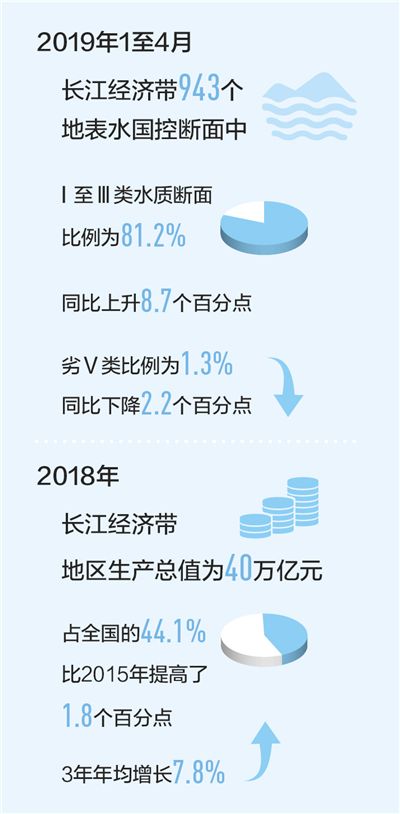
  The "mother river", which was seriously overdrawn, finally got a chance to breathe. In the past few decades, the Yangtze River Economic Belt has supported 45% of the country’s total economic output and cultivated over 40% of the population. However, the development mode of pursuing scale and speed in the past led to serious overdraft of the Yangtze River ecological account. According to the information released by the Yangtze River Committee of the Ministry of Water Resources, from 2005 to 2015, the wastewater discharge in the Yangtze River basin increased from 29.64 billion tons to 34.67 billion tons.

  To promote the development of the Yangtze River Economic Belt, the urgent task is to "stop bleeding" and do a good job in the protection and restoration of the Yangtze River ecological environment. The provinces and cities along the Yangtze River insist on continuously improving the water quality of the Yangtze River, and strike hard to solve outstanding ecological and environmental problems.

  Solidly promote the control of water pollution, "strong medicine to eliminate furuncle, scraping bones to treat poison."

  In 2017, Yichang picked up the "scalpel" and waved to the chemical industry, the first local industry with an output value of over 100 billion yuan. By the end of this year, it will complete the goal of "clearing" the installations of 134 chemical enterprises within 1 km of the coastline of the Yangtze River and its tributaries. Anhui has clearly defined the hierarchical control measures for the coastline of 1 km, 5 km and 15 km along the river, and carried out seven major actions of "prohibiting new construction, reducing storage, turning off pollution sources, entering the park, building new green buildings, accepting unified management and strengthening the mechanism".

  Strive to promote water ecological restoration, "consolidating the foundation and cultivating the yuan, nourishing blood and defending qi".

  On the banks of Taixing River in Jiangsu Province, small chemicals and shipyards that have been entrenched for decades have disappeared, and they have been replaced by natural ecological coastlines that stretch for 12 kilometers. Riverside ecological wetlands and green corridors have become the first choice for Taixing citizens to take a leisurely stroll. In Hubei, the 10-year-old "Honghu Ecological Defence War" also achieved results: all 1,634 professional fishermen landed, and the 155,000-mu lake purse seine was demolished, and the poetic landscape of "Hong Hushui, beating waves" was reappeared.

  Treat the disease before it happens, and protect the "mother river" with the strictest system and the strictest measures.

  Guizhou and Hubei establish a negative list system for industrial access; Hunan has cancelled the per capita GDP assessment for 79 restricted development regions and counties in the province; Jiangsu promotes 22 comprehensive reforms of environmental protection systems; Since the beginning of this year, Yunnan has included 36,000 square kilometers of Jinsha River Basin (Yunnan part) in the red line of ecological protection, accounting for 30.5% of the red line area of ecological protection in the province. Chongqing has fully implemented the river length system and established a three-level "double total river length" structure at city, district, county, street and town levels, covering more than 5,300 rivers and more than 3,000 reservoirs in the city.

  The "Great Protection" struck hard and solved a number of "long-standing problems", and the color of "Mother River" gradually improved.

  In January this year, the Ministry of Ecology and Environment issued a bulletin on the quality of water resources. Of the 1,155 water functional zones in the Yangtze River Basin, 1,032 reached the standard, with a compliance rate of 89.4%, an increase of nearly 4 percentage points year-on-year.

  Strengthen cooperation and integrate organically.

  Put your own development into the overall situation of coordinated development, play a good game of chess and protect a river together.

  At the beginning of this year, counties and districts in Yichun City, Jiangxi Province agreed on 14 compensation agreements for cross-county horizontal ecological protection. The water quality of the handover section shall be assessed on a monthly basis, and if it meets the requirements of the agreement, the downstream counties shall compensate the upstream counties; If the agreement is not met, the upstream will compensate the downstream.

  Water is flowing. In the past, the Yangtze River could not get out of the "strange circle" of pollution control. An important factor was that the upstream and downstream "played their own trumpets and sang their own tunes". Nowadays, "whoever pollutes will be treated" and "whoever benefits will be compensated". Responsibility comes first, benefit sharing is postponed, and responsibilities and rights are tied to each other. The governance situation of inter-provincial and inter-city basins in the main and tributary of the Yangtze River has changed.

  Anhui and Zhejiang provinces carried out the first pilot project of ecological compensation in inter-provincial river basins in China, and protected an underwater Qiantang River in Qing Jiang for seven years in succession with the "water quality" of Xin ‘anjiang River. Up to now, Huangshan City and Jixi County in Anhui Province, which are located in the upper reaches of Xin ‘anjiang River, have received relevant compensation of nearly 4 billion yuan. In Chishui River in the upper reaches of the Yangtze River, Yunnan, Guizhou and Sichuan provinces jointly set up a compensation fund for horizontal ecological protection in the basin of 200 million yuan to protect this tributary of the Yangtze River, which is known as the "Wine River".

  The upstream and downstream, the left and right banks and the main tributaries of the Yangtze River Economic Belt are an organic whole, and the key to great protection lies in the word "common", but it is also difficult to do so. Under the pattern of a chess game in the whole basin, both ecological management and industrial development must correctly grasp the relationship between their own development and coordinated development.

  Only by eliminating "blocking points", breaking regional barriers and accelerating river basin coordination can the "golden waterway" be smooth — —

  From 1,500 containers a day to 2,500 containers a day, it only took more than a year for Chenglingji Port in Yueyang, Hunan. Deng Longbiao, head of the comprehensive department of Hunan Port Group, introduced that Chenglingji Port cooperated with Shanghai Port Group to set up Hunan Chenglingji Port Group, which opened up the "blocking point" of integrated water transport in the province and strengthened cooperation with upstream and downstream terminals. In the past, "the big ship was not satisfied, and the small boat could not fit". Now, "the small boat went to the tributary, and the big ship entered the Yangtze River, and the size was full".

  From Taicang Port in Jiangsu to Shuifu Port in Yunnan, the tide of port integration is surging inland along the Yangtze River waterway. Logistics alliances and port alliances have been formed one by one, and the comprehensive three-dimensional transportation corridor has been accelerated. Hot metal combined transport and river-sea combined transport & HELIP; … Under multimodal transport, the gold content of the "golden waterway" with the largest freight volume of the Yangtze River in the world continues to increase.

  Only by clearing market barriers, promoting the free flow and optimal allocation of labor, capital, technology and other factors across regions, dislocation development and coordinated development can the Yangtze River Economic Belt be built into an organically integrated and efficient economy — —

  A new energy electric vehicle is designed and developed in Shanghai. The battery materials and battery packs come from Changzhou, Jiangsu, Ganzhou, Jiangxi and other places, and the whole vehicle assembly is in Hubei, Sichuan and Chongqing. Electronic information, equipment manufacturing and other industrial chains are longer, with more flowers in the upper, middle and lower reaches, dislocation competition and gratifying division of labor and cooperation, which has become an important support for the high-quality development of the Yangtze River Economic Belt.

  At present, the "1+3" inter-provincial consultation and cooperation mechanism of the Yangtze River Economic Belt, led by the Office of the Leading Group for Promoting the Development of the Yangtze River Economic Belt and attended by 11 provinces and cities along the Yangtze River, has been fully established, and four provinces and cities in the lower reaches of the Yangtze River, three provinces in the middle reaches and four provinces and cities in the upper reaches have also established inter-provincial consultation and cooperation mechanisms respectively, and the system and mechanism for coordinated development have been continuously improved.

  Upstream, the Yangtze River Basin Park Cooperation Alliance, established with the participation of 48 cities and 59 parks, is making great efforts to promote collaborative innovation between intelligent manufacturing and robot industry chain elements. Overlooking the Yangtze River, the regional integration development of the Yangtze River Delta has become a national strategy, and the integration development level of urban agglomerations in the middle reaches of the Yangtze River and Chengdu-Chongqing urban agglomerations has been continuously improved … … Jumping out of the "thinking of three points in one acre", playing a good game of chess and protecting a river together, the endless Yangtze River is scouring out a coordinated development zone.

  Reform leads and innovation drives.

  Change and innovate the traditional development mode and path, and promote the transformation of the development power of the Yangtze River Economic Belt

  Many people didn’t expect that Guizhou, an underdeveloped inland province, had devoted several years to "making something out of nothing" and built a famous "China Valley" at home and abroad.

  Guided by Gui ‘an New District, Guizhou relies on abundant hydropower resources to cut into the "big data industry". A number of Fortune 500 companies such as Intel, Dell and Apple gathered here, and a number of domestic big data leaders such as CLP, Alibaba and Huawei took root here.

  Han Shaobo, deputy director of the Big Data Development Administration of Guizhou Province, introduced that Guizhou takes innovation as the engine to accelerate the "stock change" to achieve the "variable breakthrough" of the digital economy. At present, 33.9% of industrial enterprises in the province have fully integrated big data with key business links such as R&D, production, sales and management, and the growth rate of the digital economy has ranked among the best in the country for four consecutive years.

  The success or failure of ecological environment protection depends on the economic structure and economic development mode in the final analysis. Grasping great protection and not engaging in great development is not to develop, but to force the transformation and innovation of traditional development models and paths, and to seek higher quality development with green and innovation as the keynote.

  The transformation and upgrading of traditional industries, the cultivation of emerging industries and the optimization and upgrading of manufacturing structure are promoting the transformation of the development momentum of the Yangtze River Economic Belt.

  Walking into the No.18 Workshop of Sany Heavy Industry in Changsha Economic and Technological Development Zone is like walking into a garden. A traditional production line usually produces only one product, but in this well-known intelligent manufacturing demonstration workshop in Asia, more than 30 kinds of construction machinery and equipment can be assembled, and an excavator can be off the assembly line in 5 minutes.

  "We must take the initiative to cross the threshold of intelligent and digital transformation!" Liang Wengen, chairman of Sany Heavy Industry, said. Facing the once depressed market, Changsha construction machinery enterprises, including Sany Heavy Industry, have built intelligent manufacturing workshops, laid out intelligent logistics systems and built a big data cloud platform to seize the commanding heights of industrial chain and value chain in the increasingly fierce market competition.

  Faced with the huge stock of traditional industries, the provinces and cities along the Yangtze River insisted on deepening the structural reform of the supply side. On the one hand, resolutely go to production capacity, the decisive elimination of the elimination, the complete withdrawal of the withdrawal, and the strong man broke his wrist to crack the "chemical encirclement of the river." On the other hand, we will persist in upgrading traditional industries with modern technology and accelerate the "stock change": Hubei has rolled out the "10,000-enterprise trillion-dollar technological transformation project", with an investment of more than 500 billion yuan in industrial technological transformation; In 2018, Guizhou implemented technological transformation for 1,688 industrial enterprises through the "transformation of thousands of enterprises", and made Shangyun enterprises exceed 10,000 through the "integration of all enterprises"; Jiangxi has thoroughly implemented the three-year action plan for technological transformation of industrial enterprises, and strived to increase the investment in technological transformation by 30% in 2019 & hellip; … In 2018, the main business income of industrial enterprises above designated size in the Yangtze River Economic Belt was 46.7 trillion yuan, accounting for 45.7% of the national industry, an increase of 4.1 percentage points compared with 41.6% in 2014.

  Walking through Zuoling Avenue at the edge of Wuhan Optical Valley, just 8 kilometers, Yangtze River Storage (National Storage Base), Huaxing Optoelectronics, tianma microelectronics and other "new Wuhan-made" are row upon row, and the total investment of emerging industries exceeds 400 billion yuan.

  Wuhan Optical Valley started from an optical fiber 40 years ago and developed into a national optoelectronic industry base. Only optical fiber occupies 25% of the global market share. Today’s Optics Valley, from network transmission to display, from intelligent terminals to chips, a trillion-dollar industrial cluster with "core screen end network" has taken shape.

  From "Optical Valley" in Wuhan to "Digital Valley" in Guizhou and "Smart Valley" in Chongqing, from "Huigu" in Wuxi, Jiangsu and "Sound Valley" in Hefei, Anhui to "Power Valley" in Zhuzhou, Hunan, which leads the industry with rail transit equipment, all areas along the Yangtze River insist on innovation-driven and "incremental rise", and new technologies, new formats, new models and new industries are surging, and a number of them are competitive and influential in the country and the world.

  What is more exciting than the optimization and upgrading of manufacturing structure is that creating an innovative environment and stimulating endogenous power are injecting inexhaustible power into accelerating the transformation of old and new kinetic energy along the Yangtze River.

  "Elsewhere, parks are built in urban areas, and we are building new cities in parks, changing ‘ Production — City — People ’ The development logic of is ‘ People — City — Production ’ 。” Liu Yang, deputy director of Chengdu Science City Management Committee in Tianfu New District, Sichuan, said that it took only four years for Tianfu New District to develop from a blank sheet of paper to become the core area of innovation and development in Sichuan.

  Nanjing Jiangbei New District has carried out the pilot reform of "Regional Environmental Assessment+Environmental Standards" in Industrial Technology Research and Innovation Park, put forward the project access standards, and formulated a "negative list" to provide environmental support for building a "city of chips" and a "city of genes". In the first four months of this year, the main business income of integrated circuits and life and health industries in Jiangbei New District increased by 52% and 40.5% respectively.

  Chongqing Liangjiang New District stipulates that social investment projects that do not involve land and financial subsidy policies only need to be filed and no longer approved; For foreign-invested projects that meet the requirements of industrial layout, the foreign-funded authorities will no longer pre-approve them … … Chongqing Liangjiang New Area Digital Economy Industrial Park, which has been listed for only one year, has attracted investment of 52.9 billion yuan and accepted 3,865 digital economy enterprises.

  The construction of Shanghai Science and Technology Innovation Center has been launched in an all-round way, and the comprehensive innovation and reform experiments in Anhui, Sichuan and other regions have been further promoted. The pilot reform of Shanghai, Zhejiang, Hubei, Chongqing and Sichuan Pilot Free Trade Zones has accumulated experience & HELIP; … The "Golden Waterway" connects the "Belt and Road", and the reform and innovation and opening up have increased their efforts, anchoring the "innovation drive belt that leads the national transformation and development". The Yangtze River Dragon is taking off with a new attitude. (Reporter He Guanghua, Cheng Yuanzhou, Sun Chao)

Notice of China Banking and Insurance Regulatory Commission Municipality on Printing and Distributing the Measures for Capital Management of Financial Asset Investment Companies (Trial) Measures for C

China Banking and Insurance Regulatory Commission on printing and distributing financial assets investment companies

Notice of Measures for Capital Management (for Trial Implementation)

Yin Bao Jian Gui [2022] No.12

All banking insurance regulatory bureaus, Industrial and Commercial Bank of China, Agricultural Bank of China, China Bank, China Construction Bank, Bank of Communications, and all financial asset investment companies:

"Measures for Capital Management of Financial Asset Investment Companies (Trial)" has been adopted at the second ministerial meeting in China Banking and Insurance Regulatory Commission in 2022, and is hereby issued to you, please follow it.

China Banking and Insurance Regulatory Commission

June 17, 2022

Measures for capital management of financial asset investment companies (for Trial Implementation)

Chapter I General Principles

the first In order to strengthen the capital supervision of financial asset investment companies and promote the stable operation of financial asset investment companies, these Measures are formulated in accordance with the Banking Supervision Law of the People’s Republic of China, the Administrative Measures for Financial Asset Investment Companies (Trial) (Order No.4 of the Bank of China Insurance Regulatory Commission in 2018) and other laws and regulations.

the second These Measures shall apply to groups composed of financial asset investment companies and their subsidiaries.

The term "financial asset investment company" as mentioned in these Measures refers to a non-bank financial institution established within the territory of People’s Republic of China (PRC) with the approval of China Banking and Insurance Regulatory Commission, which is mainly engaged in bank debt-to-equity swap (hereinafter referred to as debt-to-equity swap) and supporting business. The term "affiliated institutions" as mentioned in these Measures refers to institutions that are directly or indirectly held by financial asset investment companies and should be included in the scope of consolidated capital supervision in accordance with the provisions of Section V of Chapter II of these Measures.

Article A financial asset investment company shall ensure that the capital it holds can withstand the risks it faces, including group risks, individual risks and systemic risks.

Article 4 A financial asset investment company shall continuously meet the regulatory requirements and indicators of capital adequacy as stipulated in these Measures.

Article 5 The term "capital adequacy ratio" as mentioned in these Measures refers to the ratio between capital and risk-weighted assets held by financial asset investment companies that meet the requirements of these Measures.

Tier 1 capital adequacy ratio refers to the ratio between tier 1 capital and risk-weighted assets held by financial asset investment companies that meet the requirements of these Measures.

Core Tier 1 capital adequacy ratio refers to the ratio between core Tier 1 capital and risk-weighted assets held by financial asset investment companies that meet the requirements of these Measures.

Article 6 A financial asset investment company shall calculate the consolidated and non-consolidated capital adequacy ratio in accordance with the provisions of these Measures.

Article 7 The term "net capital" as mentioned in these Measures refers to the capital balance after deduction from all levels of capital held by financial asset investment companies and affiliated institutions that meet the provisions of these Measures.

Article 8 In addition to the above regulatory requirements for capital adequacy ratio, financial asset investment companies should also meet the regulatory requirements for leverage ratio.

The term "leverage ratio" as mentioned in these Measures refers to the ratio between the net Tier 1 capital held by a financial asset investment company and the adjusted balance of assets on the balance sheet and the balance of off-balance sheet items.

Article 9 A financial asset investment company shall establish a comprehensive risk management framework and internal capital adequacy management and evaluation procedures.

Article 10 China Banking and Insurance Regulatory Commission and its dispatched offices shall, in accordance with these Measures, conduct daily supervision and on-site inspection on the capital adequacy and capital management of financial asset investment companies, and may take corresponding supervision measures as appropriate.

Chapter II Capital Supervision Requirements

Section 1 Calculation of Capital Adequacy Ratio and Regulatory Requirements

Article 11 The formula for calculating the capital adequacy ratio of a financial asset investment company is:

Article 12 The total capital of a financial asset investment company includes core tier 1 capital, other tier 1 capital and tier 2 capital. A financial asset investment company shall calculate all levels of capital and deductions in accordance with the provisions of Section II of this chapter.

Article 13 The risk-weighted assets of financial asset investment companies include credit risk-weighted assets, market risk-weighted assets, operational risk-weighted assets and asset management business risk-weighted assets. A financial asset investment company shall separately measure credit risk-weighted assets, market risk-weighted assets, operational risk-weighted assets and asset management business risk-weighted assets in accordance with the provisions of Section III of this chapter.

Article 14 The capital adequacy ratio of financial asset investment companies at all levels shall not be lower than the following requirements:

(1) The core tier-one capital adequacy ratio shall not be less than 5%;

(2) The Tier 1 capital adequacy ratio shall not be less than 6%;

(3) The capital adequacy ratio shall not be less than 8%.

Article 15 Under certain circumstances, a financial asset investment company shall accrue countercyclical capital above the minimum capital requirement. The countercyclical capital requirement is 0-2.5% of risk-weighted assets, which is met by core Tier 1 capital. The countercyclical capital requirement is determined by China Banking and Insurance Regulatory Commission according to the actual situation.

Section 2 Definition of Capital

Article 16 Core Tier 1 capital includes:

(1) Paid-in capital or common stock;

(2) Capital reserve;

(3) Surplus reserve;

(4) General risk preparation;

(5) Undistributed profits;

(6) Other parts that can be included.

Article 17 Other Tier 1 capital includes:

(1) Other Tier 1 capital instruments;

(2) Premium of other Tier 1 capital instruments.

Article 18 Tier 2 capital includes:

(1) Tier 2 capital instruments;

(2) Premium of secondary capital instruments;

(3) Reserve for excess losses.

Financial asset investment companies should use the weight method to measure credit risk-weighted assets, and the excess loss reserve can be included in tier 2 capital, but it shall not exceed 1.25% of credit risk-weighted assets.

A financial asset investment company shall carry out impairment accounting treatment on financial instruments that need impairment accounting treatment in strict accordance with the requirements of accounting standards and confirm the loss reserve. The excess loss reserve mentioned in the preceding paragraph refers to the part of the loss reserve actually withdrawn by a financial asset investment company that exceeds the balance of non-performing assets.

Article 19 When calculating the capital adequacy ratio, a financial asset investment company shall fully deduct the following items from the core Tier 1 capital:

(1) Goodwill;

(2) Other intangible assets (except land use rights);

(3) Net deferred income tax assets caused by operating losses;

(4) The gap of loss provision for credit risk assets.

The gap of loss reserve refers to the part where the loss reserve actually accrued by a financial asset investment company is lower than the balance of non-performing assets.

Article 20 Capital instruments at all levels held by financial asset investment companies and other financial institutions through agreements, or capital investments at all levels identified by China Banking and Insurance Regulatory Commission and its dispatched offices as inflated capital, should be deducted from the corresponding regulatory capital.

Financial asset investment companies directly or indirectly hold capital instruments at all levels issued by the company, which should be deducted from the corresponding regulatory capital. Financial asset investment companies should deduct the capital investment in affiliated institutions from the capital at all levels when calculating the capital adequacy ratio without consolidation.

Corresponding deduction refers to a one-time full deduction from the corresponding capital of the financial asset investment company. If the net capital of a financial asset investment company at a certain level is less than the amount to be deducted, the gap shall be deducted from the net capital at a higher level.

Article 21 The small minority capital investment made by a financial asset investment company to financial institutions that are not included in the scope of capital supervision, which exceeds 30% of the company’s core tier-one net capital, shall be deducted from the supervision capital at all levels.

Small minority capital investment refers to the capital investment (including direct and indirect investment) of a financial asset investment company to all levels of financial institutions, which accounts for less than 10% (excluding) of the paid-in capital (common stock plus common stock premium) of the invested financial institution, and can be excluded from the scope of capital supervision according to the provisions of Section 5 of this chapter.

Article 22 Among the large minority capital investments made by financial asset investment companies to financial institutions that are not included in the scope of capital supervision, the part where the total core tier-one capital investment exceeds 30% of the company’s net core tier-one capital shall be deducted from the company’s core tier-one capital; Other tier-1 capital investments and tier-2 capital investments shall be fully deducted from the corresponding level of capital.

Large minority capital investment refers to the capital investment (including direct and indirect investment) made by a financial asset investment company to all levels of financial institutions, which accounts for more than 10% (inclusive) of the paid-in capital (common stock plus common stock premium) of the invested financial institution, and may not be included in the scope of capital supervision according to the provisions of Section 5 of this chapter.

Article 23 Except for the net deferred income tax assets specified in Article 19 of these Measures, other net deferred income tax assets that depend on the company’s future earnings, which exceed 10% of the company’s net core tier 1 capital, shall be deducted from the core tier 1 capital.

Article 24 According to the provisions of Article 22 and Article 23 of these Measures, the total amount of large minority capital investment in financial institutions and the corresponding net deferred income tax assets not deducted from the core tier 1 capital of a financial asset investment company shall not exceed 35% of the company’s net core tier 1 capital.

Section 3 Measurement of Risk-weighted Assets

Article 25 Financial asset investment companies use the weight method to measure credit risk-weighted assets.

Article 26 When measuring the risk-weighted assets of various on-balance-sheet assets, a financial asset investment company should first deduct the corresponding impairment reserve from the book value of the assets, and then multiply it by the risk weight.

A financial asset investment company shall measure the credit risk-weighted assets of various on-balance-sheet assets in accordance with the provisions of Annex 1 to these Measures.

Article 27 When a financial asset investment company uses the weighting method to measure credit risk-weighted assets, it may consider the risk mitigation effect of the risk mitigation clause in accordance with the provisions in Annex 1 of these Measures, and the calculation method is as follows:

Credit risk weighted assets = (book value of assets-impairment reserve-book value of risk mitigation tools) × risk weight of assets+book value of risk mitigation tools× risk weight of risk mitigation tools.

Article 28 Financial asset investment companies should adopt the standard method to measure the market risk capital requirements.

Article 29 A financial asset investment company shall formulate clear criteria for the division of trading books and bank books, specify the positions of financial instruments included in trading books and the conditions for transfer between trading books and bank books, and ensure the consistency of implementation.

Article 30 The market risk-weighted assets of financial asset investment companies are 12.5 times of the market risk capital requirements, that is, market risk-weighted assets = market risk capital requirements ×12.5.

Article 31 A financial asset investment company shall separately measure the capital requirements of various asset market risks in accordance with the provisions of Annex 2 to these Measures.

Article 32 Financial asset investment companies should adopt the basic index method to measure the operational risk capital requirements.

Article 33 The operational risk-weighted assets of financial asset investment companies are 12.5 times of the operational risk capital requirements, that is, operational risk-weighted assets = operational risk capital requirements ×12.5.

Article 34 A financial asset investment company shall measure the operational risk capital requirements based on the average total income in the last three years.

Total income shall be confirmed in accordance with the provisions of Annex 3 of these Measures, including investment income, net fee and commission income, net interest income, net income from disposal of non-performing assets and other income.

Operational risk capital shall be measured according to the following formula:

Among them:

KBIAIt is the operational risk capital requirement measured by the basic index method;

GI is the positive total income in each of the past three years;

N is the number of years with positive total income in the past three years;

α is 15%.

Article 35 Financial asset investment companies should measure the risk capital requirements of asset management business.

Article 36 The risk-weighted assets of the asset management business of a financial asset investment company are 12.5 times the risk capital requirement of the asset management business, that is, the risk-weighted assets of the asset management business = the risk capital requirement of the asset management business ×12.5.

Article 37 A financial asset investment company shall measure the risk capital requirements of asset management business in accordance with the provisions of Annex 4 of these Measures.

Article 38 A financial asset investment company shall carefully judge the risk situation faced by its asset management business and ensure that the capital can cover the risk of asset management business.

Section 4 Calculation of Leverage Ratio and Regulatory Requirements

Article 39 The formula for calculating the leverage ratio of a financial asset investment company is:

Leverage ratio = net Tier 1 capital/(adjusted balance of on-balance-sheet assets+balance of off-balance-sheet items) ×100%

Article 40 The adjusted balance of on-balance-sheet assets is the balance of on-balance-sheet assets after deducting Tier 1 capital deduction from the total assets in the table.

Article 41 Off-balance sheet items do not include asset management business. The balance of off-balance-sheet items is the risk exposure calculated by the off-balance-sheet business of financial asset investment companies according to the corresponding credit conversion coefficient, and the credit conversion coefficient of various off-balance-sheet items shall be implemented in accordance with Annex 5 of these Measures.

Article 42 The leverage ratio of a financial asset investment company shall not be less than 6%.

Section 5 Calculation Scope of Consolidated Capital Supervision Indicators

Article 43 The calculation scope of consolidated capital supervision indicators shall include financial asset investment companies and institutions that directly or indirectly invest in them in accordance with the provisions of these Measures.

Article 44 A financial asset investment company shall follow the principle of "substance is more important than form", take control as the basis, and take into account the risk correlation, and include the invested institutions that meet one of the following conditions into the consolidated calculation scope:

(1) The investee directly owned by the financial asset investment company or its affiliated institutions, or jointly owned by the financial asset investment company and its affiliated institutions with more than 50% of the voting rights.

(2) An investee whose financial asset investment company has less than 50% of the voting rights, but is under any of the following circumstances:

1. Having more than 50% of the voting rights of the institution through agreements with other investors;

2. According to the articles of association or agreement, have the right to decide the financial and operating policies of the institution;

3. Have the right to appoint or remove most members of the board of directors of the institution or similar authority;

4. Have a majority of voting rights in the board of directors of the institution or similar authority.

When determining the voting right of the invested institution, we should consider the potential voting factors such as the current convertible corporate bonds and current executable warrants held by the financial asset investment company. The potential voting rights that can be realized in the current period shall be included in the voting rights of the financial asset investment company to the invested institution.

(3) There is other evidence that the invested institution is actually controlled by the financial asset investment company.

Control means that the investor has the power over the investee, enjoys variable returns by participating in the related activities of the investee, and has the ability to influence the amount of returns by using the power over the investee.

Article 45 A financial asset investment company does not have the majority voting rights or control rights of the invested institution, and it shall be included in the calculation range of consolidated capital supervision indicators under any of the following circumstances:

(1) Although the asset size of a single institution accounts for a small proportion of the overall asset size of a financial asset investment company, according to the risk correlation, the overall risk of such institutions is enough to have a significant impact on the financial position and risk level of a financial asset investment company;

(2) The harm and loss caused by the compliance risk and reputation risk of the invested institution are sufficient to have a significant impact on the financial asset investment company.

Article 46 The following invested institutions may not be included in the calculation scope of consolidated capital supervision indicators:

(a) closed or declared bankrupt institutions;

(2) Institutions that have entered liquidation procedures due to termination;

(3) Invested institutions that have evidence to prove that they have decided to sell within three years, and the equity capital of financial asset investment companies or affiliated institutions is more than 50%;

(4) A subsidiary non-financial institution that meets any of the following conditions:

1. The proportion of financial assets in total assets is less than 50% (the scope of financial assets shall conform to the relevant provisions of Accounting Standards for Enterprises No.22-Recognition and Measurement of Financial Instruments);

2. The asset-liability ratio is lower than 70%;

3. It is recognized by China Banking and Insurance Regulatory Commission and its agencies that it has no investment and financing function.

The conditions stipulated in this paragraph are mainly judged according to the arithmetic average of the audited year-end financial statements of the affiliated non-financial institution in the last two years. If it is established less than two years, it can be judged according to the audited financial statements from the date of establishment to the latest period.

Article 47 If a financial asset investment company and its affiliated financial institutions provide long-term repayment guarantee to affiliated non-financial institutions, the non-financial institutions shall be included in the scope of capital supervision; If there is no repayment guarantee or the repayment guarantee can be unconditionally revoked, the financial asset investment company shall handle it according to the principle of prudence. Equity investment through structured entities such as asset management plans and funds should be managed according to the penetrating principle.

Article 48 A financial asset investment company shall strengthen the capital management of its subsidiaries, determine the management requirements for the capital adequacy of its subsidiaries at all levels according to its actual situation, and urge the subsidiaries to continuously meet the capital management and supervision requirements.

Article 49 China Banking and Insurance Regulatory Commission and its dispatched offices have the right to determine and adjust the scope of capital supervision according to the changes in equity structure and risk categories of financial asset investment companies and their investment institutions.

Chapter III Internal Capital Adequacy Assessment Procedures

Article 50 A financial asset investment company shall, in accordance with the regulatory requirements, establish a sound risk management framework and a robust internal capital adequacy assessment procedure, clarify the risk governance structure, carefully assess various risks, capital adequacy levels and capital quality, and formulate capital planning and capital management plans to ensure that capital can fully resist the risks it faces and meet the needs of business development.

Article 51 The board of directors of a financial asset investment company bears the primary responsibility for capital management of the company. The board of directors shall perform the following duties:

(1) Set the risk preference and capital adequacy target suitable for the company’s development strategy and external environment, and examine and approve the internal capital adequacy assessment procedures to ensure that the capital fully covers the major risks.

(2) Examining and approving the company’s capital management system, and ensuring that the capital management policies and control measures are effective.

(3) Examining and approving and supervising the implementation of capital planning. Examine and approve the capital management plan at least once a year, review the capital management report and the internal capital adequacy assessment report, and listen to the audit report on the implementation of the capital management and internal capital adequacy assessment procedures.

(4) Examining and approving the policies, procedures and contents of capital information disclosure, and ensuring the truthfulness, accuracy and completeness of the disclosed information.

(five) to ensure that financial asset investment companies have sufficient resources to independently and effectively carry out capital management.

Article 52 When making a capital plan, a financial asset investment company shall comprehensively consider the results of risk assessment, stress test, future capital demand, capital regulatory requirements and capital availability to ensure that the capital level continuously meets the regulatory requirements. Capital planning should set at least a three-year target of internal capital level.

Article 53 A financial asset investment company shall improve its reporting system, regularly monitor and report the changing trend of the company’s capital level and main influencing factors, and the report shall at least include the following contents:

(1) Assessing the impact of major risks and development trends, strategic objectives and external environment on the capital level;

(2) Assessing whether the capital actually held is sufficient to resist major risks;

(3) Put forward suggestions to ensure that capital can fully cover major risks.

According to the different importance and purpose of the report, a financial asset investment company shall specify the sending scope, contents and details of all kinds of reports, and ensure that the reporting information and frequency meet the needs of the capital management of the financial asset investment company.

A financial asset investment company shall submit a report on capital management and internal capital adequacy assessment to China Banking and Insurance Regulatory Commission within four months after the end of the year.

Chapter IV Supervision and Administration

Article 54 China Banking and Insurance Regulatory Commission and its agencies shall supervise and inspect the capital adequacy of financial asset investment companies to ensure that the capital can fully cover all kinds of risks.

Article 55 China Banking and Insurance Regulatory Commission and its dispatched offices have the right to put forward more prudent additional capital requirements according to the daily supervision and on-site inspection to ensure that the capital fully covers risks, including:

(a) according to the function orientation of a single financial asset investment company, the implementation of development strategy, the operation and development of debt-to-equity swap, etc., the additional capital requirements put forward;

(2) According to the judgment of the risk of a specific asset portfolio and its relevance to the main business, the additional capital requirements for a specific asset portfolio are put forward by adjusting the risk weight and other methods;

(3) According to the fact that a single financial asset investment company has not established an internal capital adequacy assessment procedure, or the internal capital adequacy assessment procedure fails to meet the relevant requirements, combined with the assessment results of the risk situation, the additional capital requirements are put forward for the financial asset investment company;

(4) According to the operational risk management level of a single financial asset investment company and the occurrence of operational risk events, the additional capital requirements for operational risk put forward by the financial asset investment company;

(five) according to the results of supervision and inspection, the additional capital requirements for financial asset investment companies.

Article 56 According to the capital adequacy, China Banking and Insurance Regulatory Commission and its agencies will be divided into three categories of financial asset investment companies:

(1) Class I financial asset investment companies: the capital adequacy ratio, tier 1 capital adequacy ratio and core tier 1 capital adequacy ratio all meet the capital requirements at all levels as stipulated in these Measures.

(2) Type II financial asset investment companies: the capital adequacy ratio, tier 1 capital adequacy ratio and core tier 1 capital adequacy ratio are not lower than the minimum capital requirements and countercyclical capital requirements, but any one of them fails to meet the additional capital requirements.

(3) Category III financial asset investment companies: any one of the capital adequacy ratio, tier 1 capital adequacy ratio and core tier 1 capital adequacy ratio fails to meet the minimum capital requirements and countercyclical capital requirements.

Article 57 For the first type of financial asset investment companies, in order to prevent the rapid decline of their capital adequacy level, China Banking and Insurance Regulatory Commission and its dispatched offices may put forward the following regulatory requirements:

(a) to strengthen the analysis and prediction of the reasons for the decline in the level of capital adequacy;

(2) Formulating a feasible capital adequacy management plan;

(3) Improve risk control capability.

Article 58 For the second kind of financial asset investment companies, in addition to the regulatory measures stipulated in Article 57 of these Measures, China Banking and Insurance Regulatory Commission can also take the following regulatory measures according to law according to different situations:

(1) Prudent talks with the board of directors and senior management of the financial asset investment company.

(2) Issuing supervision opinions, including: problems existing in capital management, corrective measures to be taken, and opinions on meeting the standards within a time limit, etc.

(3) Require financial asset investment companies to formulate feasible capital replenishment plans and plans to meet the standards within a time limit.

(4) Increase the frequency of supervision and inspection on the capital adequacy of financial asset investment companies.

(5) Require financial asset investment companies to take risk mitigation measures in specific risk areas.

Article 59 For the third kind of financial asset investment companies, in addition to the regulatory measures stipulated in Articles 57 and 58 of these Measures, China Banking and Insurance Regulatory Commission can also take the following regulatory measures according to law according to different situations:

(1) Restrict financial asset investment companies from distributing dividends and other income. Dividends and other income include: items that can be used for profit distribution, stock repurchase, independent income from other Tier 1 capital instruments and independent payment to employees.

(2) Restrict financial asset investment companies from offering any form of incentives to directors and senior managers.

(3) Restrict financial asset investment companies from making equity investments or repurchasing capital instruments.

(four) to limit the important capital expenditure of financial asset investment companies.

(5) Require financial asset investment companies to control the growth of risky assets.

When dealing with such financial asset investment companies, China Banking and Insurance Regulatory Commission can also take other necessary measures in consideration of external factors.

Article 60 For financial asset investment companies whose leverage ratio is lower than the minimum regulatory requirements, China Banking and Insurance Regulatory Commission can put forward the following regulatory requirements:

(1) Replenishing Tier 1 capital within a limited period;

(2) Controlling the growth rate of assets on and off the balance sheet;

(3) Reduce the scale of off-balance-sheet assets.

Chapter V Information Disclosure

Article 61 A financial asset investment company shall disclose information related to capital adequacy to investors and the public through open channels to ensure the centralization, accessibility and openness of information disclosure.

Article 62 The frequency of information disclosure of financial asset investment companies is divided into temporary, semi-annual and annual disclosures. Among them, temporary information shall be disclosed in a timely manner, and the semi-annual information disclosure time shall be within the last 60 working days and the annual information disclosure time shall be within four months after the end of the fiscal year. If it cannot be disclosed on time due to special reasons, it shall apply to China Banking and Insurance Regulatory Commission and its dispatched offices for delayed disclosure at least 15 working days in advance.

Article 63 A financial asset investment company shall disclose relevant information at the following frequency:

(1) Changes in paid-in capital or common stock and other capital instruments shall be disclosed in a timely manner.

(2) Important information such as net core tier-one capital, net tier-one capital, net capital, core tier-one capital adequacy ratio, tier-one capital adequacy ratio, capital adequacy ratio and leverage ratio shall be disclosed once every six months.

(3) Relevant important information such as the calculation range of capital adequacy related indicators, total credit risk exposure, total non-performing assets, provision for impairment of credit risk assets, risk exposure balance after slow release of credit risk portfolio, market risk, operational risk, asset management business risk and debt-to-equity swap business risk shall be disclosed once a year.

Article 64 With the consent of China Banking and Insurance Regulatory Commission, the content of information disclosure can be appropriately simplified on the basis of meeting the overall requirements of information disclosure.

Chapter VI Supplementary Provisions

Article 65 China Banking and Insurance Regulatory Commission is responsible for the interpretation of these measures.

Article 66 These Measures shall come into force as of the date of issuance.

Attachment: 1. Assets credit risk weight in the balance sheet and risk mitigation tools for qualified equity investment.

   2. Measurement rules of market risk standard method

   3. Measurement rules of basic index method of operational risk

   4. Risk capital measurement rules for asset management business

   5. Credit conversion coefficient of off-balance sheet items

(The above attachment is omitted, please visit the website of China Banking and Insurance Regulatory Commission for details.)

In September, the China storage index showed that the demand increased well, the inventory rebounded sharply, and the industry maintained a relatively fast development level.

  CCTV News:according toChina Federation of Logistics and Purchasing website news,The China warehousing index jointly investigated by China Federation of Logistics and Purchasing and China Storage Development Co., Ltd. was 53.5% in September, 2023, up 1.5 percentage points from last month, and remained in the expansion range for eight consecutive months. The increase this month was obvious and reached the high point in the last five months, indicating that the warehousing industry maintained a relatively rapid development level. New orders, business volume, facility utilization rate, business profit, ending inventory, business activity expectation and other indexes have all rebounded, indicating that the demand for warehousing business has increased well, the profitability of enterprises has improved, the enthusiasm for replenishing warehouses has increased, and the expectations for the future are more optimistic. Specifically, this month’s index has the following characteristics:

image001

  Business demand grew well and the utilization rate of facilities improved significantly.In September, the business volume index was 56.2%, up 3.7 percentage points from the previous month, reaching a high point in the past five months; The new order index was 55.2%, up 1.5 percentage points from last month; The facility utilization index was 56.2%, up 5.3 percentage points from last month, reaching a high point in the past seven months. The three indexes reflecting the business demand are all at a high level in the expansion range, indicating that the warehousing market is running well and the business demand is showing an obvious growth trend. In terms of varieties, affected by the approaching Mid-Autumn Festival and National Day holiday, residents’ willingness to shop has increased, and the business volume of consumer goods and the utilization rate of facilities have greatly improved, especially food, clothing, textiles and daily necessities. Due to the arrival of the peak construction season for bulk commodities, the business volume of steel, building materials, machinery and equipment has also picked up significantly compared with the previous period.

  Business profits rebounded and business conditions improved.In September, the charge price index was 50.6%, although it dropped by 0.6 percentage point from last month, but it was still in the expansion range, indicating that the charge price of warehousing business continued to increase slightly; The business profit index was 51.9%, up 2.2 percentage points from last month, and returned to the expansion range, indicating that the growth of business demand and charging price has strengthened the supporting role of profits, and the business situation of enterprises has improved to some extent.

  Turnover remained efficient and inventory levels rebounded.In September, the average inventory turnover index was 53.8%, which was 0.5 percentage points lower than that of last month, but it still maintained a high level of prosperity in the expansion zone, indicating that the commodity turnover efficiency continued to improve and the upstream and downstream of the supply chain were smoothly connected. The ending inventory index was 54.2%, up 3.9 percentage points from the previous month, indicating that the commodity inventory level increased significantly. The holiday season is approaching, which stimulates the rapid growth of consumer demand, and the commodity market is also picking up during the peak season. The enthusiasm of enterprises for stocking has been greatly improved, and the overall inventory has been significantly improved compared with the previous low level.

  Judging from the quarterly average value of the warehousing index, the overall trend in the first three quarters was on the rise, with the average value reaching 52.6% in the third quarter, and the recovery rate at the end of the quarter was accelerated, and the industry continued to develop well. In the fourth quarter, as the economy maintained a stable recovery trend, both supply and demand rebounded, and the effects of various policies were further manifested. In addition, the warehousing industry is expected to continue to maintain a good development trend.