How to apply for withdrawal of provident fund when buying a house outside Beijing? The official answer is here.

  The Beijing Housing Provident Fund Center recently released the hot questions of the 12329 hotline. In this group of "business questions and answers", there is a more detailed description of whether you can apply for withdrawal of provident fund when buying a house outside the administrative area of Beijing with a loan and how to withdraw the provident fund when buying a house outside Beijing.

  Beijing Housing Provident Fund Center said that if commercial bank loans and off-site housing provident fund loans are used to purchase houses outside the administrative area of Beijing, the paid employees and spouses should have no record of purchasing houses within the administrative area of Beijing and can apply for withdrawal if certain conditions are met. In addition, if there is no self-owned housing in the administrative area of Beijing, you can also apply for housing provident fund withdrawal without a rental contract and invoice. You can withdraw it once a month at the standard of 1,500 yuan every quarter, and you need to reapply after one year of withdrawal.

  Purchase

  It is necessary to meet the conditions that the depositor and spouse have no room in Beijing.

  The Beijing Housing Provident Fund Center said that if you use loans from commercial banks and loans from housing provident funds in different places to purchase houses outside the administrative area of Beijing, the employees and their spouses who have paid in should have no record of purchasing houses in the administrative area of Beijing, and they can apply for withdrawal if they meet one of the following conditions: First, buy houses in the province where their ID cards and household registration books are located; Second, the depositor and his spouse have no house in Beijing, and buy houses in Tianjin and Hebei Province or houses where relatives are located (such as grandma’s house).

  It should be noted that there is a big principle in both cases of purchasing houses outside the administrative area of Beijing — — Deposited employees and spouses should have no record of purchasing houses within the administrative area of Beijing.

  Two kinds of application extraction methods

  The first method: housing provident fund online business system application, counter settlement.

  Log in to Beijing Housing Provident Fund Network, click "Personal Online Business Platform" on the right, enter "Personal Online Business Platform (Beijing Center)", click "Registered User Login" and log in with registered account and password. Employees who log in for the first time need to register as registered users. After logging in successfully, complete the extraction application according to the following steps.

  Step 1: Select the extraction items and enter the extraction information.

  The applicant clicks "I want to withdraw" on the left side of the page, and then clicks "Withdraw Application" in the "Withdraw Provident Fund" tab to enter the withdrawal application interface. Click "Use commercial bank loans and use off-site housing provident fund loans to purchase housing outside the administrative area of Beijing and apply for housing provident fund withdrawal" in the new event application list to enter the event application page, and the system will automatically display the basic information of users. After selecting "payee’s co-branded card bank", the system will automatically display the corresponding co-branded card number. Enter the loan contract number, location of the purchased house, date of loan, repayment period, loan amount and purchase amount.

  Step 2: Personal authorization and commitment.

  Applicants should carefully read and check the Personal Information Verification Authorization and Commitment Letter, and click the "Submit" button, and the system will display that the submission is successful.

  Step 3: Submit the application and print the receipt.

  The applicant clicks "Print Receipt" to print the business receipt of this application, and clicks "OK" to complete the application. Submit the printed application business receipt and relevant materials prompted by the system to the unit manager (with the original ID card) to any management department or the entrusted bank agency for on-site handling. If you need to inquire about the business handling institution, click "handling outlets".

  The second way: through the housing provident fund business counter.

  The unit manager must hold the original ID card and extract the materials provided by the applicant to any management department or entrusted bank agency of Beijing Housing Provident Fund Management Center. Extracting the materials provided by the applicant is: (1) extracting the original ID card of the applicant; (2) Original uniform invoice or deed tax payment certificate (second-hand house) for sales of real estate; (3) The original loan contract; (4) If the county and city where the house purchase address is located are inconsistent with the ID card, the original household registration book is also required; (5) Fill in the Application Form for Using Commercial Bank Loans and Using Off-site Provident Fund Loans to Purchase Houses Outside the Administrative Region of Beijing and Withdraw Housing Provident Fund (Table 107 of Housing Provident Fund). The counter staff returned all the materials on the spot after verification, retained the application form for housing provident fund and entered it into the system according to the contents filled in, and initiated a "personal credit inquiry" to the Credit Information Center of the People’s Bank of China. 2-3 working days after the feedback query results are consistent, for the applicant to extract; The staff with inconsistent results will inform the applicant or the unit manager by telephone.

  renting a house

  You can also withdraw the provident fund without a rental contract and invoice in Beijing.

  According to the recent hot questions of hotline 12329 issued by Beijing Housing Provident Fund Center, if there is no self-owned house in the administrative area of Beijing, you can also apply for housing provident fund withdrawal without rental contract and invoice, and withdraw it once a month at the standard of 1,500 yuan, and you need to reapply after one year of withdrawal.

  Two kinds of application extraction methods

  The first way is to apply through the online business system of housing provident fund.

  Log in to Beijing Housing Provident Fund Network, click "Personal Online Business Platform" on the right, enter "Personal Online Business Platform (Beijing Center)", click "Registered User Login", and log in with registered account and password. Employees who log in for the first time need to register as registered users. After logging in successfully, complete the extraction application according to the following steps.

  Step 1: Select the extraction items and enter the extraction information.

  The applicant clicks "I want to withdraw" on the left side of the page, and then clicks "Withdraw Application" on the "Withdraw Provident Fund" page to enter the withdrawal application interface. Click "Rent Application and Withdraw Housing Provident Fund" in the new event application list to enter the event application page, and the system will automatically display the basic information of the user. After selecting "Payee Joint Card Bank", the system will automatically display the corresponding bank card number. Select "No self-owned house (1,500 yuan per month)" in the "Rental Type" item.

  Step 2: Personal authorization and commitment.

  Applicants should carefully read and check the Personal Information Verification Authorization and Commitment Letter, and click the "Submit" button, and the system will display that the submission is successful.

  Step 3: Submit the application and print the receipt.

  The applicant clicks "Print Receipt" to print the business receipt of this application, and clicks "OK" to complete the application. Submit the printed application business receipt and relevant materials prompted by the system to the unit manager for on-site handling at any management department or entrusted bank agency.

  The second way: through the housing provident fund business counter.

  The unit manager must hold the original ID card and extract the materials provided by the applicant to any management department or entrusted bank agency of Beijing Housing Provident Fund Management Center.

  Extracting the materials provided by the applicant is: (1) extracting the original ID card of the applicant; (2) Extract the "Application Form for Extracting Housing Provident Fund from Renting" that the applicant has filled out.

  Text/reporter Zhu Kaiyun
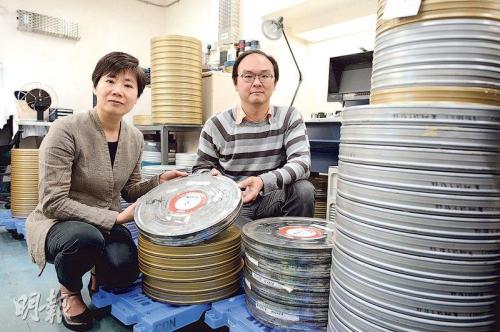
Hong Kong will digitize Bruce Lee and other early films, which are expected to be shown in 2020 at the earliest.

  BEIJING, April 28 (Xinhua) According to Hong Kong’s Ming Pao, since the beginning of the last century, Hong Kong has produced more than 10,000 films, of which 4,000 have become the collections of the Hong Kong Film Archive. In 2019, the Hong Kong Budget allocated HK$ 20 million, which enabled the Film Archive to digitize an additional 30 films each year. The museum revealed that 10 of them will be digitized in the first year after the grant, including Bruce Lee’s early films and Huang Feihong’s film series, which are expected to be released to the public as soon as 2020-2021.

  Yang Kexin (left), director of the Hong Kong Film Archive, said that he has been collecting film from different sources, and the collection now covers 4,000 films. . Image source: Hong Kong Ming Pao/photo by Zhong Linzhi

  Digital movies contain martial arts, detective, horror and other themes.

  Yang Kexin, director of the Film Archive, said that the digitized films mainly came from the 1950s and 1960s, and most of them had only one copy or negative, hoping that digitization could preserve these orphan copies.

  In 1950s and 1960s, Hong Kong’s film industry flourished. In the first year after the film archive was funded, many digital films were produced during this period. Ten films included Bruce Lee’s early films, Kwan Tak-hing’s Huang Feihong series, Chen Baozhu’s "Jane Bond Film" and "Ghost Talented Director" Gongliang Yang’s horror films.

  Yang Kexin said that most of the films digitized after the grant were orphans, and many of them were never shown after being collected. "If you get a copy, you will try not to use it, because every time the film is broadcast by the projector, it will inevitably be worn out.".

  Yang Kexin said that he has been collecting films from different sources. In recent years, the most important batch came from a San Francisco theater, which was Hong Kong film before the 1930s and 1940s, and it was a very important cultural heritage.

  She said that among the 4,000 films, about 170 films have digital versions. In the past, 20 films could be digitized every year. After funding, more manpower and resources can be increased, and 30 more films can be made every year. "The goal is that 1/10 of the collections will have digital versions in five years."

  Hire young technicians to inherit the film restoration technology

  The film should be preserved, and the technology of repairing film and film repair should also be passed on. Before the film is digitized, it is necessary to check whether the film is damaged. Yang Kexin said that film repair is a professional technology. At present, several technicians in their twenties and thirties joined the museum two or three years ago, and some of them were "laymen". Only after they joined the museum did they learn from Master to check and repair damaged films.

  After the film is digitized, it may need to be digitally restored to improve the quality of sound and pictures. Yang Kexin said that unlike commercial restoration, the restoration in the museum is based on the principle of restoration, "it will not be better than the released version of that year".

  Yang Kexin said that the film archive will study whether it needs to be expanded, but it is a long-term plan. "We need to consider whether more people and more places are needed to place the collections, but this needs to be linked to the growth of the collections." The space of the data library is limited, so it is not necessary to expand the scope of the museum. We can also find warehouses outside the museum to store the collections.

Has the "Chip Quartet Alliance" been established? What are the impacts on China? What is the working principle of the chip and why is it difficult to make it?

Is the "Four-Party Alliance on Chip" established? What are the impacts on China?

"Four-party Chip Alliance" is an idea put forward by the United States in March this year. The United States hopes to set up a chip alliance composed of the United States, Japan, Taiwan, China and South Korea to realize a closed-loop chip production and exclude mainland enterprises. The idea of four-party alliance put forward by the United States has gathered four major countries and regions in the field of chip manufacturing in the world. Among them, the United States has long been in the leading position in the field of chips, while Japan and Taiwan, China also have their own advantages in parts and OEM, and South Korea also has unique advantages. If South Korea does not join, it is likely to be sanctioned by another three parties, and the domestic chip field will face a huge disaster.

The United States has long planned to set up a "chip quartet" to contain China.

This alliance can be regarded as version 2.0 of the Semiconductor Alliance of America (SIAC).

As early as May 11th, 20211, the American Semiconductor Alliance (SIAC) was officially announced.

This is a cross-industry alliance, which consists of semiconductor design and manufacturing enterprises and downstream customers who widely use semiconductors in products in important fields such as consumer and military.

At present, the alliance has 64 enterprise members, including Apple and AT&; T, Google and other technology giants also own chip design companies such as AMD, NVIDIA and Qualcomm, as well as chip manufacturers such as TSMC, Samsung, SKHynix and Infineon.

The Semiconductor Alliance of the United States does not accept Chinese mainland enterprises and has an obvious tendency of "excluding China".

However, it is still a business alliance in essence.

However, the "chip quartet" has obvious political color.

One of the most obvious signs is that this alliance is not divided by industry, but by country (region).

The so-called "quartet", that is, the United States, Japan, South Korea and Taiwan, China, has completely rejected Chinese mainland.

Chip quartet

This alliance is surprising, including almost the main participants in the chip industry, and can be called "the strongest alliance in the history of semiconductors".

According to ICinsights’ chip market research report, in the list of the top ten semiconductor companies in 2021, the United States monopolized seven seats, South Korea occupied two seats, and Taiwan, China occupied one seat, all within the alliance.

The four-party alliance covers the fields of chip research and development, production, sales and technology update, and basically realizes the closed loop of chip production.

The United States hopes to take this opportunity to exclude China from the semiconductor industry chain, thus curbing China’s chip development.

In March this year, the United States put forward the idea of establishing a "chip quartet" and planned to hold a meeting in August.

The meeting will be held soon, but South Korea is unwilling to make a statement.

Why doesn’t Korea want to get involved in this matter?

First of all, South Korea has invested a lot of money in the field of chips in Chinese mainland.

Not to mention other companies, just look at the investment and production capacity of Samsung Electronics and SK Hynix.

In 2021, the vice president of Samsung said that the investment in China has reached 46 billion US dollars (about 310 billion yuan).

In February, 2022, Samsung invested another 101 billion yuan to expand the second phase factory of Xi flash memory and build a 12-inch 3Dv-nand production line.

In terms of production capacity, the production capacity of Samsung Electronics Xi factory accounts for 42% of Samsung’s total flash memory production capacity and 15% of the global production capacity.

Samsung electronics Xi factory

From the perspective of SK Hynix, it has been deeply involved in the China market for more than ten years, with an accumulated investment of more than 20 billion US dollars (about 134.8 billion yuan), and plans to invest 2,394 trillion won (about 12.2 billion yuan) in Wuxi factory in the next three years.

SkHynix produces DRAM chips in Wuxi, accounting for 47% of the company’s total output of DRAM chips.

To sum up, Samsung Electronics and South Korea Hynix have invested more than 550 billion yuan in China.

Investing in China is about making money.

In China, Samsung Electronics and Hynix really made a lot of money.

If South Korea joins the "four-chip alliance" led by the United States, it will have to worry about what to do with the invested funds.

Second, China is Korea’s largest trading partner.

In 2021, in addition to investing in chip production in China, South Korea also exported memory chips worth $69 billion to China, accounting for nearly half of the export volume.

As far as international trade is concerned, China is the largest trading partner of South Korea.

According to the data released by Yonhap News Agency recently, China has been Korea’s largest trading partner for 18 consecutive years, with an absolute advantage of 25% in exports to China, ranking first in Korean exports.

What is the working principle of the chip and why it is difficult to build;

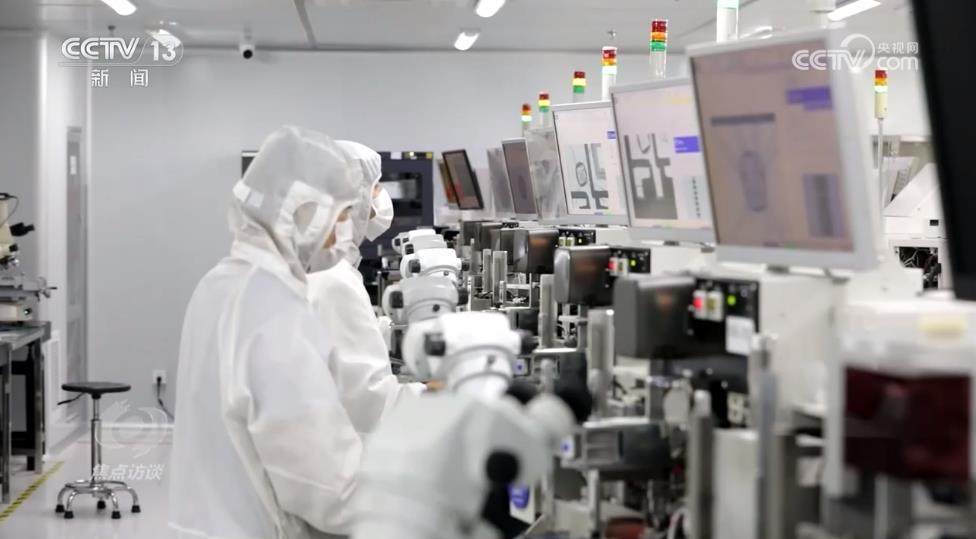
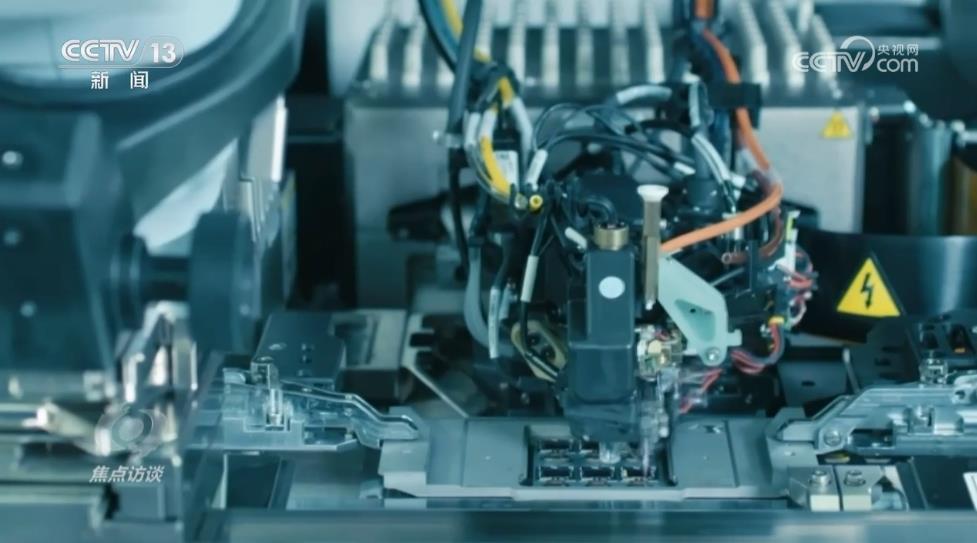
Chip is an integrated circuit, which is composed of a large number of transistors. The circuit can be manufactured on the surface of semiconductor chip for operation and processing. The development and supply of the first and second generation semiconductor materials in China are restricted by people, and the third generation semiconductor is an important way to improve the performance of integrated circuits in the post-Moore era. The working principle of the chip is to make the circuit on the surface of the semiconductor chip for operation and processing.

The first step of the chip is design.

Just like building a building, you must have a design before building it, so that your house will be built stably and safely. On this premise, you can make the layout of the building on the first floor more reasonable, the utilization rate is higher, and more people live in it. Then the design drawing is more recognized, and the house you built will be better.

Why is it so difficult to make a chip?

Making a chip is as difficult as creating a city, even more difficult than creating a city!

A series of China enterprises, such as Huawei ZTE, were sanctioned by chips, China tightened its belt to make chips, and by 2022, the whole world began to make chips crazily. This silicon wafer, which is almost the size of a thumb, makes the whole world crazy. So why is the chip so difficult to make? What is its principle and manufacturing process? Let’s find out! Whether it is smart wearable devices (smart watch bracelets), digital microwave ovens or refrigerators, more common mobile phones and computers, Internet of Things devices, etc., you can see the chip.

What is the essence of the chip: the chip is also called integrated circuit IC (generally referred to as large-scale integrated circuit). Generally, it is mainly a large-scale circuit system composed of transistors (semiconductor devices, diode triodes or various subdivided gate-level components). Now, the transistors in the mainstream mobile phone computer chips have reached tens of billions, and some even rose to hundreds of billions. So how can such a large-scale transistor circuit be placed on an area the size of a fingernail?

The primary product of the chip: wafer

The chip is mainly burned or placed on the wafer, and finally cut, and so on. We can look like a CD, place or carve something on each unit area of the CD, and finally cut it in unit area.

So what is a round chip?

Polysilicon is dissolved and doped with silicon crystals, and then it is precipitated by various technologies to form cylindrical monocrystalline silicon. Then the silicon crystal is grinded, polished and sliced to form a flaky product of the silicon wafer, that is, the wafer.

(General process from wafer fabrication to chip production)

Mask aligner-the mother embryo of the chip.

What is the principle of mask aligner? Mask aligner’s principle of preliminary treatment of round crystal is similar to that of general circuit board manufacturing, and a protective film on the wafer surface is removed by using a designed template. Then, the wafer is soaked in the designed etching solution, and the part that lost the protective film is etched away to form the circuit we need. Then the impurities remaining on the wafer surface are washed with pure water. Among them, the exposure machine is a device that uses ultraviolet rays to remove the protective film on the wafer surface through the template. Then in the end, we can think of mask aligner as how to map the design drawings on a circular wafer with a unit area. It can be seen how complicated and delicate the manufacturing process is.

photoetching machine

What are the commercial chip manufacturing companies at present?

The most famous is TSMC in Taiwan, China: a manufacturer of integrated circuits and wafers, and most of a series of technology companies like Apple, Huawei and Qualcomm are actually manufacturing in TSMC.

South Korea’s Samsung Company: Samsung also has its own foundry, and its own chips, including those of other companies, can be produced in Samsung. However, some people in the industry think that there are still some gaps in the production process between Samsung and TSMC, so TSMC accounts for a larger proportion.

Samsung Semiconductor and TSMC

However, no matter how great the international scientific and technological situation changes, Chinese can always find a way to deal with it. It is believed that the country will occupy an important position in the cutting-edge chip in the near future with strong basic science and scientific research strength.

In fact, from the process of wafer production, we can see that it is very difficult to make chips, and the process and technology of wafer production cover a series of disciplines such as materials science, optics, crystallography, process flow, automation and so on, which shows that it is very difficult. In fact, wafer fabrication is not the most difficult in the whole process of the chip! Chip architecture design: since the chip is compared to building a city, then the wafer just bulldozes the land. How to plan and create a city is the most difficult!

The Soul of Chip-Chip Architecture Chips are not all the same. Different architectures (design drawings) have different types of chips, just like the selection of cities, whether inland cities or coastal cities. These cities are divided into transportation hub cities or port cities, etc. Different chip architectures have different chip design requirements and manufacturing processes. At present, the mainstream chip architecture is arm architecture and Intel’s X architecture. ARM is mainly used in embedded systems (including mobile phones, embedded computers, Internet of Things devices, etc., Huawei Kirin processors, and Apple A and M series chips all belong to ARM architecture). Intel chips are mainly desktop processors, which are mainly produced for various computers, but also some embedded chips and other types of chips. To sum up, the chip architecture is very important, and the knowledge involved in designing the chip architecture is also very much: mathematics (especially the mathematical analysis of matrix theory, applied mathematical model-operational research, etc.), not to mention physics (circuit analysis-analog circuit digital circuit, automatic chemistry, heating modeling of nonlinear system, etc.), computer science (studying its clock frequency, pulse signal, instruction set and other issues) and so on. So how do you put the chip architecture on the wafer? This is the core problem of chip making, just like how to build the city on the drawing!