Development and Reform Commission: The car guidance price is implemented by most dealers or will be recognized as a monopoly.

  BEIJING, March 23 (Xinhua) According to the official website news of the National Development and Reform Commission, the National Development and Reform Commission and relevant departments have studied and drafted the Anti-monopoly Guide on the Automobile Industry (draft for comments), which is now open to the public for comments.

  The Opinions define the concepts of automobiles and automobile manufacturers, distribution markets and after-sales markets, and clarify the prohibition and exemption of monopoly agreements.

  According to the Opinions, the suggested price, guided price or maximum price set by automobile suppliers for reselling automobiles and automobile after-sales accessories and supplies to dealers and repairers, and the suggested price, guided price or maximum price set for after-sales service working hours to dealers and repairers usually have efficiency effects. If, due to the pressure or encouragement of one party to the agreement, the suggested price, the guided price or the highest price are executed by most or all dealers, and the substantial effect is equivalent to the fixed resale price or the minimum resale price, these behaviors may be identified as fixed resale price or the minimum resale price according to the specific circumstances of each case.

  The National Development and Reform Commission said that the time for public consultation was from March 23, 2016 to April 12, 2016. Relevant units and people from all walks of life can log on to the "Anti-monopoly" column of the website of the National Development and Reform Commission (http://www.ndrc.gov.cn) Price Supervision Bureau Sub-station (http://jjs.ndrc.gov.cn/), click "Anti-monopoly Guide on the Automobile Industry (Draft for Comment)", put forward opinions and suggestions on the Guide, and send them to the National Development and Reform Commission (Price Supervision Bureau).

  At the same time, the National Development and Reform Commission announced the feedback channel, including address: No.38 Yuetan South Street, Xicheng District, Beijing, Price Supervision Bureau of the National Development and Reform Commission, zip code: 100824. E-mail: wudm@ndrc.gov.cn. (Zhongxin. com auto channel)

  Attachment: Anti-monopoly Guide on Automobile Industry (Draft for Comment)

  Price Supervision Bureau of National Development and Reform Commission

  March 23, 2016

  The State Council Anti-monopoly Committee

  Anti-monopoly guide on automobile industry

  (Draft for Comment)

  (March 2016)

  I. General principles

  Automobile industry is an important pillar industry of national economy, which plays an important role in promoting economic growth, technological innovation, employment and social development. In order to prevent and stop the monopolistic behavior of the automobile industry, reduce the cost of administrative law enforcement and operator compliance, promote scientific and effective anti-monopoly supervision, protect fair competition, safeguard consumer interests and social public interests, and promote the healthy development of the automobile industry, this guide is formulated in accordance with the Anti-monopoly Law of the People’s Republic of China (hereinafter referred to as the Anti-monopoly Law).

  (A) Concept definition

  1. Automobile refers to a vehicle driven or towed by power and having four or more wheels, which is used for carrying people and/or goods, towing people and/or goods, and for special purposes. It can be divided into two categories: passenger cars and commercial vehicles. For further classification of passenger cars and commercial vehicles, please refer to the relevant national standards (GB/T3730.1-2001 Terms and Definitions of Types of Cars and Trailers).

  2. New energy vehicles refer to vehicles that use new power systems and are driven entirely or mainly by new energy sources, mainly including pure electric vehicles, plug-in hybrid vehicles and fuel cell vehicles.

  3. Second-hand cars refer to cars that have been traded and transferred ownership from the completion of registration procedures to the national compulsory scrapping standards.

  4. Automobile suppliers refer to operators who provide automobiles, after-sales accessories and supplies, including:

  (1) automobile manufacturers;

  (2) The general automobile dealer established or authorized by the automobile manufacturer;

  (3) Automobile importers engaged in automobile wholesale business.

  5. Spare parts suppliers refer to operators who produce or provide automobile parts for initial assembly and after-sales parts.

  6. Automobile dealers refer to operators who engage in automobile distribution and service independently of automobile suppliers. In practice, car dealers can assume the role of car repairers at the same time, but car sales and after-sales service can also be separated from each other.

  7. Automobile repairers refer to operators who provide automobile repair and maintenance services.

  8. End users, as far as automobiles are concerned, refer to the owners of automobiles (subject to the motor vehicle registration certificate) and other persons who have the legal right to use automobiles (such as automobile lessees). As far as after-sales automobile accessories and supplies are concerned, it includes: (1) the owner of the motor vehicle who purchased these products and other people who have the legal right to use the automobile; (2) Repairers who use these products for repair rather than resale.

  9. Auto parts are classified according to the standards of use, brand, supply channel and quality, including initial parts, double standard parts, after-sales parts, original parts and homogeneous parts.

  (1) Initial assembly parts refer to the parts used to produce and assemble new cars.

  (2) Double-label parts refer to the initial assembly parts and after-sales parts marked with the trademarks, logos and part codes of the automobile manufacturer and the parts manufacturer.

  (3) After-sale accessories refer to products installed in automobiles to replace the parts initially installed in automobiles, including lubricants necessary for automobiles, but excluding fuel.

  (4) Original spare parts refer to after-sales spare parts provided by automobile suppliers or third parties designated by automobile suppliers, which are manufactured according to the specifications and product standards of automobile parts initially installed by using automobile suppliers’ brands or brands designated by automobile suppliers.

  (5) Homogeneous parts, also known as parts with equivalent quality, refer to after-sales parts that have obtained relevant certification and the quality is not lower than that of automobile parts initially installed, but do not include original parts.

  10. Maintenance technical information refers to the technical information necessary for automobile diagnosis, testing and maintenance in order to maintain or restore the technical condition and working ability of the automobile when it leaves the factory, prolong the service life of the automobile and ensure that the automobile meets the requirements of safe and environmentally friendly use.

  (2) Definition of relevant markets

  The automobile industry has a long industrial chain and various business types in the upper, middle and lower reaches. The definition of relevant commodity markets and regional markets follows the general principles and methods defined in the Anti-monopoly Law and the Guide of the State Council Anti-monopoly Committee on Defining Relevant Markets, and at the same time, the characteristics of the automobile industry and the specific circumstances of individual cases are considered.

  The basic basis for defining the relevant market of the automobile industry is substitution analysis. In a case, the demand substitution is firstly investigated, and then the supply substitution is investigated. For example, automobile distribution consists of two parts: wholesale and retail. Wholesale is for automobile suppliers and retail is for end users. According to the specific circumstances of the case, it may be necessary to define automobile wholesale and retail as subdivided related markets respectively; The automobile distribution market can be further subdivided from the perspective of supply substitution and demand substitution.

  The automobile after-sales market can be further subdivided into after-sales parts distribution market and after-sales maintenance market. In the automobile after-sales market, the after-sales maintenance service of a specific brand and model requires the use of after-sales accessories suitable for the brand and model, based on the maintenance technical information of the specific brand and model. From the perspective of demand substitution and supply substitution, the compatibility and locking effect of automobile aftermarket exist objectively, so automobile brand has become an important related factor to be considered when defining automobile aftermarket.

  Second, the monopoly agreement

  (1) Prohibition and exemption of monopoly agreements

  1. Basic provisions of the Anti-Monopoly Law

  Article 13 of the Anti-Monopoly Law prohibits horizontal monopoly agreements, article 14 prohibits vertical monopoly agreements, and article 15 stipulates the exemption situations and conditions of monopoly agreements. According to Article 15 of the Anti-Monopoly Law, if an operator claims that Article 13 or Article 14 of the Anti-Monopoly Law does not apply to his agreement, he must first prove that his agreement belongs to one of the circumstances listed in Article 15. Secondly, in addition to "to protect the legitimate interests in foreign trade and foreign economic cooperation" and "other circumstances stipulated by law and the State Council", the operator should also prove that his agreement will not seriously restrict the competition in the relevant market and enable consumers to share the benefits arising therefrom.

  In order to prove that its agreement will not seriously restrict the competition in the relevant market, the operator can evaluate its market power in the relevant market. To evaluate the market power of operators, we can refer to the factors listed in Article 18 of the Anti-Monopoly Law. Evaluating whether an agreement can enable consumers to share the resulting benefits can be investigated from the perspectives of price reduction, quality improvement, technological innovation, technological upgrading, and more choices of products and services.

  The specific procedures for operators to apply Article 15 of the Anti-Monopoly Law to claim exemption from monopoly agreements shall be stipulated separately by the relevant guidelines of the State Council Anti-Monopoly Committee.

  2. Presumptive immunity

  In order to reduce the cost of administrative law enforcement and the compliance cost of operators, this guide lists some situations of geographical restrictions and customer restrictions set by operators who do not have significant market power, and it can be inferred that the provisions of Article 15 of the Anti-Monopoly Law are applicable. Law enforcement practice and theoretical research have proved that these situations can usually improve the quality of distribution services, improve distribution efficiency, enhance the operating efficiency and competitiveness of small and medium-sized dealers, generally do not seriously restrict the competition in relevant markets, and enable consumers to share the benefits arising therefrom, thus meeting the conditions stipulated in Article 15 of the Anti-Monopoly Law.

  It is not necessarily reasonable, scientific and operable to set a fixed market share standard to evaluate whether operators have significant market power. However, taking the competition evaluation of vertical agreements as an example, law enforcement practice and theoretical research show that it accounts for 25%— Operators with a market share below 30% may be considered as having no significant market power.

  However, according to the specific circumstances of a case, if there is evidence to prove that the operator’s behavior does not conform to the provisions of Article 15 of the Anti-Monopoly Law, the anti-monopoly law enforcement agency can still apply Article 14 of the Anti-Monopoly Law to the relevant behavior.

  3. Case exemption

  In addition to the situations listed in this Guide where Article 15 of the Anti-Monopoly Law can be presumed to be applicable, if an operator claims that Article 15 of the Anti-Monopoly Law can be applied to his agreement, he needs to prove that his agreement meets the statutory conditions of Article 15 of the Anti-Monopoly Law according to the specific circumstances of each case, and judge whether his agreement can be exempted from each case.

  (2) Horizontal monopoly agreement of automobile industry

  1. Some types of horizontal agreements, such as research and development agreements, specialization agreements, technical standardization agreements, joint production agreements, joint procurement agreements, etc., can usually improve efficiency and promote competition, which is conducive to increasing consumer welfare. For example, horizontal cooperation agreements in the R&D and production of new energy vehicles can enable competitors to share investment risks, improve efficiency and promote social public interests. Therefore, the automobile business operators who have reached the aforementioned horizontal agreements that can improve efficiency and promote competition can prove that the provisions of Article 13 of the Anti-Monopoly Law are not applicable to their agreements according to Article 15 of the Anti-Monopoly Law.

  2. Regarding the competition analysis of horizontal monopoly agreements, there is no significant difference between the automobile industry and other industries, so this guide will not further refine it. The anti-monopoly regulation of horizontal monopoly agreements in the automobile industry shall be handled by the anti-monopoly law enforcement agencies in the State Council according to the Anti-monopoly Law, the Provisions on Anti-price Monopoly, and the Provisions on Prohibition of Monopoly Agreements by the Administrative Law Enforcement Agencies for Industry and Commerce.

  (3) Vertical monopoly agreement of automobile industry

  1. The form of the agreement and the cumulative effect of similar agreements.

  In practice, vertical agreements can be expressed as direct restrictions, such as the resale price of dealers stipulated in the contract terms; It can also be manifested as indirect restrictions, such as fixing the profit rate and discount level of dealers, canceling rebates, refusing to supply or canceling the authorization agreement in advance for dealers who do not comply with the suggested price through price monitoring.

  In China automobile market, vertical agreements are mainly embodied in dealer agreements, and may also be reached through commercial policies, circulars, information and notices. Anti-monopoly law pays attention to the effect of behavior rather than the form, and the key to evaluate monopoly behavior is the actual effect of restricting competition. According to its competitive effect, unilateral acts in the form of business policies may be recognized as constituting a vertical monopoly agreement regulated by the Anti-Monopoly Law.

  Usually, the implementation of vertical agreements by a single operator will limit intra-brand competition and harm the interests of consumers. In particular, when most or even all operators in the relevant market adopt similar vertical agreements, and all kinds of vertical restrictions in the agreements form a network, covering the relevant markets in an all-round way, the binding force of inter-brand competition will be obviously weakened. The cumulative effect caused by similar vertical agreements can significantly limit the competition in related markets, make related products and services priced above the competitive level, and ultimately lead to the loss of consumer welfare.

  2. Fixed resale price and limited minimum resale price

  Article 14 of the Anti-Monopoly Law explicitly prohibits the fixed resale price and the limited minimum resale price with obvious competitive effect. The negative effects of vertical price restrictions are mainly manifested in maintaining high prices, promoting horizontal and vertical collusion, weakening inter-brand competition and intra-brand competition, and excluding competitors.

  Of course, according to the principle of case analysis, if the operator can prove that these price restrictions will not seriously restrict the competition in the relevant market and enable consumers to share the benefits arising therefrom, the operator can claim case exemption for the fixed resale price and the limited minimum resale price according to Article 15 of the Anti-Monopoly Law.

  In practice, the common situations in which automobile industry operators advocate the vertical price restriction of case exemption based on Article 15 of the Anti-Monopoly Law include:

  (1) Fixed resale price and limited minimum resale price during the promotion period of new energy vehicles.

  In order to save energy, protect the environment and avoid "service hitchhiking", during the promotion period of new energy vehicles, it is necessary to fix the resale price and limit the minimum resale price in a short period (for example, within 9 months from the date when the automobile supplier issues the first batch invoice for a specific vehicle) to encourage dealers to promote new energy products, increase sales efforts and expand the market demand for new products, thus promoting the successful listing of new products and giving consumers more choices.

  (2) resale price limit in the sales of dealers who only assume the role of middlemen.

  Dealer sales, which only assume the role of middleman, refers to the sales of car suppliers and specific third parties or specific end customers (such as employees of car suppliers and dealers, major customers, advertising and sponsors, etc.) through direct negotiation, and only through authorized dealers to complete the sales of car delivery, collection and invoicing. In these transactions, authorized dealers only play the role of middlemen to help complete the transactions, which is different from full-fledged dealers.

  (3) resale price restrictions in government procurement

  In practice, government procurement projects usually require automobile suppliers participating in joint bid to provide consistent or fixed retail price quotations after coordination with their dealers. For nationwide procurement projects, government procurement departments sometimes directly contact automobile suppliers, who have no direct sales or retail licenses and need to reach an agreement with specific dealers on retail prices in order to realize their quotations for government procurement. Similar to dealer sales that only assume the role of middleman, dealers in government procurement are different from dealers in full sense if they only assist in completing the transaction.

  (4) the resale price limit in e-commerce sales of automobile suppliers.

  The pricing behavior in e-commerce sales is governed by the Anti-Monopoly Law, the Anti-Price Monopoly Provisions and other laws and regulations. However, in practice, automobile suppliers sell cars at a uniform price for a certain period of time through e-commerce platforms, and directly reach a deal with unspecified end users, and only complete the sales of delivery, collection, invoicing and other trading links through dealers. In these e-commerce transactions, dealers only assume the role of middlemen to help complete the transaction, which is different from the dealers in full sense.

  3. Suggested price, guided price and limited maximum price

  It is usually efficient for automobile suppliers to set suggested prices, guided prices or maximum prices for reselling automobiles and automobile after-sales accessories and supplies to dealers and repairers, and to set suggested prices, guided prices or maximum prices for after-sales service working hours to dealers and repairers, and these behaviors generally do not exclude or restrict competition.

  However, if, due to the pressure or encouragement of one party to the agreement, the suggested price, the guided price or the highest price are executed by most or all dealers, and the substantial effect is equivalent to the fixed resale price or the minimum resale price, these behaviors may be identified as fixed resale price or the minimum resale price according to the specific circumstances of each case.

  4. Geographical restrictions and customer restrictions

  Geographical restriction means that the supplier promises to supply one or several dealers in a specific distribution area, and the dealers promise not to sell in other distribution areas. Customer restriction means that the supplier restricts the distributor to sell the goods only to specific customers or not.

  Geographical restrictions and customer restrictions may weaken intra-brand competition, divide the market and encourage price discrimination. Effective geographical restrictions and customer restrictions make it difficult for other distributors to obtain supplies, hinder the promotion of more efficient new distribution models, and keep the prices of goods and services at a high level. However, sometimes geographical restrictions and customer restrictions can also improve distribution efficiency. For example, when dealers need to make specific investments to protect and establish brand image, geographical restrictions can produce significant efficiency.

  (1) The geographical restrictions and customer restrictions set by automobile operators who do not have significant market power are efficient and justified, and can usually meet the provisions of Article 15 of the Anti-Monopoly Law, which can be applied. The foregoing situations mainly include:

  It is agreed that the distributor will only conduct distribution activities in its business premises, but it will not restrict the passive sales of the distributor or cross-supply between distributors.

  Passive sales refer to the delivery of goods or services to individual customers at their request without active marketing. For example, the behavior of consumers in a place to buy a car in b place is the passive sales of dealers.

  Compared with traditional sales methods, e-commerce sales are aimed at a wider and more diverse customer base. If a customer browses the dealer’s website or the third party’s website and contacts the dealer, and the contact leads to a sales transaction, the sales will be regarded as passive sales. For the information sent by the distributor to an unspecified audience through its own or third-party website, if the customer actively chooses to accept it (for example, subscribing to the promotion information of the distributor online) and actively contacts the distributor to generate a sales transaction, the transaction will be regarded as the passive sales of the distributor. However, if the distributor sends out advertisements or promotional information to a specific audience, such acts will constitute active sales.

  Restrict dealers from actively selling exclusive territory or exclusive customers reserved by automobile suppliers for another dealer.

  Restrict wholesalers from selling directly to end users.

  In order to prevent accessories from being used by customers to produce the same products as automobile suppliers, dealers are restricted from selling accessories to such customers.

  It is not necessarily reasonable, scientific and operable to set a fixed market share standard for evaluating the market power of operators. However, taking the competition evaluation of vertical agreements as an example, law enforcement practice and theoretical research show that operators who occupy less than 25%-30% of the relevant market share may be considered as having no significant market power.

  (2) The following four types of geographical restrictions and customer restrictions can usually severely restrict competition, lead to high prices and reduce consumers’ choices, so the provisions of Article 15 of the Anti-Monopoly Law cannot be directly applied. Automobile business operators who engage in the following acts may claim individual exemption if they can prove that their acts conform to the provisions of Article 15 of the Anti-Monopoly Law.

  Restrict the passive sales of dealers.

  Restrict cross-supply between dealers.

  Restrict dealers and repairers from selling accessories needed for automobile maintenance services to end users.

  Except in the case of OEM agreement, automobile manufacturers reach an agreement with suppliers of accessories, repair tools, testing instruments or other equipment to restrict such suppliers from selling relevant accessories, repair tools, testing instruments or other equipment to dealers, repairers or end users. For the determination of the OEM agreement, please refer to Appendix (1) of this Guide.

  5. Indirect vertical restrictions are imposed on after-sales maintenance services and parts circulation through warranty clauses.

  For the maintenance work and replacement parts within the warranty scope, the automobile supplier usually requires the automobile end user to use the original parts in the authorized maintenance network to complete the maintenance work. However, by indirectly imposing unreasonable vertical restrictions on after-sales service and after-sales parts circulation through warranty clauses, independent repairers can be excluded, parts supply and distribution channels can be reduced, and finally the price of automobile maintenance services can be increased.

  The unreasonable vertical restrictions mentioned above include but are not limited to:

  (1) As a condition for the automobile supplier to fulfill the warranty responsibility, the automobile supplier shall hand over all the maintenance work that is not covered by the warranty by the automobile end user to the authorized maintenance network;

  (2) For after-sales parts that are not covered by the warranty, the automobile supplier requires to use the original parts as a condition for fulfilling the warranty responsibility;

  (3) Automobile suppliers have no justifiable reason to restrict their maintenance network to provide after-sales maintenance services for parallel imported cars.

  6. Other vertical restrictions on the ability of dealers and repairers to sell and serve.

  The following vertical restrictions imposed by automobile suppliers through agreements and business policies may improperly restrict the sales and service capabilities of dealers and repairers. If they lead to significant elimination and restriction of competition, increase the price of automobile distribution and maintenance channels and harm the interests of consumers, the relevant agreements and business policies may be recognized as vertical monopoly agreements regulated by the Anti-Monopoly Law.

  (1) The automobile supplier forces the dealers or repairers to tie up the cars, after-sales parts, fine products, consumables, repair tools, testing instruments, etc. that they have not ordered.

  Tying by suppliers to distributors is a vertical restriction, which may lead to exclusive purchase obligation of tying products, thus excluding competition in tying products market.

  (2) Automobile suppliers force dealers or repairers to accept unreasonable sales targets, inventory varieties and quantities of automobiles or after-sales parts.

  Suppliers and distributors can agree on the sales target, inventory variety and quantity of contract products through equal consultation. However, suppliers unilaterally set and force dealers to accept unreasonable sales targets, inventory varieties and quantities, which may lead dealers to assume exclusive purchase obligations of contract products, thus excluding competition in relevant markets.

  (3) The automobile supplier compels the dealer to bear the expenses of advertising, auto show and other publicity in the name of the automobile supplier, or compels the dealer to carry out advertising at his own expense in a specific way and in a specific media.

  Automobile suppliers usually agree with dealers to participate in joint promotion and marketing activities and ask dealers to share reasonable expenses. In addition, in order to ensure the overall effect of brand promotion, automobile suppliers usually set reasonable quality standards for dealers to select media. However, forcing dealers to bear the promotion expenses in the name of automobile suppliers, or restricting the specific ways and media for dealers to carry out advertising, may unduly limit dealers’ ability to decide their own promotion and marketing activities, indirectly increase the cost of distribution and after-sales channels, and ultimately increase the burden on consumers.

  (4) Automobile suppliers restrict dealers and repairers to use only the services of specific paid design units or construction units, or restrict dealers and repairers to use only specific brands, suppliers and supply channels for building materials, general equipment, information management systems and office facilities.

  In order to ensure the brand image, automobile suppliers usually stipulate or stipulate quality standards for the design, decoration and office facilities of dealers and repairers’ business premises through agreements or business policies. In addition, based on the consideration of intellectual property protection, automobile suppliers usually specify the procurement channels of their automobile brand logos. However, it is usually not necessary to restrict the design of business premises and office facilities to specific third-party brands, suppliers and supply channels to ensure the brand image of automobiles. Such restrictions may unduly restrict the competition in relevant markets and indirectly increase the cost of distribution and after-sales channels.

  (5) When the automobile supplier refuses to supply or terminates the distribution agreement in advance, it shall clearly list the reasons.

  In order to prevent automobile suppliers from refusing to supply to dealers or terminating the distribution agreement in advance without justifiable reasons, such as refusing to implement the minimum resale price set by automobile suppliers, purchasing original parts and homogeneous parts from channels other than automobile suppliers for after-sales maintenance, etc., the notice of automobile suppliers refusing to supply or terminating the distribution agreement in advance shall clearly list the reasons.

  Iii. Abuse of dominant market position

  Article 17 of the Anti-Monopoly Law prohibits the abuse of market dominance, including unfair high prices and low prices, as well as selling goods below the cost price without justifiable reasons, refusing to trade, restricting trading, tying and attaching other unreasonable trading conditions, and differential treatment.

  At present, the competition in China’s new car sales market is fierce, but the lock-in effect and compatibility problems in the after-sales market may limit and weaken the effective competition in the after-sales market and harm the interests of consumers. In defining the automobile aftermarket in a case, automobile brand is an important related factor to be considered. According to the definition of market dominance in Article 17 of the Anti-Monopoly Law and the factors that should be based on in Article 18 of the Anti-Monopoly Law, automobile suppliers who do not have a dominant position in the new car sales market may be identified as having a dominant position in the after-sales market of their brand cars.

  (A) after-sales parts production

  Except for the parts produced according to the OEM agreement, the automobile manufacturers that have a dominant position in the after-sales market of their brand cars should not restrict the production of "double-labeled parts" for the accessory manufacturers that initially installed automobiles without justifiable reasons. That is to say, automobile manufacturers should not reach an agreement with the parts manufacturers who provide them with initial parts, and prohibit the latter from affixing their own trademarks, logos and part codes on the initial parts of automobiles. Double standard parts aim to improve the ability of consumers and repairers to identify homogeneous parts and promote effective competition in the automotive aftermarket.

  For the determination of the OEM agreement, please refer to Appendix (1) of this Guide.

  (2) Supply and circulation of after-sales parts

  Automobile manufacturers that have a dominant position in the after-sales market of their brand cars should not restrict the supply and circulation of after-sales parts without justifiable reasons, including:

  1. Restrict dealers and repairers from purchasing after-sales parts, that is, restrict dealers and repairers from purchasing homogeneous parts or original parts (including parallel imported parts) from other channels.

  Suppliers who do not have a dominant market position set exclusive purchase obligations for their distribution channels for a certain period, which can improve the quality standards of distribution networks, help to establish and maintain brand image, improve the attractiveness of brands to end consumers and increase sales. However, if there are obvious barriers to entry or expansion in the relevant market, the exclusive procurement obligation may block competitive suppliers, weaken the incentive mechanism for innovation, raise the price of goods in distribution channels and limit consumers’ choices.

  In practice, automobile suppliers, which have a dominant position in the after-sales market of their brand cars, impose unreasonable sales quantity targets, inventory varieties and quantities on dealers, which can usually substantially restrict dealers and repairers from purchasing accessories.

  However, automobile suppliers have the right to require their authorized system members to use only original and homogeneous parts, and to require their authorized system members to ensure consumers’ right to know and the traceability of parts. Automobile suppliers also have the right to claim that members of the authorization system can use remanufactured parts and recycled parts in maintenance work only when consumers know and clearly choose and ensure the traceability of accessories. The above situation does not affect the civil liability of authorized dealers, authorized repairers and parts suppliers.

  2. Restrict accessories suppliers, distributors and repairers from exporting after-sales accessories, including:

  (1) Except for the parts produced according to the OEM agreement, all parts are required to be "returned to the factory", that is, parts suppliers are restricted from supplying parts with their own brands to the after-sales channels;

  (2) Restrict the cross-supply of after-sales parts between dealers, between repairers and between dealers and repairers;

  (3) Restrict dealers and repairers from selling accessories needed for automobile maintenance services to end users.

  (3) Availability of maintenance technical information, test instruments and maintenance tools

  Automobile after-sales maintenance usually needs to be completed by qualified technicians based on the technical information of specific brands of automobiles. Automobile suppliers are usually the only source of all maintenance technical information of their brand cars. If the repairer can’t get the necessary technical information for testing, repairing and replacing automobile parts, the maintenance service it provides may lead to dangerous driving, high emissions and air pollution. At the same time, the market position of repairers is squeezed, which leads to the reduction of maintenance channels, the increase of automobile maintenance prices and the limited choice of consumers.

  Effective competition in the automobile after-sales market needs to ensure the availability of after-sales maintenance technical information, as well as the availability of test instruments and maintenance tools. Therefore, automobile suppliers that have a dominant position in the aftermarket of their brand automobiles should not restrict the availability of maintenance technical information, test instruments and maintenance tools without justifiable reasons, including:

  1. Restrict the rights and channels for the repairer to obtain the technical information of automobile maintenance of a specific brand;

  2. To reach an agreement with suppliers of repair tools, testing instruments or other equipment to restrict such suppliers from selling relevant repair tools, testing instruments or other equipment to dealers and repairers.

  Fourth, the concentration of operators

  The Anti-Monopoly Law prohibits business operators from implementing concentration that has or may have the effect of eliminating or restricting competition. There is no significant difference between the automobile industry and other industries in the competitive analysis of operator concentration.

  The anti-monopoly review on the concentration of automobile operators shall be handled by the anti-monopoly law enforcement agencies in the State Council according to the Anti-monopoly Law, the Interim Provisions on Evaluating the Impact of Concentration of Operators, the Provisions on Additional Restrictive Conditions for Concentration of Operators (for Trial Implementation) and other laws and regulations.

  In the anti-monopoly review of automobile operators, this guide explains and guides the automobile monopoly agreement and the abuse of market dominance, which is of reference significance for the anti-monopoly review of automobile operators.

  V. Abuse of administrative power to exclude or restrict competition

  The Anti-Monopoly Law prohibits administrative organs and organizations authorized by laws and regulations to manage public affairs from abusing administrative power to exclude or restrict competition.

  Abuse of administrative power to exclude or restrict competition in the automobile market shall be dealt with by the anti-monopoly law enforcement agencies in the State Council according to the Anti-monopoly Law, the Provisions on Anti-price Monopoly, and the Provisions of the Administration for Industry and Commerce on Stopping Abuse of Administrative Power to Exclude and Restrict Competition.

  Abuse of administrative power in automobile trading excludes and restricts competitive behavior, which hinders the healthy development of automobile market and harms consumers’ interests. For example, the abuse of administrative rights in second-hand car trading excludes and restricts competition, which is not conducive to green recycling consumption and the sustainable development of the automobile market. It also limits the rights and interests of car owners to dispose of property rights, prolongs the cycle of changing cars for consumers, and indirectly affects the new car sales market.

  Therefore, administrative organs and organizations authorized by laws and regulations to manage automobile circulation affairs should not violate the provisions of Chapter V of the Anti-Monopoly Law to exclude or restrict competition, including but not limited to:

  (a) to formulate regulations that restrict the access to the automobile market and the free circulation of automobiles;

  (2) Restricting or disguised restricting operators from operating automobile business by setting business opening conditions or qualification requirements with the effect of excluding and restricting competition;

  (3) Restricting or restricting in disguised form the purchase, lease and use of the automobile trading system, facilities and business premises provided by its designated operators;

  (four) the behavior of restricting the movement of used cars, that is, the second-hand cars must be traded at the place where the vehicles are registered;

  (five) to restrict the second-hand car trading, the invoice must be issued by the second-hand car trading market.

  VI. Supplementary Provisions

  (A) the identification of the OEM agreement

  OEM agreement, also known as entrustment processing agreement, agency processing contract, contracting contract and OEM processing contract in practice, means that the entrusting party provides the necessary technology and equipment for the entrusted party, and the entrusted party produces products, provides services or completes the work for the entrusting party.

  If the parts manufacturer uses the intellectual property rights of the automobile manufacturer to process the automobile parts according to the requirements of the automobile manufacturer, the relationship between the automobile manufacturer and the parts manufacturer is entrusted processing, and an OEM agreement is reached. There are significant differences between OEM agreement and parts supply agreement between parts manufacturers and automobile manufacturers who use their own intellectual property rights.

  Whether an agreement constitutes a real OEM agreement needs to be evaluated on a case-by-case basis, and it can be determined after evaluating the substantive content of the agreement, rather than directly according to the form of the agreement. In short, if the technology and equipment provided by the automobile manufacturer (the entrusting party) are necessary for the parts manufacturer (the entrusted party) to produce contract products or provide contract services under reasonable conditions according to the requirements of the automobile manufacturer, then the parts manufacturer’s identity is "OEM" and is not regarded as an independent parts supplier in the market.

  However, when an automobile manufacturer provides tools, intellectual property rights or know-how to an accessory manufacturer, if the accessory manufacturer already has such tools, intellectual property rights or know-how that can be used independently or can obtain such tools, intellectual property rights or know-how on reasonable terms, the technology and equipment of the automobile manufacturer are not necessary for the accessory manufacturer to perform the agreement. For example, if the automobile manufacturer only provides the general descriptive information of the contract products, but restricts the accessory manufacturer from supplying accessories to the aftermarket under its own brand name, the automobile manufacturer essentially deprives the accessory manufacturer of the possibility of expanding business in the areas related to the agreement, and excludes and restricts the competition in the relevant markets, which may lead to high prices and reduce consumers’ choices.

  Specific factors that can be considered in evaluating "technology or equipment necessary for producing contract products or providing contract services" include but are not limited to:

  1. Intellectual property rights owned or disposed of by the entrusting party, including: invention patents, utility models, copyrighted designs, registered designs or other intellectual property rights;

  2. Proprietary technologies such as production processes owned or disposed of by the entrusting party;

  3. Research reports, plans and other documents prepared by the entrusting party to match the information provided by it.

  (two) the entry into force, update and supplement of the guide

  This guide will be implemented on * * *. The Anti-monopoly Committee of the State Council will continue to investigate and evaluate the overall competition situation in China’s automobile market, and update and supplement this guide according to the development trend of China’s automobile industry.
Notice of the People’s Government of Inner Mongolia Autonomous Region on Practically Promoting Quality Education in Primary and Secondary Schools

The administrative offices of the Union, the Municipal People’s Government, the relevant commissions, offices, departments and bureaus of the autonomous region, and major enterprises and institutions:

  Promoting the implementation of quality education in primary and secondary schools is an urgent task of basic education at present. According to the requirements of the state to promote quality education in primary and secondary schools, combined with the actual situation in our region, the following implementation opinions are put forward.

  First, raise awareness and clarify the direction and thinking of promoting quality education.

  (1) Promoting the implementation of quality education in primary and secondary schools is the requirement of the development of the times, the need to implement the "two strategies" and the necessity of educational reform and development. Leaders of governments at all levels, education administrative departments and faculty members must understand its necessity, arduousness and long-term, and enhance their sense of responsibility and urgency.

  Our region belongs to remote minority areas. Since the reform and opening up, although the economy has made great progress and the society has made great progress, it is still lagging behind the developed areas. This situation is naturally related to historical reasons, but the relatively low quality of the population is an important factor causing economic backwardness. With the popularization of compulsory education, what kind of basic education to run and how to make basic education adapt to the needs of economic construction and social development in our region are a major issue facing governments and education departments at all levels. In the past few decades, the basic education in our region has been greatly developed and achieved great results. At the same time, it is undeniable that the tendency of "exam-oriented education" exists like a stubborn disease, which always puzzles us to fully implement the educational policy, affects the cultivation of high-quality talents adapting to economic construction and social development, and affects the realization of the talent training strategy facing the 21 ST century. It has become a top priority to fully implement quality education in basic education.

  (2) To promote the implementation of quality education, we must break through the traditional and outdated educational ideas and models and create a quality education model, that is, "to achieve the goals stipulated in the educational policy, focus on the requirements of the educated groups and social development, take all students as the fundamental purpose, and comprehensively improve their basic quality, and pay attention to the development of education."

  The potential of the students can promote the lively development of the educated in all aspects of morality, intelligence and physique

  Education as the basic feature. " To create a model of quality education, we must first change the concept of education, establish a correct concept of education, talent and quality, and run through the whole process of promoting the implementation of quality education. The decisions and measures made by governments at all levels, education administrative departments and primary and secondary schools should conform to the laws and regulations promulgated by the state and the requirements of promoting quality education, and should always take changing ideas as the premise of promoting quality education. In the future, all kinds of inspection and evaluation conducted by superiors to subordinates should first examine whether the educational concept has changed, whether the educational ideas have been updated, whether the educational process conforms to the educational laws and whether it meets the requirements of implementing quality education; The evaluation, promotion, promotion and reward of principals and teachers mainly depends on whether the awareness of implementing quality education is enhanced, whether the attitude of promoting it is positive, whether the process of education and teaching is optimized and whether the effect is remarkable.

  (3) Changing ideas requires creating a good atmosphere of public opinion. All public opinion propaganda departments should vigorously publicize the spirit of the national quality education experience exchange meeting in primary and secondary schools, publicize scientific and advanced educational ideas and advanced deeds and experiences in implementing quality education. Education departments at all levels and schools at all levels should carry out great learning, discussion and publicity on the implementation of quality education, and gradually expand this activity to all walks of life, so that the implementation of quality education is well known to everyone. Learning and publicity should take the relevant requirements of the country and the experience of advanced regions as the content, and study the important topic of how to cultivate high-quality talents in our region to meet the challenges of the 21 ST century in combination with reality.

  In order to promote university studies, discussion and publicity, governments at all levels and education administrative departments should organize training courses for implementing quality education at different levels in a planned way, cultivate backbones and promote the overall situation. The Education Department of the Autonomous Region shall compile a publicity outline and distribute relevant materials to all localities for reference.

  (IV) In promoting the implementation of quality education in primary and secondary schools in our region, we must take the relevant national policies and requirements as the basis, proceed from our local conditions, adhere to the principle of emancipating our minds and seeking truth from facts, and adhere to the principle of "all-round development, overall planning, regional promotion, classified guidance, key breakthroughs, grasping points and areas, and steady improvement" to make the promotion work both vivid and solid. Resolutely oppose the wrong practices of fraud and formalism.

  Second, strive to create conditions to promote the implementation of quality education

  (1) Popularizing nine-year compulsory education according to law is the basis of implementing quality education. According to the Compulsory Education Law, facing all means not only facing every student at school, but also facing all school-age children and adolescents and improving the quality of the whole nation.

  The "top priority" position of the "Nine-Year Plan" cannot be shaken. Areas that have been "popularized nine years" should be carried out to implement quality education.

  To comprehensively consolidate and improve the work for the center, further improve the conditions for running schools, reduce the dropout rate, and improve the qualified rate and completion rate. It is necessary to put changing the appearance of weak schools in a prominent position, and strive to achieve a relatively balanced condition for running primary and secondary schools in urban areas in three to five years, and basically solve the problem of choosing students for compulsory education. We should actively promote the reform of the academic system, and make a transition from the "May 3rd" and "June 3rd" academic system to the "May 4th" or "Nine-year consistent system" according to local conditions. It is necessary to implement the Ninth Five-Year Plan for Compulsory Education for Disabled Children and Adolescents. In areas that have not completed the Nine-Year Plan, we must adhere to the principle of "being proactive and seeking truth from facts" and reach the standard of the Nine-Year Plan as scheduled, so that school-age children and adolescents can "get in, stay and learn well" to the maximum extent. At the same time, we should attach importance to promoting the implementation of quality education throughout the whole process of "Nine-Year Plan".

  (2) The quality of principals and teachers is the foundation of promoting the implementation of quality education, and the training work must be strengthened and improved. We should continue to do a good job in on-the-job training and continuing education for principals and teachers, and further improve teachers’ political, professional and professional ethics. It is necessary to strengthen the awareness and actions of principals in implementing quality education, and pay attention to the scientificity and effectiveness of promoting quality education. Those who are not enterprising, stick to the rules, or even run counter to the implementation of quality education, the competent authorities should take decisive measures of "changing people without changing their minds". Teachers’ colleges should take the lead in implementing quality education and must take serving primary and secondary schools as their school purpose. All localities should conscientiously implement the spirit of the document issued by the regional normal education work conference.

  (3) Actively developing vocational education and adult education is not only of great significance to building an overpass for talent growth, but also plays an irreplaceable role in alleviating the increasingly fierce competition for further studies in basic education. All regions must conscientiously implement the spirit of the document issued by the regional vocational education work conference, and at the same time intensify the reform of the running mode of ordinary high schools, and strive to build a new pattern of mutual connection, communication and harmonious development of basic education, vocational education and adult education that adapt to the local economic construction.

  (4) Establish an advanced model for implementing quality education and popularize successful experiences. Dabagou Middle School is a typical example of basic education reform in rural and pastoral areas of our region. Governments at all levels and education administrative departments must proceed from reality, actively implement the spirit of the Notice of the General Office of the Party Committee and the General Office of the Government of the Autonomous Region on Vigorously Popularizing the Experience of Running a School in Dabagou Middle School (No.43 [1996] of the Inner Party Office), learn their guiding ideology of "Dont Ask For Help people pursue higher education, but strive for everyone to become useful", promote quality education in primary and secondary schools, and effectively turn the direction of running a school to the track of facing the needs of local economic and social development and cultivating applicable talents.

  (5) Carry out educational scientific research extensively, give full play to the leading role of theory, change the traditional way of making educational decisions by experience, and strive to build a "two-wheel drive" operation mechanism between educational scientific research and administration. Educational and scientific research departments, teaching and research departments, normal universities and colleges of education should, under the leadership of administrative departments, focus on promoting the implementation of quality education, determine topics and carefully organize research. Education administrative departments and units should give support in terms of funds, personnel and office conditions; Those scientific research achievements that are worth popularizing should be popularized in time and rewarded according to their actual effects.

  Third, standardize education and teaching behavior and deepen education and teaching reform

  (A) education and teaching activities, especially classroom teaching is the main channel to implement quality education. Only through this channel can the conditions for running a school and some safeguard measures play their role. The achievements of basic education are largely reflected from this channel; The influence of "exam-oriented education" is also exposed from this channel to a great extent. Deepening the reform of education and teaching and optimizing the teaching process are the core of implementing quality education, and also the main direction and difficulty of implementing quality education. This requires us to be good at summing up the past, be brave in opening up the future, and make breakthroughs and progress in reform with perseverance and indomitable spirit.

  To deepen the reform of education and teaching, we should start with the normative behavior that should be done and can be done within education, and gradually optimize the education and teaching process. The goal of reform is to improve the quality and efficiency of education and teaching. Teaching as the center can not be shaken, and the improvement of teaching quality can not be shaken. The "quality" here refers to the overall knowledge and ability of students and the comprehensive quality of moral, intellectual and physical education. The way and method of improvement is to mobilize students’ enthusiasm and make them develop actively and vividly on the premise of running every primary and secondary school well and facing every student.

  In order to implement this work, we hereby reaffirm and standardize the following educational and teaching behaviors. In violation of the provisions, the administrative department of education should severely punish schools, units and individuals; Anyone who hangs an honorary plaque awarded by the administrative department of education or receives other awards shall be notified of revocation, and no award shall be made within three years.

  -We should conscientiously implement the "Several Opinions of the Central Committee of the Communist Party of China on Further Strengthening and Improving Moral Education in Schools", the relevant laws and regulations of the State and the spirit of a series of documents issued by the State Education Commission, pay special attention to moral education with patriotism education as the main line and "five loves" education and civilized behavior education as the basis, and work hard on the effectiveness of moral education. The critical comments on students in the reform of compulsory education section are positive and encouraging comments. Corporal punishment, disguised corporal punishment and insulting students are strictly prohibited.

  -It is necessary to fully implement the curriculum plan and program, implement the Opinions of the State Education Commission on Promoting the Implementation of Quality Education, Adjusting the Teaching Contents of Primary and Secondary Schools, and Strengthening the Management of Teaching Process (J.J. [1998] No.1), and strive to establish a curriculum textbook system that is suitable for quality education. Every primary and secondary school should offer full courses and full class hours (including compulsory courses, elective courses and activity classes). In particular, we should strengthen the construction of weak subjects such as music, physical education, aesthetics, labor and activity classes, attach importance to social practice and experimental teaching, and work hard to cultivate students’ practical ability, problem-solving ability and productivity to adapt to social life. According to the relevant spirit of the State Education Commission, we should improve the construction of local teaching materials.

  -We should develop students’ potential, give full play to their intelligence, cultivate their interests, and develop their creative thinking by establishing characteristic schools and carrying out various interest activities, so that students can get all-round and full development.

  -students’ school activities, homework assignments and examination times must be strictly controlled according to the regulations of the state and the autonomous region. It is strictly forbidden to use holidays to make up lessons or take new lessons for students collectively. Reform the examination and assessment system in schools.

  -resolutely prohibit the indiscriminate compilation, printing and use of review materials, and earnestly strengthen the management of books used in primary and secondary schools.

  -It is necessary to enliven teaching research, popularize advanced teaching methods and modern teaching means, and improve classroom efficiency.

  -Model schools and experimental schools of compulsory education at the autonomous region level should start from each class, actively explore teaching models that are suitable for quality education, and truly play an exemplary role in promoting the implementation of quality education.

  (2) We should conscientiously implement the management regulations of junior high schools and primary schools and the Basic Requirements for Regular Management of Ordinary Primary and Secondary Schools in Inner Mongolia Autonomous Region (for Trial Implementation), and strive for standardized and scientific school management. We should continue to carry out the activities of establishing compulsory education demonstration schools, experimental schools, advanced management schools in ordinary high schools and demonstration ordinary high schools, so as to promote the construction by evaluation and strive to improve the overall management level of primary and secondary schools.

  Four, the establishment of control mechanism, reform the entrance examination system and evaluation system.

  The entrance examination system and evaluation system play an important guiding role. The influence of "exam-oriented education" is difficult to eliminate, which is closely related to the disadvantages of the existing enrollment examination system and evaluation system. Reform must first make a big breakthrough in this respect. The idea of reform is to downplay the examination competition and score consciousness, and change the evaluation of schools, teachers and students mainly based on the enrollment rate and examination scores into a comprehensive evaluation according to the requirements of quality education.

  -Primary schools should be admitted without examination.

  -areas that have been "nine-year compulsory education" will make primary school graduates go straight to junior high school without examination as soon as possible; Areas that have not completed the Nine-Year Plan should actively create conditions to meet this requirement by the year 2000.

  -reform the entrance examination system for ordinary senior high schools, and change the single examination selection into an entrance examination system combining examination selection with the evaluation of junior high school running level.

  -The graduation examination system of ordinary senior high schools should be further reformed and improved in the direction of adapting to the reform of the school-running model of senior high schools. Junior high school does not implement the examination system.

  -implement the national policy on the reform of the college entrance examination system, adjust the admission ratio of previous graduates in our district, and gradually make fresh graduates account for the majority of the total admission.

  -Except for the senior high school entrance examination, senior high school entrance examination and college entrance examination, it is not allowed to take any form of unified examination at or above the county level (city, district), and violators will be held accountable.

  -It will take about two years to establish an evaluation system of "grade+comment+specialty" for students and a comprehensive evaluation system for schools and teachers according to the requirements of implementing quality education.

  -Strengthen the construction of cadres and supervisory teams in the front line of basic education, and establish and improve the supervision and evaluation system for the implementation of quality education and the corresponding reward and punishment system.

  Five, strengthen leadership and strive to create a good environment for the implementation of quality education.

  (A) promoting the implementation of quality education is a government act. Strengthening the leadership of governments at all levels is the key to implementing quality education. Governments at all levels must know, act and invest in teaching according to law. We should take the lead in studying and implementing the relevant requirements of the state to promote quality education in primary and secondary schools, and formulate plans or programs to promote the implementation of quality education in light of the actual situation in the region. It is necessary to clarify the responsibilities of finance, personnel, labor, planning, industry and commerce, taxation, prices, public security, justice, culture, health, press and publication, youth league committees, women’s federations, associations for science and technology and other relevant departments and even families. The main leaders should personally grasp them and be in charge of the leadership. It is necessary to make overall coordination and overall linkage, so that the plan or scheme can be implemented. All Union cities and counties (cities, districts) should select a number of experimental areas with counties (cities, districts) or villages and towns as units, adopt the methods of leading several major teams or establishing contact systems, guide them to carry out pilot experiments on relevant reforms, sum up and popularize successful experiences, and guide them to make steady progress. It is necessary to mobilize all forces, implement various fund-raising policies, give full play to the role of various propaganda and public opinion departments, and intensify the creation of conditions for implementing quality education and publicity work. Resolutely put an end to the government’s wrong practices and behaviors of giving education departments or schools entrance examination indicators and evaluating school work with the entrance examination rate as the standard. In the future, once such behavior is discovered, the Education Department of the autonomous region will inform the whole region and veto the government’s achievements in education that year.

  (2) Leaders of education administrative departments at all levels should first change their ideas, make suggestions for government leaders, and be good assistants and staff officers. At the same time, we should take the lead in standardizing the decision-making, command and guidance of this department with the requirements of implementing quality education. It must be clear that promoting the implementation of quality education is the overall work of the whole education front. The top leaders should take command personally, unify the understanding of all personnel in their own units with the opinions of the state and the autonomous region as soon as possible, determine the responsibilities of various departments, and form a situation of internal cooperation to guide and promote local work.

  (3) In order to promote the smooth implementation of quality education in primary and secondary schools in our region, the Education Department of the Autonomous Region will issue a series of supporting documents on strengthening the construction of weak schools, the construction of principals and teachers, education and scientific research, and the evaluation of schools to teachers and students, and determine several experimental areas with counties (cities, districts) as units to guide the work of the whole region. With the deepening of reform, the autonomous region will also formulate evaluation criteria for promoting quality education in primary and secondary schools in the Union City, and gradually carry out the evaluation of superiors to subordinates. The evaluation results will be an important part of the evaluation of the achievements of the Union City.

  April 1, 1998

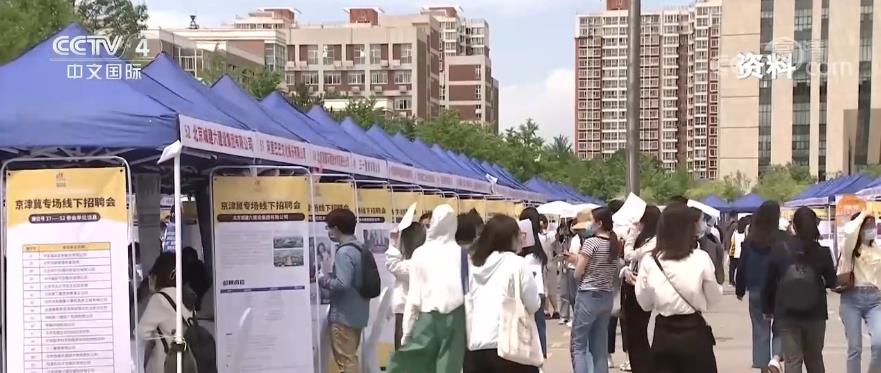
New career, new youth, new stage of choosing a job | A number of measures to help graduates find jobs "package", a new format has spawned a large number of entrepreneurial employment opportunities.

  CCTV News:This year, the number of college graduates nationwide reached 9.09 million, a record high. The Ministry of Human Resources and Social Security said that it should improve the quality of employment services, strengthen key assistance, provide good services for college graduates, undertake various measures to ensure employment, and vigorously support graduates’ employment and entrepreneurship. According to the survey of Young People’s New Career Guide, more than 50% of young people want to try a new career, and nearly 20% have started to engage in related occupations. In the graduation season, what role does the new occupation play in attracting college students’ employment? Come and watch the news observation.

  The data shows that there are 9.09 million college graduates nationwide this year, an increase of 350,000 over last year, reaching a new record high. The Ministry of Human Resources and Social Security said that it will continue to take a number of measures to implement the "package office" for graduate employment policy, speed up the implementation of social security subsidies, training subsidies and other policies, and encourage small and medium-sized enterprises to absorb more graduates’ employment.

  In March this year, the Ministry of Human Resources and Social Security and other three departments jointly released 18 new jobs, including integrated circuit engineering and technical personnel, enterprise compliance engineer and beverage mixer. At present, 56 new occupations have been announced in China, including a number of new occupations with high technical content and high skill requirements brought about by the transformation and upgrading of manufacturing industry, such as industrial robot system operators, quantum algorithm engineer, etc., as well as digital managers, all-media operators, internet marketers and so on.

  The popularity of new formats such as short video, live broadcast and online retail has also spawned a large number of entrepreneurial employment opportunities, indirectly driving a variety of new employment forms in the upstream and downstream industrial chains. A social media platform drives more than 36 million direct and indirect employment opportunities a year.

  The employment prospects of new occupations are broad. The Development Report of Online Learning Platform for New Occupations issued by the Ministry of Human Resources and Social Security shows that the demand for new occupations is huge in the next five years. It is estimated that there will be nearly 1.5 million cloud computing engineers, nearly 5 million Internet of Things installers, nearly 1 million drone drivers, nearly 1.5 million agricultural managers, nearly 5 million artificial intelligence talents, nearly 1.3 million building information model technicians, and 1.25 million industrial robot system operators and operators.

  Research shows that "post-80s" and "post-90s" are the main force of new occupations. Experts say that it is very important to strengthen skills training in order to make new careers a new stage for college students to choose jobs. In July, the Ministry of Human Resources and Social Security launched the "Online Learning Platform for New Occupations Version 3.0", and recently announced that "Skills China Action" will be organized during the "Tenth Five-Year Plan" period, and efforts will be made to increase skilled talents.

Lu Shu, a "country-flowing e-person", returns, and the joy heals and absorbs all negative energy.

The demon king returned with a heavy weight, and the fire was full! The second season of the online cartoon "King forgives" will be broadcast exclusively on Tencent video at 10: 00 every Saturday from December 30th. After customizing the file, the official has released the second season animation OP and several previews PV. Lv Shu and Xiaoyu will embark on a new adventure in the new story, and the animation will bring you joy in the New Year in a funny style.

Lu Shu, a "country-flowing e-person", returns, and the joy heals and absorbs all negative energy.

happyEFan, sympathetic expression of the younger generation

The animation "King Forgive Me" tells the story of a high school student, Lu Shu, who awakened a supernatural ability in a car accident, collecting negative energy through "killing people", "irritating people" and "choking people", becoming stronger and stronger by transforming negative energy into spiritual resources, and finally becoming the strongest "big devil" on the surface with a mouth.

Different from other animations, the animation of "King Spare My Life 2" focuses on the concept of e-fan, focusing on aura recovery, supplemented by modern humor, which is not serious, but makes people feel relaxed and happy. Playing with stalks and interesting reversal of plots always stirs the emotions of the audience. Lu Shu, the male host of "Heaven and Earth", has become a substitute for contemporary young people and has spoken out what everyone dares to say in their daily lives. The cool feeling created by the highly stylized music and picture production is also widely praised by the public.

In addition to fun, the warm and healed brotherhood and grand world outlook in this animation also brought a strong sense of healing to the audience, as if all negative energy would be absorbed in the process of chasing fans. It resonates with and expresses the mental state of contemporary young people, which makes E people enjoy themselves and relieve their anger. I people will be unconsciously attracted by the magnetic field of animation after watching it, and then laugh.

Guoman flowePeople,Enrich the group image and rekindle the blood

"Let others live, fix for yourself"! As the ceiling of E-people in animation industry, Lu Shu, the king of strong mouth, used other people’s resentment to improve his cultivation, and then mastered the "irritating" traffic password. Its seemingly unattractive people’s design often makes people hate and love because of the rationality of "Yi". In the second season of animation, Lu Shu will continue to grasp the underlying logic of "making others angry and improving themselves", bringing more joyful and funny content to the audience. At the same time, he will also bring more excitement to the audience in the new adventure of competing with foreign forces for relics and completing dangerous spy missions.

Lv Xiaoyu, a smart girl with a poisonous tongue, looks lovely, but her ability to kill others is not under Lv Shu’s. In the first season, she once filled Li Xuanyi with resentment because of the plan. At the same time, she is also a foodie. In her daily life, she will be happy because of a tomato scrambled egg, and she is often pinched by her brother because of her gluttony. In the second season of animation, she will complete her personal growth and transformation, and fight side by side with her brother.

In addition to the brothers and sisters Lv Shu and Lv Xiaoyu, there are also a lot of group characters in the animation. Li Xianyi, a good neighbor who is always angry with Lv Shu’s brothers and sisters, is a talented girl Cao Qingci in Daoyuan class who can only practice sword, Nie Ting, who is cold and rational but extremely justifying her faults, Li Yixiao, who is straightforward and timid, and a little fierce and super cute beast … Through these various characters’ meeting experiences, they are intertwined.

Brother and sister fight side by side, and the story of the ruins continues to be wonderful.

The animation "King Rao Life" is adapted from the novel of the same name created by the platinum writer "Talking Elbow". The first season of animation was broadcast in 2021. The unique style, wonderful role setting and humorous plot made this novel, unique and rich animation gain a lot of audience’s love as soon as it was launched, with the total broadcast volume exceeding 400 million and the average broadcast volume exceeding 35 million. The second season animation is still produced by Penguin Film and Tencent Animation, produced by Big Firebird Culture Company, directed by Nishimura Liang, and starred by voice actors such as Ajie, Yang Tianxiang, Zhao Shuang, Wei Chao and Liu Cong.

In the first season, Lu Shu has entered the Daoyuan class to learn the basics of power, but during a relic security work, he was involved in the ruins that suddenly opened with his classmates, and the content of the second season of animation began. It can be seen from the preview information released at present that in the era of Reiki recovery, the man who has awakened his special ability intended to be a low-key person, but for the sake of his sister Lv Xiaoyu not being hurt, he took the initiative to take responsibility and entered the game, and decided to join hands with his sister Xiaoyu to safeguard the world.

Will Lu Shu, who has outstanding performance in the ruins, become the regular army of tight encirclement? How many people will he have to be angry with and what challenges will he face on his way to becoming the Great Devil? With a mouth, what other surprises do you not know about Lushu? Stay tuned!

Investigation on "Punching in online celebrity": Many serious cases of disturbing the people can be detained.

       CCTV News:In the last year or two, a very popular word on the Internet is: online celebrity punched in, which means that a video of a certain place was broadcast on the relevant platform, which aroused widespread concern, and then a large number of tourists and photographers went to the place to shoot and remember. The influx of people may have boosted local tourism revenue, but some uncivilized phenomena have also embarrassed these places with hot networks.

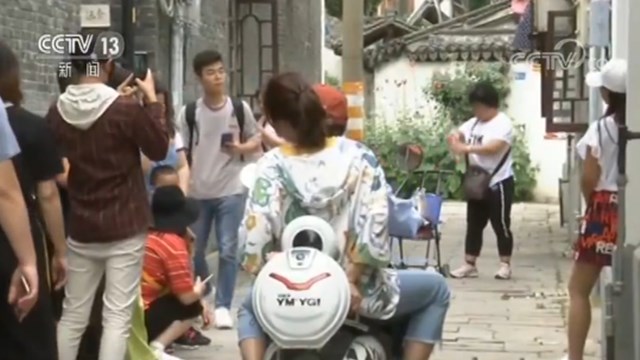
       Tongdeli is an alley in Suzhou, about 2 meters wide and more than 200 meters long. The 19 western-style houses here constitute the most typical buildings of the Republic of China in Suzhou. The old house named after a TV series is here. Thousands of tourists come here to take photos and punch in every day, and the lives of more than 100 households have changed.

one

       Aunt Xu is an old resident of No.8 in Tongli. In the past two months, she has received a large number of tourists to visit, take photos and consult every day. Her home was originally an actor’s rest area, and No.7 was the prototype of Su’s old house, but because the layout of the two houses is the same, Aunt Xu often takes the initiative to open the door to receive visitors in order to alleviate the pressure next door.

       Xu Lifang, a resident of Tongli, said: "There are very few uncivilized tourists who are still knocking at the door of Su’s old house in the middle of the night."

       Aunt Xu said that she actually welcomes everyone to visit, but there are some problems, and even the house number of her own "No.8 Tongdeli" has disappeared a few days ago. The location of the actor lounge in the play has also been affected by the large passenger flow.

one

       Lin Shengguo, a resident of Deli, said: "When someone opens the door in the whole community, once a person takes the lead to rush into the owner’s room, all the tourists will file in, and people will be packed around their homes in the morning. This situation is very common, just like my place, where I used to sit, and so are the tourists. Even the floor of my place was trampled, the board was broken, and some people fell in my place."

one

       On the roadside of Pingjiang, Suzhou, a small courtyard called Haneryuan is the prototype of the restaurant "Meat eater" where the hero and heroine of this hit TV series met. A large number of tourists have been jammed at the door for two months.

       CCTV reporter Wang Shengdong: "The surge of photo-punching passengers has also brought unprecedented pressure to the garden. For example, this century-old wall around me, many tourists have taken photos with their hands, and the wall has been destroyed. The garden has to arrange special personnel to maintain order at the door."

       Haner Garden staff: "Some of them are for consumption, but more people simply punch in for taking pictures, which will lead to many people trampling on the flowers and plants in our garden, and throwing garbage everywhere, which will affect the environment of our whole garden and elegance. There are stone bridges and Ping Jianghe, which are actually very dangerous for everyone."

one

       Destruction of flowers and plants is even more common in other places in online celebrity. Chengdu Airport Flower Field is an open sightseeing area built by Chengdu Shuangliu District in the landing area of the east runway of Shuangliu Airport. It has become a place for many tourists to punch in because it can photograph flowers and planes at the same time. The reporter saw at the scene that most tourists can enjoy the flowers on the observation deck, greenway and other places. However, many tourists ignored the fence, and even the staff dissuaded them, insisting on taking photos and playing in the flower planting area. Some flower fields near the sightseeing channel have been trampled by tourists, which is very conspicuous.

one

       The "online celebrity punch card place", which suddenly rises in heat, can be said to be an embarrassing problem for the local area. There are more tourists, and their popularity has been greatly improved; But the uncivilized behavior of tourists interferes with everyone’s normal life. The Dragon Boat Festival holiday is approaching, and relevant departments in some places have prepared emergency plans for the upcoming large passenger flow.

       Li Jun, a member of the comprehensive administrative law enforcement brigade in the Fengmen area: "Our urban management department has also joined forces with the public security traffic police, transportation and other departments to cope with the peak passenger flow during the Dragon Boat Festival holiday. We have put forward corresponding measures, such as one-way circulation of vehicles, and then our passenger flow has also gone from left to right, and timely guidance has been made to deal with the unexpected incident that happened to some tourists. For these uncivilized behaviors, we first educate them through community volunteers. "

       Ji Zhaoliang, secretary of the Party Committee of Jinfan Road Community, said: "One is the combination of dredging and blocking. If it is sparse, it is mainly because we have also made a hand-painted map, then we will divert residents or some tourists and go to other places to have a look. On the other hand, we have also posted some soft guiding signs at the exit of Tongli, so as not to disturb some normal lives of our residents. "

       In fact, these places in online celebrity are not the tourist attractions in our strict sense, and the short-term gathering of passengers by punching cards will bring great pressure to the local area. On the one hand, we call on tourists to travel in a civilized way and punch cards rationally; On the other hand, for uncivilized behavior, some legal experts said that excessive disturbance to the people and damage to the environment should bear the responsibility.

       Lawyer Cheng Xiaowen: "First of all, it is the provisions of the Law on Public Security Administration Punishment. Once there is a corresponding actor who disturbs some lives and normal life order of others, the public security organs can give warnings and punishments after reporting to the police, and in serious cases, they can be administratively detained."

       According to the lawyer, knocking at the door in the middle of the night and shouting the names of the characters in the TV series are also suspected of infringement. On the one hand, they disturb the normal rest of others. On the other hand, if residents can prove that this behavior has caused their physical, mental or health damage, then the actor should not only apologize, but also make financial compensation.

       Lawyer Cheng Xiaowen: "As a tourist, it’s good to visit people’s private houses, or other places in online celebrity, or to punch cards. First of all, you should travel in a civilized way, respect others, and you respect others, so you can get others’ respect for you."

       Some experts in the field of tourism also said that online celebrity’s punch-in fires quickly and the fever drops quickly, which often caught the local residents and functional departments off guard. Therefore, in addition to on-site emergency coordination due to too many tourists, various means can be used to keep the passenger flow in online celebrity stable, orderly and long-term.

       Deng Ning, vice president of beijing international studies university Institute of Tourism Science, said: "We can relatively explore some of its tourism products, or some tourist routes, and explore its connection with the so-called online celebrity land, so that this kind of people flow can have other places to visit, spend money and experience some local elements with more humanistic care besides punching in. In this case, In order to form a so-called complete tourism experience, it is especially necessary to combine with other local things, such as cultural and creative products, catering, performing arts and so on. It does not have to be physically focused on a certain point, and it can be extended a little more. "

Huai ‘an, Jiangsu Province: The Grand Canal "deformed" and unblocked the golden waterway.

  The Grand Canal and Li Canal pass through Huai ‘an City. Following the clue of a 1958 "Comparison Diagram of the New and Old River Lines of the Grand Canal Project" in Huai ‘an Archives, we can understand the relationship between the "two canals" and also open the struggle history of Huai ‘an people in governing the Grand Canal under the leadership of the Party.

  Schematic diagram of comparison between old and new river lines of Grand Canal Project

  The Li Canal, also known as the Huaiyang Canal, starts from Huai ‘an Qingkou Hub in the north and flows into the Yangtze River in Yangzhou in the south. Its predecessor was the Han ditch dug in the 5th century BC, which was the earliest section of the Grand Canal.

  The riverbanks on both sides are short and thin, resulting in poor flood control ability of the Li Canal. Before the founding of New China, during the flood season, Li Canal often burst its banks and overflowed everywhere, and Huai ‘an was the first victim. After the flood, the water source dried up, and shipping and people’s living water were in trouble. In the early days of the founding of New China, the width of some sections of the Li Canal was only over 20 meters, and the narrowest part was only about 10 meters. In the wet season, the water depth is only 2-3 meters, and only wooden boats of about 30 tons can pass. In the dry season, navigation is often interrupted, or even dried up to the bottom, and shipping is basically paralyzed.

  After the founding of New China, the Grand Canal was managed. By the end of 1950s, more than 1,100 kilometers of the Grand Canal had been navigable. With the rapid development of socialist construction, in terms of industrial and agricultural construction, the areas along the Beijing-Hangzhou Grand Canal have achieved unprecedented development, and the transportation volume of various industrial and agricultural products has doubled. However, the transportation volume of the southern section of the Jin-Pu Railway has been saturated, and the position of the Grand Canal in inland navigation has become more prominent. In 1958, the State Council put forward the task of managing the Beijing-Hangzhou Canal by stages and unified planning.

  According to the Records of Huai ‘an Water Conservancy, the old canal in the urban area is narrow and tortuous, and there are cross-river sluice bridges such as Beimen Bridge, Shuimen Bridge and Qingjiang Gate. The revetment on both sides of the river needs to be demolished and rebuilt, and more than 25,500 factories and houses along the coast need to be demolished. There are a large number of underwater, so it is difficult to excavate in the urban area, and there are contradictions between construction and land and water transportation, and the development of Huaiyin Port is also restricted. In addition, there are towns such as Banzha and Hexia to the south of Huaiyin, and the task of demolition is great. After the comparison and demonstration of the schemes, it was decided to cut and straighten the original Huaiyin and Huai ‘an sections of the Grand Canal and open a new river.

  The west end of the project started from Yangzhuang Commune in Huaiyin County (now Huaiyin District) and ended at Yangmiao Village in Yanhe Commune in Huai ‘an County in the south. Construction started in September 1959. "The standing migrant workers of Chenji People’s Commune actively do all the preparatory work to ensure that they can participate in the excavation project on the Beijing-Hangzhou Grand Canal on time … …” On August 25, 1959, Huaihai Daily published an article entitled "The standing migrant workers of Chenji Commune are ready to leave for the Grand Canal site".

  According to Huaihai Daily, Huaiyin District invested more than 12,000 migrant workers in the Grand Canal construction site. The first phase of the project was originally planned to be completed in June 1960, but it was required by the provincial and prefectural committees to be completed in 1959, and the Huaiyin area sent more migrant workers twice, which made the project progress rapidly and completed half a year earlier than originally planned.

  "Before September last year, it was still flat. Now, a new river with a length of 2,900 meters, a width of 60 to 160 meters (the bottom of the river) and a depth of 5 to 5 meters and 5 inches has been opened, and levees with a height of 4 meters have been built on both sides. After inspection, the quality of the project is good." On January 5, 1960, Huaihai Daily described the scene after the completion of the first phase of the project.

  After the Huaihe section of the Grand Canal was finally completed, the Li Canal and the newly built Grand Canal coexisted.

  Beijing-Hangzhou Grand Canal

  From 1960 to 1982, the Jiangsu Provincial Communications Department treated the south section of the Li Canal irrigation main canal in northern Jiangsu in two phases. From December 1987 to the end of April 1988, the underwater dredging project was carried out on the waterway of the Huaibei section of the Subei Canal. In the 21st century, the "three to two" project has been implemented for the Huaibei section of the Northern Jiangsu Canal (from Yangzhuang Town in Huaiyin District to Huai ‘an Shiplock) to meet the needs of the rapid development of water transport.

  As the artery of water transport, the transportation function of the Grand Canal is irreplaceable. The Huai ‘an section of the Beijing-Hangzhou Canal is 60 kilometers long, which is the section with the highest shipping utilization rate. In recent years, Huai ‘an has fully implemented the strategic deployment of "a strong transportation country" and "a strong transportation province" by the central government, the provincial party committee and the provincial government, and made every effort to push the construction of the high-standard Grand Canal cultural belt to a new level. In 2018, the Provincial Communications Department compiled the "Implementation Plan for Promoting the Green Modern Shipping Development of the Beijing-Hangzhou Canal in Jiangsu Province", and determined the Huai’ an Shiplock to Jiulong Lake Park section in Huai’ an, which is one of the four demonstration sections in the province. At present, the construction of the green modern shipping demonstration zone in Huai ‘an section of the Beijing-Hangzhou Canal is in full swing, and it will be one of the national inland river shipping benchmarks and model projects for building a transportation power with clean and ecological waterway environment, clean and efficient port production, energy-saving and environmental protection of ship equipment, safe and convenient shipping service and remarkable improvement of cultural quality, which will greatly promote Huai ‘an’s economic and social development, coastal environmental beautification and historical and cultural protection.

Five months after 2023, advertising marketing should avoid these pits.

  In the past five months in 2023, marketing rollover incidents are not uncommon. The most fundamental way for enterprises to avoid marketing accidents is to attach importance to creativity, professional talents, hold high common sense, reiterate the bottom line, and regard brand growth rather than enterprise valuation as the top priority of business operations; The media and advertising marketing platforms should help enterprises to publish publicity information in compliance with the requirements of public opinion and guidance, and create a good brand image in strict accordance with the provisions of the Advertising Law. The following common problems in marketing should be avoided!
  1. Don’t touch the hot spots of major social events, especially those involving natural disasters and casualties.
  Many enterprises chase hot spots regardless of the bottom line, and encounter hot events, regardless of the willy-nilly, send a poster of friends circle first. This is especially serious for real estate enterprises. Events such as rainstorm and air crash have been used for marketing, which has attracted unanimous condemnation from public opinion.
  2, don’t involve political, racial and religious topics, and be careful when using cultural symbols with national and national symbols.
  This is an important common sense of advertising marketing. Once the car is overturned, it will be more than just being condemned. In particular, it should be pointed out that cultural symbols with national and national symbols, such as dragon, stone lion, Great Wall, Yangtze River and Yellow River, Huabiao and sundial, bear national feelings and national identity, and should not be dwarfed, vilified or distorted.
  Some brands have made such mistakes: the advertisement of a paint brand, in order to show that the paint is too slippery, the dragon on the column of the classical pavilion fell down; Off-road vehicle advertisement, stone lion bows to the vehicle; In sports brand advertisements, foreign basketball players beat dragons, Tai Chi elders and flying girls … These advertisements have been greatly criticized and resisted.
  3. Don’t make consumers feel disgusted & anxiety marketing should be moderate.
  Using fear appeal in advertising content, some shocking words, pictures and data may improve the communication effect, but consumers actually resist it and will not really accept it. Brands help consumers become what they want to be, which is the meaning of brands.
  4. Don’t copy and take chances.
  Enterprises should not be lucky, thinking that the original creator can’t find it. There is a memory in the Internet age. Once a plagiarized work is published, it will exist for a long time. Not being discovered today doesn’t mean not being discovered tomorrow. For example, a nut brand was scolded for hot search just because its advertising works were turned out a few years ago.
  5. Pay attention to copyright in the fields of audio, pictures and fonts.
  In recent years, copyright awareness has often been raised, because there are a lot of incidents in which defendants have been brought to court for audio, picture and font infringement. The marketing department of excellent enterprises should train the copyright knowledge such as audio, fonts, pictures, portrait rights and copyright in the first week of employment; When the relevant person in charge of the enterprise gets the creative sample, he must confirm that the copyright is clear.
  6. Don’t discriminate against specific user groups, create gender opposition, and don’t hurt animals in advertising content.
  Enterprises can conduct marketing for target groups, but don’t talk about specific groups, let alone discriminate. A large part of marketing rollover incidents involve gender opposition and conflict of values, and marketers can’t regard creating contradictions as traffic passwords.
  There is no need to belittle men when praising women in advertisements; Praise men and there is no need to belittle women; Holding young people, there is no need to step on middle-aged people; Eulogize professional women, there is no need to belittle full-time mothers; Emphasize the importance of beauty and don’t belittle ordinary people; Sell slimming products, don’t ridicule fat people …
  7. Don’t condescend to educate consumers about how they should live.
  What consumers need is understanding and recognition, not education. Enterprises can promote high-end products, but not with a sense of superiority.
  8, crisis public relations don’t try to justify, don’t bully, don’t be arrogant.
  When the conflict between enterprises and individual employees or users causes public concern, public sentiment naturally sympathizes with the weak. Don’t try to be brave even if the enterprise is in charge, because the public is emotional, not rational. If the enterprise does something wrong, it will honestly apologize, silently correct it, and wait for time to dilute the heat of public opinion.
  9. Learn the Advertising Law well and take the first step in marketing.
  In fact, many advertising common sense and marketing bottom line have clear constraints in the Advertising Law. For example, alcohol advertisements cannot express or imply that drinking can eliminate tension and anxiety and increase physical strength. The national flag and national emblem cannot appear in commercial posters; Red scarves and so on cannot appear in commercial advertisements.

Children should pay attention to these things when the age of vaccination is prolonged.

Interview video

Children's vaccination is extended to 18 years old. Experts interpret the latest version of children's immunization program for you.

Interview site

Children's vaccination is extended to 18 years old. Experts interpret the latest version of children's immunization program for you.

Lu Mingxia, Director of Monitoring Room 1, Institute of Immunization Planning, Henan CDC

  Vaccination is the most direct and effective measure to prevent infectious diseases. National Health Commission recently published "Procedures and Instructions for Children’s Immunization under the National Immunization Program (2021 Edition)", which made the latest planning and adjustment on vaccination age, vaccination site, replanting principle and other contents. On the afternoon of March 18th, Lu Mingxia, director of the first monitoring room of the Institute of Immunization Planning of the Provincial Center for Disease Control and Prevention, made a guest visit to the online interview program of Henan government website to interpret the new national immunization program and introduce the vaccination situation of children in Henan province.

  There are four changes in the new immunization program, and the supplementary vaccination of children is extended to 18 years old.

  "Vaccination is the most direct, effective and economical measure to prevent infectious diseases, and immunization planning vaccine refers to the vaccine that is vaccinated for school-age children free of charge according to national procedures, and it is also a vaccine that must be vaccinated." Lu Mingxia introduced that the National Immunization Program for Children (2021 Edition) is the latest version of the children’s immunization program in our country. Compared with 2016, there are four main changes.

  First, the age of replanting is prolonged. The age range of coverage has been expanded from 14 years old and below to 18 years old. On the one hand, the definition of adults in China is over 18 years old, and on the other hand, it has laid a foundation for promoting vaccination and replanting of adolescents in the future.

  The second is to clarify the inoculation site. When a variety of vaccines are inoculated at the same time, they can be inoculated in the left and right arms and the left and right thighs respectively, which is more specific than the 2016 version of "Two or more vaccines should be inoculated in different parts".

  Third, the use of vaccines is more operational. For example, in the part of hepatitis B vaccine, it is more operable to vaccinate newborns and low-birth-weight infants born to mothers with positive or unknown hepatitis B surface antigen, and in the part of BCG, the principle of BCG vaccination for premature infants has been added.

  Fourth, the vaccination guidelines for children with special health status have been added. Detailed guidelines are defined for vaccination of children with premature delivery, low birth weight, allergy, abnormal immune function, jaundice, liver disease, encephalopathy and common congenital diseases.

  "In short, the new national immunization program is more detailed, which is conducive to the implementation of vaccination doctors and the healthy growth of children." Lu Mingxia said.

  Vaccination should be kept on time and throughout the whole process.childrenVaccination certificate

  According to Lu Mingxia, since 1978, the state has been vaccinating people in a planned way to prevent infectious diseases. According to the needs of infectious disease prevention and control, the content of children’s immunization program has been increased and adjusted several times. At present, there are 11 kinds of vaccines for children in Henan Province to prevent 12 kinds of infectious diseases, that is, "11 vaccines against 12 diseases". "There are more than 1 million newborns born every year in the province, and the vaccination rate is over 90%. An immune barrier has been established among the population. The incidence of these 12 vaccine-targeted infectious diseases is very low, such as polio, also known as polio. There have been no cases in Henan for 28 consecutive years."

  Lu Mingxia reminds parents that vaccine is the best health gift for their children. They should take their children to be vaccinated in time and vaccinate them on time and in the whole process according to the provisions of immunization procedures. If you miss the vaccination time for special reasons, it will increase the risk of disease exposure, and replant it in time when conditions permit. In addition, we must keep the vaccination certificate well, so as not to affect children’s normal attendance at kindergarten and primary school. (Text/Yin Xinyu Zhu Ping Zhao Meng Camera/Mu Yu Wang Shuangfei Jia Zhihao Clip/Jiang Yuxi)

Detective Chinatown 3 assembled Asian detective Masami Nagasawa to join in surprise.


1905 movie network news A few days ago, the film was scheduled for the New Year’s Day in 2021 and returned to the Spring Festival file. The discussion and expectation of movies on various platforms have been climbing all the way, and the ticketing platform has been constantly refreshed. The netizens are excited to comment: "I finally wait for you!" When Detective Chinatown 3 returned from new york, he was happy to visit Tokyo. Both the production and the lineup were upgraded in an all-round way.


Masami Nagasawa


As early as the end of the film, director Chen Sicheng planted the seeds of the third stop in Tokyo, and Tsumabuki Satoshi played Japanese detective Noda Hao, calling Tang Renhe and Qin Feng for help. When the audience finished watching it, they spontaneously left a message under the Detective Chinatown 3 movie item in advance, "If only there were Masami Nagasawa … …” I thought it was an unrealistic wish, but unexpectedly, the Asian goddess really came! As one of the most popular Japanese actresses in China, the joining of "Ma Jiang" Masami Nagasawa surprised fans. A half-joking comment in 2018 turned out to be a dream come true. Masami Nagasawa once said in an interview that he likes Tang Tan 2 very much, which has China’s unique sense of joy and joy, and the script of Tang Tan 3 is more attractive. With its powerful IP power, the "Tang Detective" series attracts the best filmmakers in the world.

Netizens expect Masami Nagasawa to join.

Other actors in Detective Chinatown 3 are equally heavy, including Starlight Glimmer, the Asian All-Star Team. Tsumabuki Satoshi, an old friend and starring in Tang Tan series; Tony Jia, the most famous action star in Thailand, has been exporting super-hot dramas in series and other films; Shōta Sometani who contributed a wonderful performance in the film; Honami Suzuki, who plays the role of Li Xiang and creates the memory of the times; As well as powerful actors Tadanobu Asano and Tomokazu Miura, will gather in Tokyo to meet the ultimate secret room problem.

Among them, Japanese detective Tsumabuki Satoshi and Thai detective Tony Jia, together with Wang Baoqiang and Haoran Liu, formed the "Asian Detective Union" to solve the most difficult cases since the Tang Detective Series. The four detectives have different cultural backgrounds, skills and personalities. They love each other and kill each other all the way, and they collide with more jokes. "They want to laugh when they stand together." Can the new "Asian Detective League" solve the puzzle and find the mysterious Q, and what role will the goddess Masami Nagasawa play? Detective Chinatown 3 meets you on the first day of 2021!

Building agriculture into a big industry (promoting rural revitalization in an all-round way)

In the autumn season, the vast fields are full of bumper harvests.

In the rice fields of Qing ‘an County, Heilongjiang Province, the combine harvester shuttles back and forth, and the golden rice keeps flowing into the grain truck. "Big base with big equipment, fast and good. There are more than 1.3 million mu of rice in the county, and the comprehensive mechanization rate of field operations is 96.8%. " Fan Jun, director of Qing ‘an Agricultural Technology Extension Center, said.

Zhengyang Lu Hua Luzhou-flavor Peanut Oil Co., Ltd. in Zhengyang County, Henan Province, the automatic production line keeps running, producing 6,000 barrels of fine peanut oil per hour. "From selling raw materials to selling products and brands, the county has built a peanut industry chain covering planting, deep processing, futures delivery, spot trade and cultural tourism." Guan Xia, director of the Agricultural and Rural Bureau of Zhengyang County, said.

General Secretary of the Supreme Leader pointed out during his inspection tour in Jiangxi: "Insist on developing agriculture through industry, quality and green, and make agriculture a big industry". During his inspection tour in Heilongjiang, the Supreme Leader stressed: "We should take the development of modern agriculture as the main direction, speed up the construction of modern agricultural bases, large enterprises and large industries, and take the lead in realizing the modernization of agricultural materials and equipment, science and technology, management and management, agricultural informationization and sustainable utilization of resources."

This year is the first year to fully implement the spirit of the 20th National Congress of the Communist Party of China, and it is a crucial year to comprehensively promote rural revitalization and accelerate the construction of an agricultural power. Under the strong leadership of the CPC Central Committee with the Supreme Leader as the core, China’s agricultural modernization has made great progress, with abundant crops for planting, flourishing animal husbandry and six kinds of livestock, and the development of rural characteristic industries. The broad masses of cadres and people have worked hard to make agriculture a big industry and realize agricultural and rural modernization at an early date.

Construct a high-quality and efficient diversified supply system to ensure the stable and safe supply of grain and important agricultural products.

General Secretary of the Supreme Leader stressed: "No matter how high the degree of social modernization is, the stable supply of food and important agricultural products for more than 1.4 billion people is always a top priority."

To build agriculture into a big industry and build a diversified supply system with high quality and high efficiency, we must first firmly hold the rice bowl in our own hands.

In the harvest season, Huang Siwen, a large grain grower, is grabbing rice in the high-standard farmland of Sangtian Town, Nanfeng County, Jiangxi Province. "This year, 2,500 mu of mid-season rice was planted, and the yield per mu was about 1,300 Jin." Huang Siwen said, "The grain subsidy was put in place in time, the agricultural technology guidance went straight to Tiantou, and the’ big iron cow’ helped the whole process. This year is another bumper harvest year."

There must be strong support behind big bases and big equipment.

Strong policy-the state has improved the "trinity" policy system of price, subsidy and insurance, issued a one-time subsidy of 10 billion yuan to actual grain farmers, and the central government timely issued agricultural disaster prevention and relief funds … The policy measures are solid, stable expectations and strong confidence.

Strong science and technology-improved varieties are planted, good farming methods are used, and agricultural machinery is galloping. The contribution rate of agricultural science and technology progress in the country has reached 62.4%, the coverage rate of improved varieties of crops has exceeded 96%, and the comprehensive mechanization rate of crop cultivation has exceeded 73%. From "knowing how to farm" to "cultivating wisely", "golden pole" has continuously injected new kinetic energy into modern agriculture.

Strong foundation-high-standard farmland construction, black land protection, and high-yield demonstration area creation take a multi-pronged approach. Oda has become a big field, and "dividends" have been continuously released. By the end of 2022, a total of 1 billion mu of high-standard farmland had been built in China, which ensured a stable grain production capacity of more than 1 trillion Jin.

Strong service-planting good land and increasing grain production, financial support is indispensable. With the increasing financial support for agriculture, rural areas and farmers, financial institutions have also increased credit support. In the first three quarters of this year, the Agricultural Bank of China invested more than 200 billion yuan in loans in key grain areas.

Strong support brings steady development. China’s grain production has been bumper year after year, and the total output has been stable at more than 1.3 trillion Jin for eight consecutive years. According to the agricultural dispatch of the Ministry of Agriculture and Rural Affairs, as of October 22nd, the national autumn grain harvest has reached 81.3%, and the increase of autumn grain production is a foregone conclusion, and the annual grain output is expected to hit a new record high.

Ask for food from the forest, from rivers, lakes and seas, and from facility agriculture. Build agriculture into a big industry, coordinate grain, economy, feeding, agriculture, forestry, animal husbandry and fishing, and build a diversified supply system with high quality and high efficiency.

In the Gobi Eco-agricultural Industrial Park in Suzhou District, Jiuquan City, Gansu Province, vegetables and melons are full of vitality. Qin Cunguo, a vegetable grower, said: "Since the automatic control equipment of water and fertilizer integration was used, irrigated land has become irrigated seedlings. The average water consumption per mu is nearly half that of Datian, saving water and increasing production, and fresh vegetables are kept in the four seasons. "

Gao Fuliang, a farmer in Qiantang Village, beside the fish pond in Yuyue Town, Deqing County, Zhejiang Province, said: "With the continuous upgrading of fish pond facilities and the new green farming technology, the water is good and the fish grow better."

According to local conditions, based on resource endowment, all localities give full play to their comparative advantages. In addition to more than 1.9 billion mu of cultivated land, more than 4 billion mu of woodland, nearly 4 billion mu of grassland and a large number of rivers, lakes and seas have gradually become an important part of the diversified food supply system.

Facility agriculture has contributed a lot. At present, the planting area of modern facilities in China has reached 40 million mu, and about 70% of meat, eggs and milk and 52% of cultured aquatic products are provided by facility farming.

Extend the industrial chain, upgrade the value chain and expand the space for agricultural development.

Industrial revitalization is the top priority of rural revitalization.

When General Secretary of Supreme Leader presided over the symposium to promote the comprehensive revitalization of Northeast China in the new era, he pointed out: "Cooperate to promote the primary processing and intensive processing of agricultural products, extend the industrial chain, upgrade the value chain, expand the space for agricultural development, and promote agricultural efficiency and farmers’ income."

To build agriculture into a big industry, we should ponder over the word "native products" and build an agricultural industrial system with integrated production, marketing and sales.

Chestnut mushrooms grow just right in the greenhouse of Shanghegu Food Co., Ltd. in Qianxi County, Hebei Province. Zhang Jixiao, the person in charge of the company, said: "From planting chestnuts to planting chestnuts and mushrooms, the company is planning to build a production and processing base to extend the industrial chain of chestnuts."

The data show that the total cultivation of edible fungi industry in Qianxi County, mainly chestnut mushrooms, reached 100 million sticks, and the annual output of fresh mushrooms was 20,000 tons, achieving an output value of nearly 400 million yuan. A variety of chestnut powder, chestnut cakes and so on are also listed in hardcover. The cultivation area is 750,000 mu, the annual output is 80,000 tons, and the brand value is 3.409 billion yuan. Small chestnut has grown into a big industry moving to the west.

Looking at the whole country, the countryside is suitable for industry and the industry is prosperous. Relying on the characteristic resources, all localities have transformed the advantages of rural resources, ecology and culture into the advantages of products and industries, and formed a number of "township name" and "local name" brands, and made great articles on local products. Up to now, China has built 300 national modern agricultural industrial parks, 180 industrial clusters with advantages and characteristics, and 1,509 towns with strong agricultural industries, and the conversion rate of agricultural products processing has reached 72%.

The relevant person in charge of the Ministry of Agriculture and Rural Affairs said: "In the future, the construction of agricultural industrial chain will be further strengthened, and efforts should be made in R&D, production, processing, storage and transportation, sales, brand, experience, consumption and service to comprehensively improve the stability of the industrial system, and take multiple measures to expand the space for agricultural value-added and efficiency, strengthen the industrial chain, and improve the system of increasing income with agriculture."

To build agriculture into a big industry, it is necessary to cultivate new industries and formats in rural areas, promote agricultural efficiency and increase farmers’ income.

At the live broadcast base of e-commerce industrial park in Ningling County, Henan Province, the live broadcasters are recommending various agricultural products to netizens, and the atmosphere is hot. In the nearby logistics sorting center, workers are busy packing and loading cars to transport all kinds of agricultural products to various places. With the help of more than 1,000 online stores in the e-commerce industrial park, the annual sales volume of Ningling crisp pears has exceeded 100 million Jin. Not only do pears sell well, but also tourists come in droves.

New industries and new formats activate the great potential of rural industries. There are more than 300,000 leisure agriculture business entities in China, and the annual operating income exceeds 700 billion yuan. There are more than 30,000 e-commerce companies involved in agriculture, and the retail sales of rural networks exceed 2 trillion yuan. The deep integration of the primary, secondary and tertiary industries in rural areas will drive more farmers to achieve local employment. In the first three quarters of this year, the per capita disposable income of rural residents was 15,705 yuan, a real increase of 7.3% after deducting the price factor.

Develop moderate scale operation and speed up the improvement of agricultural socialized service system

Agricultural modernization is inseparable from the innovation of production and management methods.

General Secretary of the Supreme Leader stressed: "Developing moderate-scale operation is the direction of modern agriculture" and "accelerating the improvement of agricultural socialized service system, serving and driving small farmers well".

Innovate agricultural management system and mechanism and develop moderate scale management.

300,000 mu of peppers in Bozhou District, Zunyi City, Guizhou Province entered the harvest season, and pepper farmers were busy. "This year, 40 acres of peppers have been planted, and more than 10,000 kilograms have been sold, and the market is not worried." He Congwei, a villager in Yuanzi Village, Tiechang Town, picks peppers every morning and sends them to the processing workshop in the village.

This workshop is an important part of the order mode of "company+village collective+cooperative+village workshop+farmer". "From seed supply to technical guidance, field management to acquisition, we provide farmers with a’ one-stop’ service. At present, the daily purchase of peppers reaches 200 tons." Tang Songbai, deputy general manager of Guizhou Zhuohao Food Co., Ltd. said.

"Based on the basic national conditions and agricultural conditions of small farmers in big countries and accelerating the modernization of agriculture and rural areas, we should put innovative agricultural management systems and mechanisms in a prominent position, and improve agricultural scale benefits from two dimensions: cultivating new agricultural management entities and developing agricultural service outsourcing markets." Ye Xingqing, Minister of Rural Economic Research Department of the State Council Development Research Center, said.

Looking at the whole country, more than 4 million family farms and 2.22 million farmers’ cooperatives are actively exploring in the fields of improved seed breeding and promotion, green unified prevention and control, standardized production, etc., driving farmers, connecting markets, leading development, and promoting the continuous improvement of agricultural intensification, specialization, organization and socialization.

Strengthen the ability of agricultural socialized service and solve the production problems that one household can’t do it, can’t do it well, and can’t do it cost-effectively.

"1,000 mu of soybeans are entrusted to Beidahuang Agricultural Service Group, which is planted in two rows and close planting. One mu of land can be 70 kg higher than its own production, saving effort and increasing production." Lu Chunfeng, a villager from Xingfu Village, Xingfu Town, Suihua City, Heilongjiang Province, said.

The socialized service of Beidahuang Agricultural Service Group is not only effective on a large scale and in a large area, but also applicable in the south, which is good at intensive cultivation. Xiaogang Village, Fengyang County, Anhui Province, through the method of field transformation, the average field area has reached 27 mu, and unmanned transplanting can also be realized. The socialized service area of Beidahuang Agricultural Service Group has reached 78 million mu, and the service has driven 3.5 million small farmers.

At present, more than 1.07 million agricultural socialized service organizations have become intimate "field nannies" of farmers, and their services have driven more than 91 million small farmers, covering more than 1.97 billion mu.

The relevant person in charge of the Ministry of Agriculture and Rural Affairs said: "In the direction of consolidating the modern large-scale agricultural management system, it is necessary to improve and perfect the mechanism of linking agriculture with agriculture. Adhere to the combination of strengthening the driving efficiency and improving the driving ability, scientifically and reasonably determine the driving mode and the degree of benefit, improve and improve the long-term mechanism of’ accurate’,’ stable’ and’ long-term’, and promote the organic connection between small farmers and modern agricultural development. "

A strong country must first strengthen agriculture, and a strong agriculture can strengthen the country. The fundamental way out for agriculture lies in modernization. In the new era and new journey, under the guidance of Socialism with Chinese characteristics Thought, the supreme leader in the new era, hundreds of millions of peasants Qi Xin have worked together to build a better life, agricultural modernization has made great strides forward, and the vast fields have unlimited hopes.