Camellia oleifera fruit picker invented by Central South Forestry University can reach 30 laborers.

Camellia oleifera fruit picker invented by Central South Forestry University can reach 30 laborers.

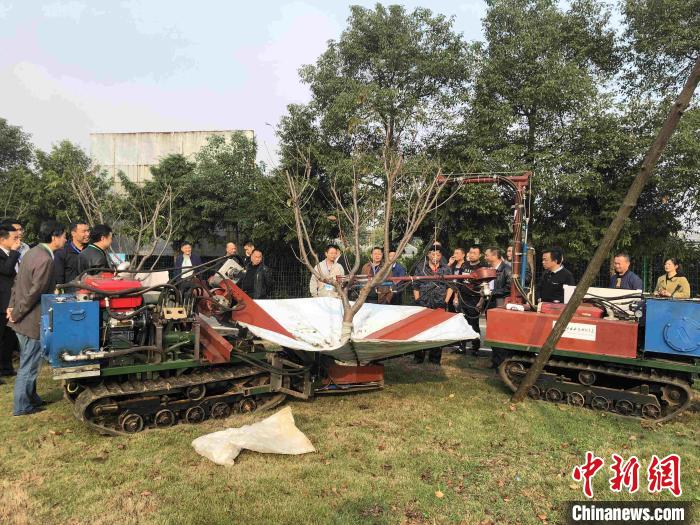
  Camellia oleifera fruit picker invented by Li Lijun team of Central South Forestry University. Photo courtesy of Zhongnan Forest

  Changsha, December 25th (Reporter Xu Zhixiong correspondent Zou Min Zhou Ying) "Our invention has been recognized as reaching the international advanced level." On 25th, Li Lijun, Dean of School of Mechanical and Electrical Engineering, Central South University of Forestry and Technology, proudly said that this newly-developed machine can match the working efficiency of 30 laborers in the past.

  Tea oil is as famous as olive oil, and is also called "the king of oil", which has unique nutritional value. At the same time, tea oil is also a unique oil species in China, with a history of cultivation and utilization of more than 2,300 years. However, for a long time, because Camellia oleifera grows in the mountains, tea seeds need to be picked completely by hand. "It is difficult to hire people and the labor cost is high" has become a bottleneck that seriously restricts the development of the tea oil industry, and it also directly leads to the continuous rise of tea oil prices, which makes ordinary people discouraged.

  Camellia oleifera fruit picker being tested. Photo courtesy of Zhongnan Forest

  Therefore, as early as 2009, the scientific research team of Central South University of Forestry and Science headed by Li Lijun began to study the replacement of manual picking of tea seeds with machines. In the past ten years, they have traveled all over the main tea-oil producing areas in Hunan, fully investigated the planting and picking characteristics of tea-oil trees, and constantly tackled technical problems and improved the prototype of tea-oil tree fruit picker.

  In view of the characteristics of Camellia oleifera forest, such as complex terrain, random tree shape and synchronous flowers and fruits, Li Lijun team listed four kinds of Camellia oleifera fruit picking methods, made nine rounds of prototypes, broke through seven key technologies, and made a lot of prototype tests, and finally the shaped Camellia oleifera fruit picker came out.

  "This machine not only has a smart ‘ Picker ’ It can be used for various tree-shaped operations and can walk freely in complex environments such as steep slopes. " Li Lijun said that the most important thing is that it can accurately match the energy, so as to achieve only picking the fruits without damaging the flowers or affecting the yield of tea seeds.

  Li Lijun said that at the just-concluded evaluation meeting of "Research on Key Techniques and Equipment of Camellia oleifera Fruit Picking" held by Hunan Forestry Society, the Camellia oleifera Fruit Picker of Central South Forestry University was recognized as having solved the problems of efficient picking of Camellia oleifera fruit and less flower loss, and the technology realized independent innovation, the equipment was reliable and practical, and the research results reached the international advanced level. "We plan to use one to two years to promote the beautification, multifunction, intelligence and serialization of Camellia oleifera fruit pickers, and realize mass production to benefit the majority of forest farmers." (End)

Stabilize enterprises, jobs and employment. The State Administration of Market Supervision has done so.

  CCTV News:On March 23rd, the State Council Office held a press conference on deepening the "streamline administration, delegate power, strengthen regulation and improve services" reform, promoting the "internet plus" action, and promoting "double innovation" to support the expansion of employment.

  At the meeting, Sun Meijun, deputy director of the State Administration of Market Supervision, said that it is an urgent task to promote epidemic prevention and control and economic and social development as a whole. The General Secretary of the Supreme Leader attached great importance to it and made a series of important instructions and instructions, demanding to speed up the establishment of an economic and social order compatible with epidemic prevention and control, comprehensively strengthen measures to stabilize employment, actively and orderly promote the resumption of work and production, and continue to optimize the business environment. Premier Li Keqiang put forward clear requirements for stabilizing employment and enterprises, emphasized stabilizing and supporting market players and enhancing the driving force of economic recovery. Market supervision departments resolutely implemented the decision-making arrangements of the CPC Central Committee and the State Council, based on their functions and took the initiative, vigorously promoted the "streamline administration, delegate power, strengthen regulation and improve services" reform, focused on optimizing the business environment, fully supported the resumption of production and entrepreneurship, and helped the epidemic prevention and control and economic and social development. Focus on several aspects of work:

  First, efforts should be made to solve problems and help enterprises to resume work and production.In view of the difficulties existing in the industrial chain, supply chain, capital chain and logistics chain of enterprises during the epidemic prevention and control period, including the difficulties in returning employees to their posts, we issued "Ten Articles of Support for Resuming Work and Production", and together with the Development and Reform Commission and other six departments, we issued "Guiding Opinions on Strengthening Support for Individual Industrial and Commercial Households in Response to the Impact of the Epidemic", with the aim of reducing costs and reducing burdens, helping individual industrial and commercial households to cope with the impact of the epidemic, supporting flexible employment through multiple channels, solving the problem of individual industrial and commercial households resuming business, and creating new opportunities.

  The second is to focus on supervision and law enforcement and maintain a fair and orderly market order.During the epidemic period, some lawless elements bid up the prices of masks, meltblown fabrics and forehead guns, making "national hardship" and "black-hearted money". Together with the public security organs, we severely cracked down, exposed typical cases, and published 10 batches of typical cases, which formed a powerful shock. At the same time, strengthen the food safety supervision of "rice bags" and "vegetable baskets", promptly investigate potential risks, strictly investigate the behavior of making and selling fake goods and arbitrarily raising prices, maintain market order, and create a safe and secure consumption environment.

  The third is to deepen reform and continuously optimize the business environment.Promote decentralization, facilitate market access, simplify product approval, and shorten the start-up time of enterprises; Innovate the way of supervision, realize "smart management" among "strict management" and improve the efficiency of supervision; Promote "internet plus" supervision and provide convenience for market players. Through the comprehensive policy of "releasing, managing and serving", the vitality and social creativity of market players have been greatly stimulated.

  The fourth is to optimize services and give full play to the role of market mechanisms.In order to ensure the market supply and price stability of epidemic prevention materials and people’s livelihood commodities, promote the resumption of work and production, and enhance the confidence in fighting the epidemic, the General Administration of Market Supervision launched the "three guarantees" action of "ensuring prices, quality and supply" on January 29, and through the commitment of the government and enterprises, the joint efforts of market participants to overcome the difficulties and ensure supply and stable prices have been positively responded by the majority of enterprises. Over the past 50 days, more than 15,000 enterprises have participated in the "Three Guarantees" campaign, involving many chain-operated enterprises, with more than 300,000 stores. They publicly promised to guarantee prices, quality and supply. Among them, there are both Fortune 500 enterprises and individual industrial and commercial households, covering production and processing, logistics and transportation, shopping malls and supermarkets, catering enterprises, e-commerce platforms, as well as familiar express delivery and other formats, which basically cover the entire supply chain. These large, medium and small enterprises on the platform break through the "blocking points" in the industrial chain and supply chain, connect "breakpoints", and work together to resume production. The "three guarantees" action has stabilized enterprises, stabilized jobs and stabilized employment while ensuring stable supply and prices and meeting the needs of people’s lives.

  In the next step, under the strong leadership of the CPC Central Committee and the State Council, the market supervision department will give full play to its functions, stick to the position of market supervision, serve the overall situation of epidemic prevention and control and economic and social development, and make due contributions to achieving this year’s economic and social development goals and building a well-off society in an all-round way.

Since January 1st, China has imposed a provisional import tax rate lower than the MFN rate on 1,020 commodities, namely, the tariff has been reduced continuously, and the open dividend has been releas

Entering 2023, tariffs have ushered in new adjustments-

From January 1st, a provisional import tariff rate lower than the MFN tariff rate will be applied to 1020 commodities; From January 2nd, the tariff rate of RCEP will be applied to some commodities originating in Indonesia. From July 1st, the eighth step will be implemented to reduce the MFN tariff rate of 62 information technology products …

In this tariff adjustment schedule, "down" has become the key word. Experts pointed out that in recent years, China has successively lowered import tariffs on related commodities, boosting global good goods to enter the China market, which not only meets the domestic consumption upgrading and enterprise production needs, but also provides countries with broader market opportunities and shares the China opening bonus.

China’s overall tariff level will drop to 7.3%.

■ Since January 1, 2023, China has imposed a provisional import tariff rate lower than the MFN tariff rate on 1,020 commodities. This number has increased by 66 items compared with the previous year, maintaining growth for four consecutive years.

■ On January 2nd, RCEP came into effect for Indonesia. So far, the world’s largest free trade agreement has come into effect for 14 of its 15 signatory members. Since January 2nd, China has implemented the agreed tariff rate applicable to RCEP ASEAN member countries in 2023 for some imported goods originating in Indonesia.

■ In 2023, China will reduce the import tariffs on homogenized mixed food, frozen blue cod, cashew nuts and other small household appliances such as coffee machines, juicers and hair dryers. Among them, the tax rate of homogenized mixed food, frozen blue cod and other commodities decreased by not less than 50%.

■ From July 1, 2023, China will also implement the eighth step of reducing the MFN tariff rate for 62 information technology products. After adjustment, the total tariff level of China will be reduced from 7.4% to 7.3%.

Further tax reduction in accordance with the FTA and RCEP

At the beginning of the new year, RCEP has made new progress: it came into effect for Indonesia on January 2. So far, the world’s largest free trade agreement has come into effect for 14 of its 15 signatory members.

China is Indonesia’s largest trading partner and the largest export market. After the entry into force of RCEP, the new measures of commodity tariff reduction and exemption introduced by China are a major attraction. The State Council Customs Tariff Commission recently released the tariff adjustment plan for 2023. According to the relevant provisions of RCEP and the entry into force of the agreement for Indonesia, the agreed tariff rate applicable to RCEP ASEAN member countries in 2023 will be implemented for some imported goods originating in Indonesia from January 2. Specifically, on the basis of the China-ASEAN Free Trade Agreement, China will reduce taxes on Indonesian-made pineapple juice and canned food, coconut juice, pepper, diesel oil, paper products, some chemicals and auto parts, among which 67.9% products originating from Indonesia will be subject to immediate zero tariffs from January 2.

"The higher level of openness advocated and led by China is urgently needed by developing economies including Indonesia." Nina Dai, Consul General of Indonesia in Shanghai, said that the China International Import Expo(CIIE) held in China enhanced the recognition and reputation of Indonesian brands in China. In 2021, the bilateral trade volume between the two countries increased by about 56%, of which Indonesian exports increased by nearly 70%. The entry into force of RCEP for Indonesia will continue to promote the deepening of economic, trade and investment relations between Indonesia and China, and further strengthen the existing cooperation.

At present, RCEP has entered the second year of effective implementation. Over the past year or so, China has implemented RCEP with high quality, fully implemented market opening commitments and agreement obligations, continuously promoted tariff reduction and exemption, and promoted trade and investment liberalization and facilitation, which has injected new impetus into the economic and trade development in the Asia-Pacific region and the world.

While reducing or exempting tariffs for newly effective members this year, the State Council Customs Tariff Commission clearly stated that it will further reduce tariffs in accordance with China’s free trade agreements with New Zealand, South Korea, Australia and Cambodia and RCEP.

"With the in-depth implementation of RCEP, New Zealand enterprises are facing more favorable tariffs and more convenient trade measures. The improvement of the business environment has enabled the company’s sales in China to grow rapidly, and it has also enabled China consumers to obtain quality products quickly." Roy Vandenke, general manager of R&D of New Zealand company Newland, said that China’s huge market provides opportunities for international companies like Newland and will also promote the recovery of the world economy. It is foreseeable that RCEP’s inclusive development dividend will make the development of the Asia-Pacific region more prosperous.

Gu Qingyang, an associate professor at the Lee Kuan Yew School of Public Policy at the National University of Singapore, believes that tariff reduction has greatly reduced the trade costs among member countries, made trade activities more active and effectively promoted economic growth, which is a tangible benefit brought by RCEP through trade channels. "China plays an important role in RCEP and is also the main export destination of other RCEP member countries. The stronger economic growth of China in the future will provide RCEP with a broader development space. "

Reduce tariffs on many medical products and consumer goods.

The new round of tariff adjustment involves not only the agreed tariff rate, but also many new changes in MFN tariff rate and provisional tariff rate. According to insiders, the most-favored-nation tax rate is the tax rate applicable to imported goods from most countries in China. Provisional tariff rate refers to the tariff rate for some imported and exported goods within a certain period. The provisional tariff rate is generally lower than the MFN tariff rate, which is a common way to adjust tariffs independently.

According to the tariff adjustment plan for 2023, from January 1st, China implemented a provisional import tariff rate lower than the MFN tariff rate for 1,020 commodities. This number has increased by 66 items compared with the previous year, maintaining growth for four consecutive years.

Sorting out the adjusted catalogue, the reporter found that there are many medical products, such as zero tariffs on some raw materials for anticancer drugs, anti-novel coronavirus drugs and drugs for relieving cancer pain, and reducing import tariffs on medical supplies such as dentures, raw materials for vascular stents and contrast agents.

Zhang Jianping, deputy director of the Academic Committee of the Research Institute of the Ministry of Commerce, analyzed that in the tariff adjustment in recent years, medicine has always been the key area of tax reduction, including zero tariffs on the first and second batches of anticancer drugs and raw materials for rare diseases, and reducing import tariffs on medical products such as artificial heart valves, hearing AIDS, intracranial embolic stents and artificial joints. These measures are helpful to further protect people’s health and reduce the economic burden of patients.

Consumer goods for daily use is another focus of this tariff adjustment. According to the published provisional tax rate table for imported goods, in 2023, the import tariffs on homogenized mixed food, frozen blue cod, cashew nuts and other small household appliances such as coffee machines, juicers and hair dryers will be reduced. Among them, the tax rate of homogenized mixed food, frozen blue cod and other commodities decreased by not less than 50%.

Zhang Jianping believes that at present, China’s consumer demand continues to grow, and the consumption structure is accelerating to upgrade, and the demand for foreign consumer goods with distinctive advantages is heating up. This tax reduction is conducive to conforming to the trend of consumption upgrading and meeting the new consumption demand of residents with high-quality supply; At the same time, it will help imported products compete with domestic products, guide the transformation and upgrading of the supply system, keep up with changes in consumer demand, and achieve a dynamic balance between supply and demand at a higher level.

In addition to medical products and consumer goods, this adjustment also highlights two aspects: first, zero tariffs will be imposed on potash fertilizer and unwrought cobalt, and import tariffs on some commodities such as wood and paper products and boric acid will be reduced; The second is to reduce import tariffs on lithium niobate, electronic ink screens, iridium oxide for fuel cells, roller bearings for wind turbines and other commodities. Experts said that reducing import tariffs on these goods will not only help strengthen the supply capacity of resources, but also promote the innovation and development of advanced manufacturing industries and accelerate industrial transformation and upgrading.

China’s overall tariff level will drop to 7.3%.

Frequent measures to reduce taxes have pushed the overall tariff level in China down continuously. According to the announcement issued by the State Council Customs Tariff Commission, starting from July 1, 2023, China will also implement the eighth step of MFN tariff reduction for 62 information technology products. After adjustment, the total tariff level of China will be reduced from 7.4% to 7.3%.

In December 2015, 24 WTO members, including China, the United States, Europe, Japan and South Korea, reached an agreement on expanding the product range of the Information Technology Agreement, and gradually abolished the import tariffs on 201 information technology expanded products according to the most-favoured-nation treatment principle. These products mainly include information and communication products, semiconductors and their production equipment, audio-visual products, medical devices, instruments and meters, etc. The annual global trade volume exceeds 1 trillion US dollars. In 2016, China implemented tax reduction for the products expanded by the Information Technology Agreement for the first time, and has implemented seven-step tax reduction so far.

According to the analysis of insiders, the gradual tax reduction according to the agreement will help reduce the import cost of related components and equipment, better meet the production needs of enterprises, promote the domestic related industries and economies to move towards high-quality development, and will also effectively promote global trade and high-tech development.

The general tariff level is one of the important indicators of a country’s openness in the field of goods trade. The data show that since China joined the WTO for more than 20 years, it has fully fulfilled its WTO commitments and continuously opened its market. The total tariff level has dropped from 15.3% to 7.4% in 2022, which is lower than the WTO commitment of 9.8%.

"Since 2018, China has introduced a series of measures such as implementing zero tariffs on imported anticancer drugs and encouraging the import of innovative drugs. In the following years, a number of innovative drugs of Bayer prescription drugs were approved for listing in China." Steve, chief financial officer of Bayer China, said, "We recognize and attach great importance to China’s opening to the outside world, and we have seen a very favorable business environment in China, which makes us more confident in the future."

Chiwharton, a Swiss flavor and fragrance company, is also one of the beneficiaries of China’s tariff reduction. "The reduction of tariffs has brought significant benefits to enterprises and enhanced our confidence in development." Wu Chongqing, the operation director of Chihuaton China, said that in 2022, China reduced the import tax rate of peppermint oil and orange oil, and the import cost of the company’s two main production raw materials decreased, saving tens of millions of yuan in taxes every year. "This not only eased the cost pressure caused by the rising price of raw materials, but also enabled the company to bring more cost-effective products to downstream customers and consumers, making our China factory more advantageous."

Zhang Jianping said that in recent years, China has taken the initiative to reduce the overall tariff level and introduced a series of new measures to reduce tariffs independently, which has made the world see that China is opening wider and wider, and also made China’s development better benefit the world and promoted all countries to share the big market opportunities in China. (Reporter Qiu Haifeng)

RMB is becoming more and more international! The proportion of foreign exchange reserves in the world has reached a new high.

  Beijing, August 15th (Reporter Li Jinlei) The RMB is becoming more and more international!

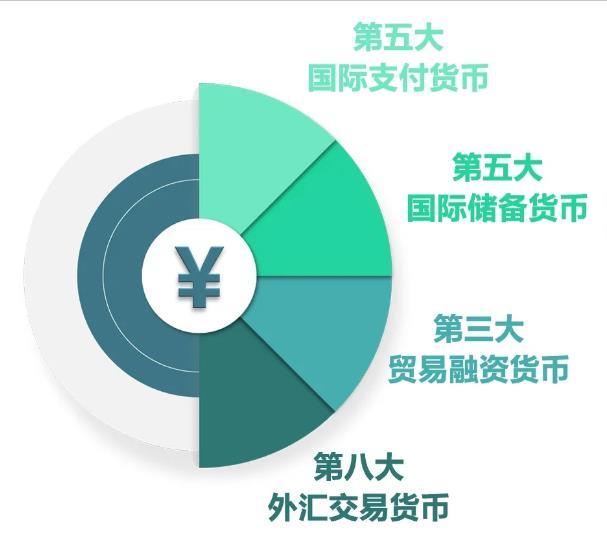
  The fifth largest international payment currency, the fifth largest international reserve currency, the third largest trade financing currency and the eighth largest foreign exchange transaction currency … … This is the RMB!

  From WeChat official account, the central bank.

  The fifth largest international payment currency

  On August 14th, the central bank released the Report on RMB Internationalization in 2020, and RMB internationalization reached a new level in 2019. According to the latest statistics, RMB ranks fifth among the major international payment currencies, with a market share of 1.76%.

  According to the report, the cross-border use of RMB increased rapidly against the trend in 2019. The total amount of cross-border payment and receipt of RMB by banks on behalf of customers in the whole year was 19.67 trillion yuan, up 24.1% year-on-year. On the basis of the rapid growth in 2018, the amount of payment and receipt continued to maintain rapid growth, reaching a record high.

  The fifth largest international reserve currency

  According to the official currency composition (COFER) data of the International Monetary Fund (IMF), by the end of the fourth quarter of 2019, the scale of RMB reserves reached US$ 217.67 billion, accounting for 1.95% of the total foreign exchange reserves in the indicated currencies, ranking fifth, surpassing Canadian dollars by 1.88%, which is the highest level since the IMF began to publish RMB reserve assets in 2016.

  According to incomplete statistics, at present, more than 70 central banks or monetary authorities around the world have included RMB in foreign exchange reserves.

  In the first quarter of 2020, the share of RMB foreign exchange reserves announced by IMF further rose to 2.02%, the highest level since RMB joined the SDR (Special Drawing Rights) currency basket in 2016.

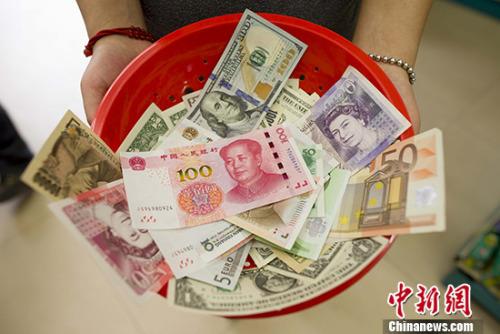
  Currency data map.

  The third largest trade financing currency

  The attraction of RMB as an international financing currency is gradually emerging.

  According to the report, the survey shows that about 82% of the overseas industrial and commercial enterprises surveyed said that when the liquidity of international currencies such as the US dollar and the euro is relatively tight, they will consider using RMB as the financing currency, which has reached a new high since 2016. 75% of the overseas industrial and commercial enterprises interviewed are willing to consider using RMB as the trade financing currency in their economic and trade exchanges with China.

  The eighth largest foreign exchange trading currency

  In 2019, global RMB foreign exchange transactions increased steadily. According to the latest data released by BIS in April 2019 (once every three years), RMB ranks eighth among the most active currencies in the world, and ranks first among the currencies of emerging market countries.

  The global average daily trading volume of RMB increased from $202 billion in 2016 to $284 billion, and its share in the global foreign exchange market increased from 4% in 2016 to 4.3%.

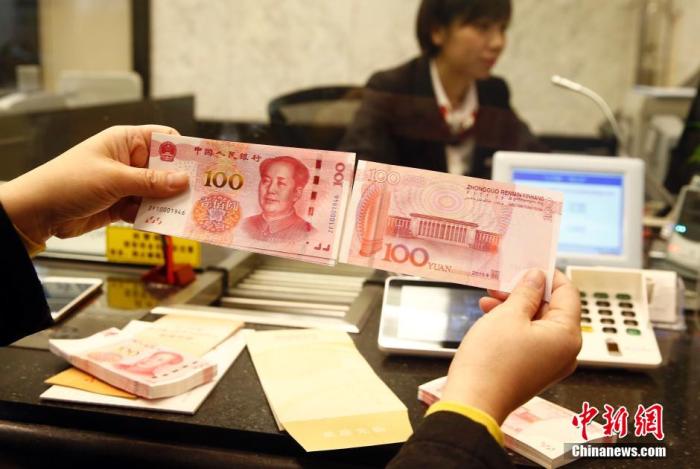
  Data map: The bank teller is working. Photo by Ai Qinglong

  RMB assets are becoming more and more popular.

  According to the report, by the end of 2019, the amount of domestic financial assets such as RMB stocks, bonds, loans and deposits held by overseas entities totaled 6.41 trillion yuan, a year-on-year increase of 30.3%. Among them, the stock market value is 2.1 trillion yuan, the bond custody balance is 2.26 trillion yuan, the deposit balance is 1.21 trillion yuan (including interbank current account deposits), and the loan balance is 833.2 billion yuan.

  Stocks and bonds in domestic financial markets have become the main varieties for overseas entities to allocate RMB assets. By the end of 2019, the scale of domestic RMB stocks and bonds held by overseas entities increased by 48.6% year-on-year, of which the amount of bond custody accounted for 2.3% of the total bond custody in the inter-bank bond market, and the market value of stocks held accounted for 3.6% of the total market value of A shares. In 2019, stocks accounted for 66.6% of the domestic RMB assets newly added by overseas entities.

  In other words, more and more foreign investors are looking for gold in China’s capital market. In 2019, the cross-border receipts and payments of securities investment in RMB totaled 9.51 trillion yuan, up 49.1% year-on-year, with a net inflow of 621.9 billion yuan.

  More foreign trade enterprises use RMB for cross-border payment and receipt.

  According to the questionnaire of the People’s Bank of China on foreign trade enterprises, since 2019, foreign trade enterprises have been highly motivated to participate in cross-border RMB business. As of the fourth quarter of 2019, 84.6% of enterprises chose RMB as the main currency for cross-border settlement.

  Judging from the driving factors for enterprises to choose cross-border RMB settlement, since 2019, due to the influence of external factors such as Sino-US trade friction, RMB exchange rate fluctuations have increased. Many enterprises choose cross-border RMB business as a means to avoid exchange rate risks, accounting for 64.7%. In addition, simple settlement process, reducing settlement cost and facilitating financial accounting and fund management are also the main reasons why enterprises choose to carry out cross-border RMB business, accounting for 43.2%, 36.8% and 32% respectively.

  The RMB cross-border payment system (CIPS) has become the main channel for RMB cross-border settlement. In 2019, the CIPS system handled 1.884 million cross-border RMB businesses, amounting to 33.9 trillion yuan, up 31% and 28% respectively. It handled 7,537 transactions daily, with an amount of 135.7 billion yuan.

  Data map of RMB. China News Service reporter Zhang Hao photo

  Iron ore transactions are settled in RMB.

  In recent years, China has been the largest importer and consumer of iron ore trade in the world. The import and consumption of iron ore are at the global level of 70% and 50% respectively, but it has been relatively passive in pricing.

  Nowadays, domestic iron and steel enterprises have made continuous progress in using RMB to settle iron ore imports. In early May 2020, baoshan iron & steel, a subsidiary of China Baowu Group, and Rio Tinto completed the first cross-border RMB settlement with blockchain technology. This is another new development after baoshan iron & steel completed the first RMB cross-border settlement with Brazil’s Vale and Australia’s BHP Billiton in January and April this year respectively.

  So far, China Baowu and the world’s three major iron ore suppliers have achieved RMB cross-border settlement, totaling more than 500 million yuan.

  The RMB exchange rate remained basically stable.

  At the beginning of August 2019, due to the further escalation of trade friction, the RMB exchange rate was "broken by 7" driven by market forces, but the exchange rate expectation remained stable on the whole. Since then, due to the changes in the international economic and financial situation and the trade friction situation, the RMB exchange rate has broken by 7 for many times.

  The report pointed out that in general, cross-border capital flows and foreign exchange supply and demand were basically balanced in 2019, exchange rate expectations were generally stable, and the RMB exchange rate remained basically stable at a reasonable and balanced level.

  Overall, in 2019, the domestic RMB exchange rate fluctuated in both directions, and its flexibility was significantly enhanced. The RMB has risen and fallen against the US dollar and other major currencies in the world. The central parity of RMB against the US dollar, Japanese yen and British pound has depreciated by 1.62%, 3.43% and 5.18% respectively compared with the end of 2018, and the central parity of RMB against the euro has appreciated by 0.41% compared with the end of 2018.

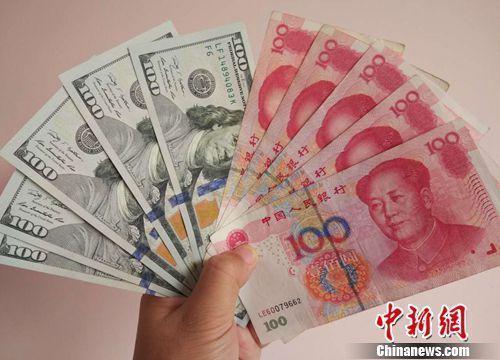
  Renminbi and US dollars. Zhongxin. com reporter Li Jinlei

  Raise the level of free use of RMB

  According to the report, RMB internationalization is a natural process driven by the market. In recent years, the cross-border use of RMB has maintained rapid growth, especially since the COVID-19 epidemic hit global trade, finance and economy this year, the cross-border use of RMB has remained resilient and showed growth.

  The Bank of China said that in the future, it will continue to serve the real economy, adhere to the principle of marketization, and steadily promote the internationalization of RMB.

  First, adhere to market-driven. Explore and promote a higher level of trade and investment facilitation, constantly remove obstacles restricting the use of RMB at home and abroad, and create a level playing field for RMB and other major convertible currencies. Second, continue to promote the opening of domestic financial markets and the interconnection of infrastructure. Further facilitate foreign investors to use RMB to invest in domestic bonds and stocks. The third is to guide the healthy development of the offshore RMB market. Improve the freely usable level of RMB and promote the benign interaction and deep integration between offshore and onshore markets. The fourth is to improve macro-prudential management. Strengthen the monitoring, analysis and early warning of cross-border capital flows, make countercyclical adjustments, and guard against the risks of cross-border capital flows. (End)

Regulations on Security Protection of Key Information Infrastructure

decree of the state council of the people’s republic of china

No.745

"Regulations on the Security Protection of Critical Information Infrastructure" has been adopted at the 133rd executive meeting in the State Council on April 27, 2021, and is hereby promulgated and shall come into force as of September 1, 2021.

Prime Minister Li Keqiang

July 30, 2021

Regulations on Security Protection of Key Information Infrastructure

Chapter I General Principles

the first In order to ensure the security of key information infrastructure and maintain network security, these regulations are formulated in accordance with the Network Security Law of the People’s Republic of China.

the second The key information infrastructure mentioned in these Regulations refers to important industries and fields such as public communication and information services, energy, transportation, water conservancy, finance, public services, e-government, national defense science and technology industry, and other important network facilities and information systems that may seriously endanger national security, national economy and people’s livelihood and public interests once they are damaged, lose their functions or have data leaked.

Article Under the overall coordination of the national network information department, the public security department of the State Council is responsible for guiding and supervising the security protection of key information infrastructure. The State Council telecommunications authorities and other relevant departments shall, in accordance with the provisions of these regulations and relevant laws and administrative regulations, be responsible for the security protection, supervision and management of key information infrastructure within their respective functions and duties.

The relevant departments of the provincial people’s government shall, according to their respective responsibilities, implement security protection and supervision and management of key information infrastructure.

Article 4 The security protection of key information infrastructure adheres to comprehensive coordination, division of responsibilities and legal protection, strengthens and implements the main responsibility of key information infrastructure operators (hereinafter referred to as operators), gives full play to the role of the government and all sectors of society, and jointly protects the security of key information infrastructure.

Article 5 The state gives priority to the protection of key information infrastructure, takes measures to monitor, defend and deal with cyber security risks and threats originating from inside and outside People’s Republic of China (PRC), protects key information infrastructure from attack, intrusion, interference and destruction, and punishes illegal and criminal activities that endanger the security of key information infrastructure according to law.

No individual or organization may illegally invade, interfere with or destroy critical information infrastructure, and may not endanger the security of critical information infrastructure.

Article 6 Operators shall take technical protection measures and other necessary measures to deal with network security incidents, prevent network attacks and illegal and criminal activities, ensure the safe and stable operation of key information infrastructure and maintain the integrity, confidentiality and availability of data on the basis of network security level protection in accordance with the provisions of this Ordinance and relevant laws and administrative regulations and the mandatory requirements of national standards.

Article 7 Units and individuals that have made remarkable achievements or made outstanding contributions in the security protection of key information infrastructure shall be commended in accordance with relevant state regulations.

Chapter II Identification of Key Information Infrastructure

Article 8 The competent departments and supervision departments of important industries and fields involved in Article 2 of these Regulations are the departments responsible for the security protection of key information infrastructure (hereinafter referred to as the protection departments).

Article 9 The protection department shall, in combination with the actual situation of this industry and this field, formulate rules for the identification of key information infrastructure and report them to the public security department of the State Council for the record.

The following factors shall be mainly considered in formulating the identification rules:

(a) the importance of network facilities, information systems, etc. to the key core business of this industry and this field;

(two) the degree of harm that may be caused by the destruction, loss of function or data leakage of network facilities and information systems;

(three) the impact on other industries and fields.

Article 10 The protection department is responsible for organizing the identification of the key information infrastructure of the industry and the field according to the identification rules, and notifying the operators of the identification results in time and the public security department of the State Council.

Article 11 If the key information infrastructure changes greatly, which may affect its identification results, the operator shall report the relevant information to the protection department in a timely manner. The protection department shall complete the re-certification within 3 months from the date of receiving the report, and notify the operator of the certification result and the public security department of the State Council.

Chapter III Responsibilities and Obligations of Operators

Article 12 Security protection measures should be planned, constructed and used simultaneously with key information infrastructure.

Article 13 Operators should establish and improve the network security protection system and responsibility system to ensure the input of manpower, financial resources and material resources. The main person in charge of the operator takes overall responsibility for the security protection of key information infrastructure, leads the security protection of key information infrastructure and the handling of major network security incidents, and organizes research and solutions to major network security issues.

Article 14 Operators shall set up special safety management institutions, and conduct safety background review on the persons in charge and key positions of the special safety management institutions. During the examination, the public security organ and the state security organ shall provide assistance.

Article 15 Specialized security management institutions shall be specifically responsible for the security protection of key information infrastructure of their own units and perform the following duties:

(a) to establish and improve the network security management, evaluation and assessment system, and formulate the security protection plan for key information infrastructure;

(two) to organize and promote the construction of network security protection capacity, and to carry out network security monitoring, detection and risk assessment;

(three) according to the national and industrial emergency plans for network security incidents, formulate the emergency plan of the unit, carry out emergency drills regularly, and deal with network security incidents;

(four) identify key positions in network security, organize the assessment of network security work, and put forward suggestions on rewards and punishments;

(5) Organizing education and training on network security;

(six) to fulfill the responsibility of personal information and data security protection, establish and improve the personal information and data security protection system;

(seven) the implementation of security management of key information infrastructure design, construction, operation and maintenance services;

(eight) in accordance with the provisions of the report network security incidents and important matters.

Article 16 Operators should guarantee the operating expenses of special security management institutions and equip them with corresponding personnel, and the personnel of special security management institutions should participate in the decision-making related to network security and informatization.

Article 17 Operators shall conduct network security detection and risk assessment on key information infrastructure at least once a year by themselves or by entrusting network security service agencies, rectify the security problems found in time, and submit the information according to the requirements of the protection department.

Article 18 When a major network security incident occurs in key information infrastructure or a major network security threat is found, the operator shall report to the protection department and the public security organ in accordance with relevant regulations.

In case of major network security incidents such as overall interruption of key information infrastructure or major functional failure, disclosure of national basic information and other important data, large-scale disclosure of personal information, resulting in greater economic losses, widespread dissemination of illegal information, or discovery of major network security threats, the protection department shall, after receiving the report, promptly report to the national network information department and the public security department of the State Council.

Article 19 Operators should give priority to purchasing safe and credible network products and services; If the procurement of network products and services may affect national security, it shall pass the security review in accordance with the national network security regulations.

Article 20 Operators purchasing network products and services shall, in accordance with the relevant provisions of the state, sign a security and confidentiality agreement with the network product and service providers, clarify the technical support and security and confidentiality obligations and responsibilities of the providers, and supervise the performance of the obligations and responsibilities.

Article 21 In case of merger, division, dissolution, etc., the operator shall promptly report to the protection department, and dispose of the key information infrastructure according to the requirements of the protection department to ensure safety.

Chapter IV Guarantee and Promotion

Article 22 The protection department shall formulate the safety planning of key information infrastructure in this industry and field, and define the protection objectives, basic requirements, tasks and specific measures.

Article 23 The national network information department co-ordinates relevant departments to establish a network security information sharing mechanism, timely collects, judges, shares and publishes information on network security threats, vulnerabilities and incidents, and promotes the sharing of network security information among relevant departments, protection departments, operators and network security service agencies.

Article 24 The protection department shall establish and improve the network security monitoring and early warning system for the key information infrastructure in the industry and field, timely grasp the operation status and security situation of the key information infrastructure in the industry and field, notify the network security threats and hidden dangers in early warning, and guide the safety prevention work.

Article 25 The protection department shall, in accordance with the requirements of the national emergency plan for cyber security incidents, establish and improve the emergency plan for cyber security incidents in its own industry and field, and organize emergency drills regularly; Guide operators to deal with network security incidents, and organize and provide technical support and assistance as needed.

Article 26 The protection department shall regularly organize the network security inspection and detection of key information infrastructure in this industry and field, and guide and supervise operators to timely rectify potential safety hazards and improve safety measures.

Article 27 The national network information department co-ordinates the public security department and protection department of the State Council to check and detect the network security of key information infrastructure, and puts forward improvement measures.

Relevant departments should strengthen coordination and information communication when carrying out network security inspection of key information infrastructure, so as to avoid unnecessary inspection and overlapping inspection. No fees shall be charged for the inspection work, and the inspected units shall not be required to buy products and services of designated brands or designated production and sales units.

Article 28 Operators shall cooperate with the network security inspection and testing of key information infrastructure carried out by the protection department, as well as the network security inspection of key information infrastructure carried out by the relevant departments of public security, national security, confidentiality administration and password management according to law.

Article 29 In the security protection of key information infrastructure, the national network information department, the competent telecommunications department in the State Council and the public security department in the State Council should provide timely technical support and assistance according to the needs of the protection department.

Article 30 The information obtained by the network information department, the public security organ, the protection department and other relevant departments, the network security service institutions and their staff can only be used to maintain network security, and ensure information security in strict accordance with the requirements of relevant laws and administrative regulations, and shall not be leaked, sold or illegally provided to others.

Article 31 Without the approval of the national network information department and the public security department of the State Council or the authorization of the protection department and operators, no individual or organization may carry out activities such as vulnerability detection and permeability testing on key information infrastructure that may affect or endanger the security of key information infrastructure. The implementation of vulnerability detection, permeability testing and other activities on the basic telecommunications network shall be reported to the competent telecommunications department of the State Council in advance.

Article 32 The state takes measures to give priority to ensuring the safe operation of key information infrastructures such as energy and telecommunications.

The energy and telecommunications industries should take measures to provide key guarantees for the safe operation of key information infrastructure in other industries and fields.

Article 33 Public security organs and state security organs shall, in accordance with their respective duties, strengthen the security of key information infrastructure in accordance with the law, and prevent and crack down on illegal and criminal activities against and using key information infrastructure.

Article 34 The state formulates and improves the safety standards of key information infrastructure, and guides and regulates the safety protection of key information infrastructure.

Article 35 The state takes measures to encourage network security professionals to engage in the security protection of key information infrastructure; Incorporate the training of operators’ safety management personnel and safety technicians into the national continuing education system.

Article 36 The state supports the technological innovation and industrial development of key information infrastructure security protection, and organizes forces to tackle key information infrastructure security problems.

Article 37 The state strengthens the construction and management of network security service institutions, formulates management requirements and strengthens supervision and guidance, constantly improves the ability level of service institutions, and gives full play to their role in the security protection of key information infrastructure.

Article 38 The state strengthens network security, and integration of defense and civilian technologies, the military and the land cooperate to protect the security of key information infrastructure.

Chapter V Legal Liability

Article 39 In any of the following circumstances, the operator shall be ordered to make corrections and given a warning by the relevant competent authorities according to their duties; Those who refuse to correct or lead to the consequences of endangering network security shall be fined between 100,000 yuan and 1 million yuan, and those who are directly in charge shall be fined between 10,000 yuan and 100,000 yuan:

(1) Failing to report the relevant information to the protection department in time when the key information infrastructure has changed greatly, which may affect its identification result;

(two) the safety protection measures are not synchronized with the key information infrastructure planning, construction and use;

(3) Failing to establish and improve the network security protection system and responsibility system;

(four) there is no special safety management organization;

(5) Failing to review the safety background of the person in charge of the specialized safety management institution and the personnel in key positions;

(six) to carry out decisions related to network security and informatization without the participation of personnel from special security management institutions;

(seven) the specialized safety management agencies failed to perform the duties stipulated in Article 15 of these regulations;

(8) Failing to conduct network security detection and risk assessment on key information infrastructure at least once a year, failing to rectify the security problems found in time, or failing to submit the information according to the requirements of the protection department;

(nine) purchasing network products and services, and failing to sign a security agreement with the network product and service provider in accordance with the relevant provisions of the state;

(ten) the merger, division, dissolution, etc., did not report to the protection department in time, or did not dispose of the key information infrastructure in accordance with the requirements of the protection department.

Article 40 If the operator fails to report to the protection department and the public security organ in accordance with the relevant provisions when a major network security incident occurs or a major network security threat is discovered in the key information infrastructure, the protection department and the public security organ shall order it to make corrections and give a warning according to their duties; Those who refuse to correct or lead to the consequences of endangering network security shall be fined from 100,000 yuan to 1 million yuan, and those who are directly in charge shall be fined from 10,000 yuan to 100,000 yuan.

Article 41 If an operator purchases network products and services that may affect national security and fails to conduct security review in accordance with the national network security regulations, the national network information department and other relevant competent departments shall order it to make corrections according to their duties, and impose a fine of more than 1 time and less than 10 times the purchase amount, and impose a fine of more than 10,000 yuan and less than 100,000 yuan on the directly responsible person in charge and other directly responsible personnel.

Article 42 Operators of key information infrastructure network security inspection and testing work carried out by the protection department, and public security, national security, confidentiality administration, password management and other relevant departments in accordance with the law to carry out key information infrastructure network security inspection work does not cooperate, by the relevant competent departments shall be ordered to make corrections; Refuses to correct, a fine of 50 thousand yuan to 500 thousand yuan, and a fine of 10 thousand yuan to 100 thousand yuan for the directly responsible person in charge and other directly responsible personnel; If the circumstances are serious, the corresponding legal responsibilities shall be investigated according to law.

Article 43 If the activities that illegally invade, interfere with or destroy key information infrastructure and endanger its security do not constitute a crime, in accordance with the relevant provisions of the Cyber Security Law of the People’s Republic of China, the illegal income shall be confiscated by the public security organs, and they shall be detained for less than 5 days, and may also be fined between 50,000 yuan and 500,000 yuan; If the circumstances are serious, they shall be detained for more than 5 days and less than 15 days, and may be fined more than 100,000 yuan and less than 1 million yuan.

If a unit commits the acts mentioned in the preceding paragraph, the illegal income shall be confiscated by the public security organ, and a fine of 100,000 yuan to 1 million yuan shall be imposed, and the directly responsible person in charge and other directly responsible personnel shall be punished in accordance with the provisions of the preceding paragraph.

In violation of the provisions of the second paragraph of article fifth and the provisions of article thirty-first, the personnel who are punished by public security management shall not engage in the work of key positions in network security management and network operation within 5 years; Persons who are subject to criminal punishment shall not engage in key positions in network security management and network operation for life.

Article 44 If the network information department, the public security organ, the protection department and other relevant departments and their staff fail to perform the duties of security protection, supervision and management of key information infrastructure or neglect their duties, abuse their powers or engage in malpractices for selfish ends, the directly responsible person in charge and other directly responsible personnel shall be punished according to law.

Article 45 Public security organs, protection departments and other relevant departments charge fees in the network security inspection of key information infrastructure, or ask the inspected units to buy products and services of designated brands or designated production and sales units, and their higher authorities shall order them to make corrections and refund the fees charged; If the circumstances are serious, the directly responsible person in charge and other directly responsible personnel shall be punished according to law.

Article 46 Network information departments, public security organs, protection departments and other relevant departments, network security service institutions and their staff use the information obtained in the security protection of key information infrastructure for other purposes, or disclose, sell or illegally provide it to others, the directly responsible person in charge and other directly responsible personnel shall be punished according to law.

Article 47 If a major and particularly major network security incident occurs in key information infrastructure and is determined as a liability accident after investigation, the responsibilities of the operators should be ascertained and investigated according to law, and the responsibilities of relevant network security service institutions and relevant departments should also be ascertained. Those who have dereliction of duty, dereliction of duty and other illegal acts should be investigated according to law.

Article 48 Operators of e-government key information infrastructure fail to fulfill the obligations of network security protection stipulated in these regulations, and shall be dealt with in accordance with the relevant provisions of the Network Security Law of the People’s Republic of China.

Article 49 Anyone who violates the provisions of these regulations and causes damage to others shall bear civil liability according to law.

In violation of the provisions of this Ordinance, which constitutes a violation of public security administration, the public security administration shall be punished according to law; If a crime is constituted, criminal responsibility shall be investigated according to law.

Chapter VI Supplementary Provisions

Article 50 The security protection of key information infrastructure for storing and processing state secret information shall also comply with the provisions of confidentiality laws and administrative regulations.

The use and management of passwords in key information infrastructure shall also comply with the provisions of relevant laws and administrative regulations.

Article 51 These Regulations shall come into force as of September 1, 2021.
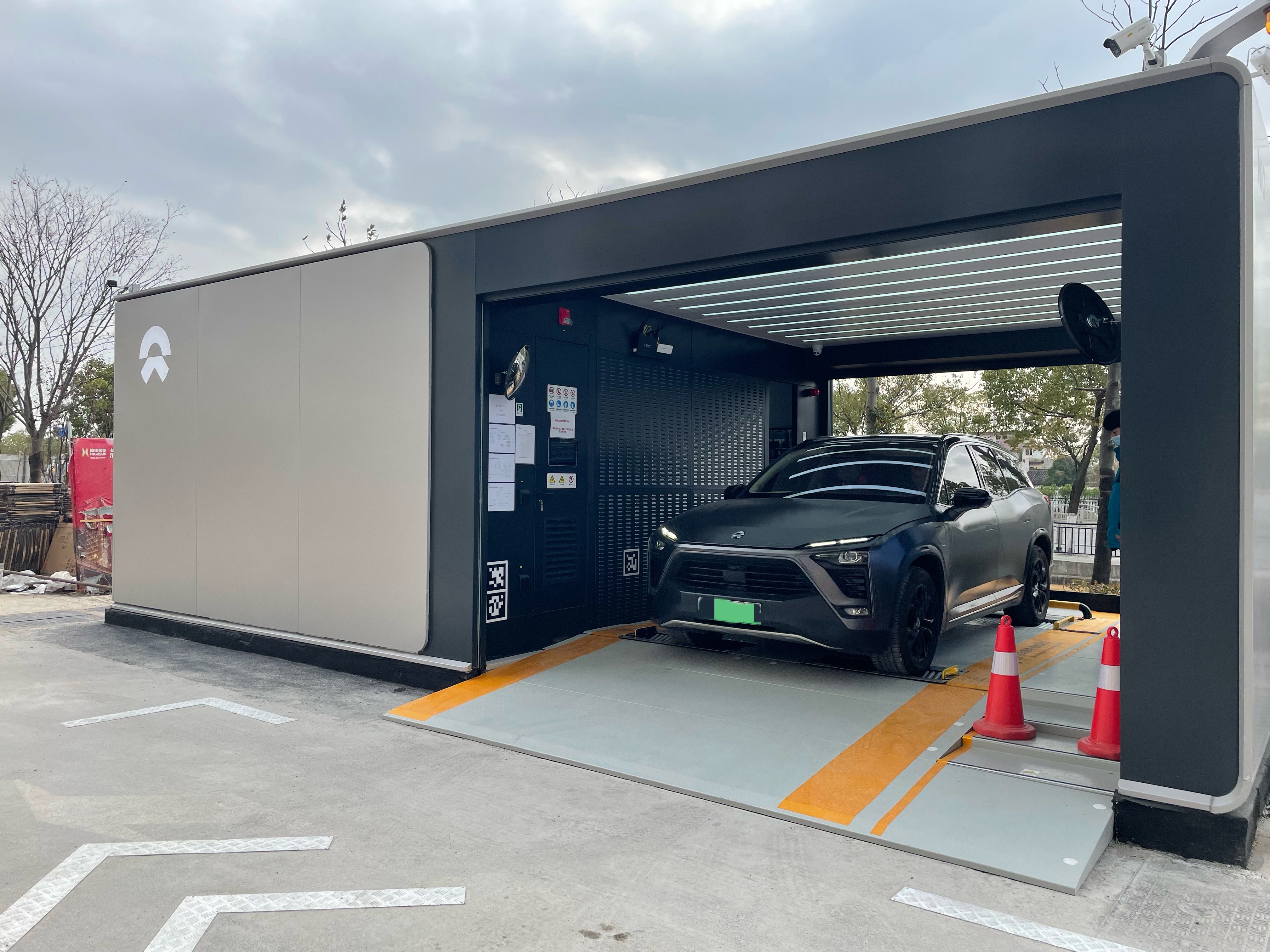
Push the power exchange technology to the world? Weilai said that it will share the power exchange technology with its competitors.

According to the British "Financial Times" report, China’s new energy automobile giant Weilai is ready to share its electric vehicle power exchange platform technology with other car companies in a competitive relationship, and plans to build 1,000 power exchange stations overseas by 2025.

Peter, vice president of Weilai Europe, said in an interview that the company is willing to share its power exchange platform technology with other automakers and is in talks with domestic and foreign automakers on this matter. When asked whether sharing power exchange technology refers to authorization or other types of commercial agreements, Weilai declined to provide more details.

"We hope to become a participant in the high-end market in Europe by 2025." Peter said. Wei Lai believes that the power exchange mode can win the support of European consumers, and the scarcity of charging piles and long charging time hinder the demand growth of electric vehicles in Europe. The company hopes to expand the application scope of this technology by selling the power exchange system, so as to resolve consumers’ concerns about the shortage of charging piles.

Weilai has established 868 power exchange stations in China, and said that its customers have replaced batteries 7.6 million times. In January this year, Weilai opened the first power exchange station in Norway, and plans to establish 20 power exchange stations in that country. In the future, the company aims to build 1,000 power exchange stations in Europe and the United States by 2025, and increase the global power exchange station network to 5,000 by the middle of this century.

Weilai Automobile said that when the ES8 SUV model was launched in Norway, almost all customers chose to rent batteries separately, so that they could use the power exchange station. The one-month battery rental fee includes two free battery replacements. Consumers can choose a 100 kWh battery or a cheaper 75 kWh battery, which will be available later this year.

The so-called "battery replacement" means that when the battery of the new energy vehicle is insufficient, the battery that has been fully charged is replaced at the recent power replacement station, and the concept is similar to the charging method of the old mobile phone battery replacement. The average time required for changing power is less than 5 minutes, while the charging mode takes more than one hour under the condition of fast charging and 8-10 hours under the condition of slow charging.

Compared with the traditional charging mode, the power exchange mode has the advantages of shortening the charging time, prolonging the battery life, improving safety, having little impact on the power grid, sharing the pressure of insufficient charging piles, and directly reducing the cost of car purchase for users.

The fly in the ointment is that the construction cost of the power exchange network is much higher than that of the charging network. The Swedish Transport Authority published a research report on power exchange last year, which quoted Weilai’s data to show that the cost of building a power exchange station in China was 772,000 US dollars, including battery and site lease, while the cost of building a battery charging station was 309,000 US dollars.

Wei Lai said that it is currently seeking to reduce the construction cost of the power station. Sharing its power exchange platform with other automobile manufacturers can improve the utilization rate of the power exchange station, thus improving cost-effectiveness.

Operation situation of Weilai power station

In addition to Weilai, there are not many domestic enterprises engaged in power exchange services at present, and most of them are for service vehicles such as taxis, and there are only a handful of power exchange services for private cars. The main reason is that the power exchange standard has not been unified, the cost is too high, and it is difficult to make a profit in the short term.

Tesla, the global pioneer of electric vehicles, claimed in March last year that the mode of changing power for electric vehicles was "full of problems and not suitable for large-scale promotion". Tesla tried the power exchange strategy in the United States many years ago, but soon gave up the plan. Well-known car companies such as GM, Volkswagen and Renault also expressed doubts about the power exchange model.

It is reported that one of Weilai’s potential customers may be Geely’s Lotus Technology, which Weilai once invested in through its venture capital department. At the same time, Geely plans to build 5,000 electric vehicle exchange stations around the world by 2025, but has not indicated whether it will create its own platform.

In addition, later this year, Weilai will March into Sweden, the Netherlands and Germany. Among them, the model that Weilai plans to launch in Germany will be the ET7 sedan, which directly competes with the electric BMW 7 Series which also adopts the power exchange technology.

It is generally believed in the industry that home-filled piles, fast-filled piles and changing power stations will become the three main ways to replenish energy for electric vehicles in the future. According to the analysis of CICC’s research report, it is estimated that the number of power stations in China will reach 22,000-26,000 in 2025, with broad market prospects.

Contrary to the negative attitude of foreign car companies, the China Municipal Government is vigorously promoting the large-scale application of the electric vehicle replacement mode as an expansion of the electric vehicle energy replenishment mode.

In 2020, the power exchange mode was included in the category of "new infrastructure" and was first written into the "Government Work Report" of the two sessions. In the construction of new energy infrastructure, "building charging piles" is expanded to "adding charging piles, changing power stations and other facilities". By 2021, the government work report once again mentioned the need to increase facilities such as changing power stations.

In May, 2021, the world’s first national standard for battery replacement technology, Safety Requirements for Electric Vehicles, was approved and issued by the State Administration of Markets and the State Standardization Administration Committee, which specified the safety requirements, test methods and inspection regulations for electric vehicles with replaceable batteries, and it was implemented in November, 2021.

In October, 2021, the Ministry of Industry and Information Technology launched a pilot project on the application of new energy vehicle switching mode, and 11 cities were included in the pilot project. The goal is to produce 100,000 rechargeable cars by 2023 and build more than 1,000 power stations in pilot cities.

Since the beginning of this year, the Ministry of Industry and Information Technology has issued the "Key Points of Automobile Standardization in 2022", which requires the development of standards such as on-board power exchange system, general platform for power exchange and battery pack for pure electric vehicles. Automobile manufacturer Weilai and Geely, battery manufacturer Aodong New Energy and central enterprise China Petrochemical jointly said that they plan to open a total of 24,000 power exchange stations nationwide by 2025, while the current number of power exchange stations is about 1,400.

According to Reuters’s previous report, if the China market succeeds in promoting the power exchange model on a large scale, this change may affect the business models of global auto giants such as Tesla, Volkswagen and General Motors. These brands of electric vehicles use their own patented batteries, and Tesla even only uses the company’s charging network.

Power exchange technology has always been one of the core competitiveness of Weilai’s automobile products. Sharing power exchange technology is equivalent to Tesla allowing other brands to use its super charging network. In addition to reducing the cost of power exchange, increasing market share and accelerating the global layout, Weilai’s move is to seize more voice in the upcoming power exchange industry.

(This article is from The Paper, please download the "The Paper" APP for more original information)

Please pay attention to these "pits" when you join more VIP member routines in online video.

  BEIJING, Sept. 5 (Reporter Wu Tao) "Putting an elephant in the refrigerator is divided into three steps", but do you know how many steps there are to cancel the "automatic fee deduction" for an online video VIP member? Many netizens don’t even know where and how to cancel, all because the online video VIP membership routine is "full".

  Routine one

  Price temptation, binding "automatic deduction"

  "One cent for membership" and "9.9 yuan enjoys exclusive price for beginners". Many online video websites have been doing this activity almost all the year round, saying that opening VIP members is cheap. Is this true?

  The reporter learned in the investigation that when using these "preferential prices" to open VIP members, they have one thing in common, that is, they are forced to bind "automatic renewal" (or "automatic deduction"), otherwise they cannot enjoy such prices; The preferential price can only last for one month or a few days.

  "Why set the preferential price? One is to attract new VIP members, and the other is to bind payment methods, so as to be ‘ Automatic fee deduction ’ Provide the necessary conditions. " Some senior online video member users say that every time they recharge, they are tempted by the price, so they are basically cheaper "continuous monthly subscription".

  Routine 2

  There is no "automatic fee deduction" cancellation service on the page.

  After users subscribe to the "automatic fee deduction", in order to reduce the loss of VIP members, many online video websites do not set up the "automatic fee deduction" service, or the location is difficult to find. For example, in the APP member center of Mango TV, there is no way to cancel the automatic renewal on the whole page.

  "I don’t know how to cancel VIP membership" and "It’s too troublesome to cancel". Some users said in an interview with Zhongxin. com that they must open VIP members to watch popular dramas, but they always renew their fees because they can’t cancel the "automatic deduction fee" after watching them.

  Routine 3

  "automatic fee deduction" deducts fees in advance

  Some netizens believe that VIP members have not expired yet, and it is too late to cancel the "automatic deduction" when it expires. In fact, this is careless again. Many online video websites deduct fees in advance, about 1 to 3 days in advance. The specific time may be different for each enterprise.

  Routine four

  Members set up in the middle, and special resources will be charged again.

  According to the data published by some online video websites, the VIP membership rate of some websites has reached more than 90%, which means that among 100 users, more than 90 people are VIP members, but when most people become VIP members, the membership rights are not so "distinguished".

  The reporter’s investigation found that VIP members, including video websites such as Tencent Video, still need to pay extra when watching some sports programs; In some online audio-visual services such as QQ music, some music downloads, even if they are members of Green Diamond, still have to be charged separately.

  Routine five

  Inductive renewal fee

  OK, just pay for special resources, but sometimes, when you click on the pop-up page to pay, it becomes a VIP member "renewal fee" instead of "purchase", and the resources you want are still not available.

  In an interview with a reporter from Zhongxin.com, a user said that she used her member account to download songs on an online audio-visual platform, showing that she paid extra, and then a payment window popped up. "After paying, I still can’t download them. After paying for three times in a row, I found that it was renewed for three times. Finally, I found the purchase channel in a small line on the page, which can be marked prominently as ‘ Renewal fee ’ It is easy to be fooled. "

  Routine six

  Only payment channels that can be "automatically deducted" are provided.

  The No.42 document previously issued by Networked Clearing Co., Ltd. makes it clear that before June 30, the direct connection between all third-party payment institutions and banks will be cut off, and banks will no longer directly provide withholding channels for third-party payment institutions.

  The reporter noticed that Youku and others only provide payment methods that support withholding services, such as Alipay, WeChat payment or SMS from operators, and do not support payment channels that cannot automatically deduct fees.

  Enterprise: This is an industry phenomenon.

  The reporter contacted the relevant staff of two online video websites and got a response, saying that VIP members can meet the differentiated needs of users well, and it is not mandatory, and users can choose by themselves.

  "As for ‘ Routine ’ This is an industry phenomenon, not just online video, including online music, online download, online knowledge payment and other fields. Many companies do this. "

  Some users spend thousands of dollars a year.

  Although it is not mandatory, the burden is not small for users. "I have opened Youku, Iqiyi, Mango TV, Tencent videos, and I can’t remember them. The reason for recharging members every time is probably because of popular online dramas or variety shows." The above-mentioned senior online video user said.

  It is understood that the annual fee for VIP members of Tencent video is 198 yuan, and most of the online video VIP members are also around 200 yuan. For example, if a user has opened 10 VIP members, it will cost more than 2,000 yuan a year.

  In addition, don’t underestimate the VIP membership fee of tens of dollars per month. According to media reports, because there are many kinds of members charging for the Internet, many users spend five or six thousand yuan on membership purchases every year.

  How can I cancel the "automatic fee deduction"?

  Having said that, how can the "automatic deduction" be cancelled? The reporter found that there are basically two methods. One is to provide websites that cancel automatic renewal, such as Tencent Video and Youku, which can be cancelled in automatic renewal management. But there are relatively few such websites.

  More online video website member centers don’t have a cancel button, so they can only cancel through the purchase channel.

  For example, if you want to cancel the "automatic deduction" for VIP members purchased through Alipay, you can find the corresponding application in Alipay My-Settings-Payment Settings-Confidential Payment/Automatic Deduction-Payment Code and Sonic Confidential Payment, and just cancel. (End)

Panzhihua characteristic fruit industry development and upgrading "Panguo" industry development alliance is coming.

The establishment of the "Panguo" industrial development alliance and the 2023 "Panguo" production and marketing docking conference were recently held in Panzhihua. The heads of nine member units of the Alliance Council signed a contract on the spot, and will establish an agricultural modern business model of "leading alliance, alliance with base and base with farmers" through "unified standards, unified marketing and unified brands" to promote the high-quality development of Panzhihua characteristic fruit industry and let industry subjects share the industrial development dividend.

The alliance was jointly established by the Agricultural Technology Extension Service Center of Panzhihua Agricultural and Rural Bureau and Panzhihua Panguo Development Co., Ltd. The first batch of 41 alliance members covered the production, processing, sales and supporting services of Panzhihua characteristic fruit industry.

The planting of characteristic fruits in Panzhihua City has reached 1.1 million mu, and the planting technology and process have initially formed corresponding standards. In recent years, the problems of scattered management, single variety and weak brand have become the bottleneck of upgrading Panzhihua characteristic fruit industry. "At present, it is urgent to build an industrial system of division of labor and cooperation in industrial links, extending the chain and supplementing the chain, transforming industrial advantages into market advantages and realizing benign and sustainable development." The relevant person in charge of the Agriculture and Rural Bureau of Panzhihua City introduced that after the establishment of the alliance, it will continuously enhance the brand value of "Panguo", and at the same time guide industry entities to strengthen cooperation, build a docking platform for production, supply and sales, optimize the allocation of industrial resources, and add momentum to the standardization, scale and intensive development of Panzhihua characteristic agriculture. (Reporter Tang Ziqing)

Li Xinqiang: Integrating Global Resources to Cultivate Local Parts Enterprises

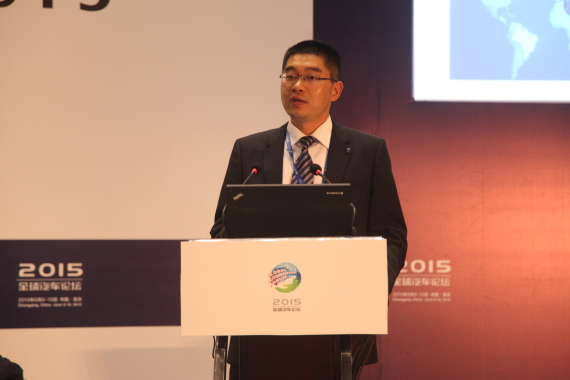
  After three years in Chengdu and two years in Wuhan, the sixth Global Automobile Forum 2015 will be held in Chongqing Yuelai International Conference Center on June 9-10. With the theme of "Great Change: Restructuring the Industrial System", more than 800 Chinese and foreign professionals gathered to discuss the future changes of the automobile industry structure. The following is a speech by Li Xinqiang, Assistant to the President of Changan Automobile and Minister of Purchasing.

Li Xinqiang, Assistant to the President of Changan Automobile and Minister of Purchasing Department

  Li Xinqiang: Good host, good morning everyone! I am honored to be invited by the organizing Committee to discuss with you how to build a cooperative relationship between automobile and parts enterprises. Changan Automobile was founded in 1862, with a history of 153 years, but we have only entered the automobile industry for 30 years. At present, Changan Automobile has established R&D centers in Italy, India, the United States and Yokohama, Japan, and has more than 6,000 R&D teams around the world. At the same time, we have established joint ventures with Ford and Mazda, and have 12 production bases and 32 automobile plants around the world, and established strategic cooperative relations with world-class parts enterprises. In 2014, Changan Automobile sold 2.54 million vehicles, including 1.38 million vehicles sold by China brand.From January to May this year, 1.25 million vehicles were sold, of which 730,000 were sold by China brand.The sales of China brand of Changan Automobile ranked first in China and 14th in the world for 8 consecutive years. It can be said that Changan Automobile is not only a long-standing enterprise, but also a young enterprise. It not only adheres to the road of independent research and development, but also constantly integrates excellent global resources. It not only cultivates local parts enterprises, but also hopes to carry out in-depth cooperation with multinational parts suppliers.

  In China, there are vehicles from Europe, America, Japan and South Korea, as well as state-owned enterprises and private enterprises. Parts enterprises also have suppliers’ management from different countries and different properties, capital cooperation based on equity, long-term strategic cooperation and some ways of full market competition. For a long time, it has been centered on the automobile factory, and has not paid attention to the voices and demands of suppliers. With the slowdown of market growth and the intensification of competition, the contradiction between suppliers and automakers has gradually intensified. Suppliers complain about low prices, frequent design changes and inaccurate plans, while automobile companies also accuse poor quality and slow response. These problems are not only found in China brands, but also in joint venture brands. The reason, I think, is that automobile enterprises still stay in the single imperative management of suppliers, lacking sufficient communication, understanding and trust with suppliers, which will inevitably reduce the synergy efficiency of supply chain and weaken the competitive advantage of products. We should change from supplier management to supplier relationship management. From single command management to double collaborative relationship. First of all, we must make clear the goal of two-way management.

  Changan Automobile’s vision is to build a world-class automobile brand. Therefore, we should take the establishment of an internationally competitive supply system as our ultimate goal. Create an efficient China brand supply chain. The core is to cultivate a batch of supply systems that are not only excellent in ability, but also capable of serving our institute. The key is to build a two-way collaborative and sustainable system. The function of procurement has been changed. Chang ‘an headquarters is responsible for purchasing strategy and planning, while molecular companies are responsible for purchasing vehicles, transportation and implementation, and a special supplier relationship management department has been set up at the headquarters. Unified management of supplier performance evaluation relationship improvement, strategic cooperation and capability improvement. Then, the procurement process is reformed, so that suppliers can be integrated into R&D, procurement, production, sales and other links, so that suppliers are not only participants, but also co-makers of rules. Not only implementation, but also suggestions for the development of vehicle enterprises, and truly achieve win-win development.

  It is necessary to change the management of suppliers from one-way to two-item. Changan Automobile has carried out a lot of experiments and innovations in this process. In terms of quality, in order to improve the product quality of China brand, we have formulated and published the strategy of Changan Automobile Parts, and constructed the first supplier quality ability certification standard of China brand. At the same time, we have set up SP teams in various projects of Changan Automobile to cooperate with suppliers to improve quality and improve cooperation. And work with suppliers to develop the quality standards and technology of each component. In terms of cost, the management mode of purchasing cost has been changed, from purchasing price management to whole life cycle management of parts, and accurate cost analysis of parts has been established. Guide suppliers to control the cost in all stages from design, development to mass production, and at the same time, build the first supplier cost management diagnosis of China brand to optimize the cost together with suppliers. In terms of sales, according to the logistics properties of parts, we plan in advance the suppliers that each production base will enter the industrial park and build nearby. The release mechanism of product planning and production planning has been established to guide suppliers to build property rights in advance. At the same time, efforts should be made to improve the accuracy of production planning and minimize the impact on suppliers’ production and delivery. In addition, a supplier relationship model is constructed to evaluate the cooperative relationship in a two-way way. The purpose of monitoring suppliers’ performance is to develop suppliers’ risks and guide suppliers to improve and upgrade. If the supplier is rated as high risk, it will be stopped.On the other hand, suppliers are regularly invited to evaluate automobile enterprises, mainly through high-level seminars and questionnaires. The purpose is to force the management of automobile enterprises. It is necessary to improve a management level of informatization, which must be supported by the level of informatization.

  In 2011, Changan Automobile cooperated with Oracle Bone Inscriptions Company to realize an online management of the whole process of supplier access, selection and elimination. It not only improves the efficiency of supplier management, but also makes the procurement process more open and transparent. Implement a two-way management system of supplier relationship to support the rapid development of enterprises in many aspects. First, the ability of suppliers has been rapidly improved, from meeting the needs of our maintenance cars and economical cars to meeting the development of middle and high-class cars, supporting Changan Automobile to go out of Chongqing and lay out the strategy of the whole country. Second, the quality of our spare parts has increased at an average annual rate of 50%, which has greatly improved the quality of the whole vehicle. At present, the quality level of some models has reached or even surpassed that of the same class of cars.

  Third, while ensuring the product quality, we should strictly control the continuous optimization of material cost and give full play to the leverage of purchasing, so that the profitability of China brand has been significantly improved. Since 2012, the supplier’s satisfaction with Changan Automobile has increased by 20% for three consecutive years, which has laid a solid foundation for the long-term development of China brand. With the arrival of big data, new energy and mobile internet, the individual needs of customers and the upgrading of products have brought more challenges to supply management. Customer-oriented, greatly improving the response speed and customer experience will be the next goal of supply chain management. Continuously improving the cooperative relationship with suppliers and forming a virtuous circle will surely make China brand cars become world-class at an early date. Welcome friends to know about Chang ‘an, enter Chang ‘an, and go hand in hand with Chang ‘an for win-win development. Thank you for your trip to Chang ‘an.

Interpretation of Statistical Bulletin of Beijing National Economic and Social Development in 2023

  Cctv newsAccording to Beijing Municipal Bureau of Statistics and Beijing Investigation Corps of National Bureau of Statistics, 2023 is the first year to fully implement the spirit of the 20th Party Congress, and the year of economic recovery and development after three years of COVID-19 epidemic prevention and control. Faced with various internal and external risks and challenges, under the strong leadership of the CPC Central Committee with the Supreme Leader as the core, the city has made great efforts to stabilize the economy, promote development and improve people’s livelihood. The overall economic recovery has improved, the social and people’s livelihood security has been strong, and the high-quality development of the capital has been solidly promoted. The latest statistical bulletin of Beijing’s national economic and social development in 2023 issued by Beijing Municipal Bureau of Statistics and Beijing Investigation Corps of National Bureau of Statistics records the new progress and achievements of various undertakings in the capital in the past year with rich statistical data.

  First, the macro-policies have exerted remarkable effects, and the economy has continued to pick up.

  Resolutely implement the decision-making arrangements of the CPC Central Committee and the State Council and the work requirements of the municipal party committee and municipal government, adhere to the general tone of striving for progress while maintaining stability, focus on expanding domestic demand, optimizing the structure, strengthening innovation, and protecting people’s livelihood. Macro-control policies continue to exert significant effects, and the overall economy continues to pick up. The annual GDP was 4,376.07 billion yuan, an increase of 5.2% compared with the previous year at comparable prices. According to the resident population, the per capita GDP of the city reached 200,000 yuan, keeping the best level among provincial regions in China. The employment and price situation is generally stable. The annual consumer price rose by 0.4% over the previous year, and the average unemployment rate in urban areas was 4.4%, which was 0.3 percentage points lower than that in the previous year, and it was within the annual control target.

  Economic development shows strong resilience and potential. The main areas have risen steadily. The added value of the service industry increased by 6.1% over the previous year, which is higher than the growth level of regional GDP. It is the main driving force for economic recovery, driven by the continuous support of the information service industry and the financial industry. Industrial production stopped falling and rebounded, and the added value of industrial enterprises above designated size increased by 0.4%. The equipment, electric power and automobile industries made outstanding contributions. The investment in fixed assets (excluding farmers) increased by 4.9% in the whole year, and the investment in construction and installation projects reflecting the physical workload and the investment in equipment purchase reflecting the expansion of production capacity of enterprises accounted for 56.2%, an increase of 0.5 percentage points over the previous year. Consumption continued to recover, and the total market consumption increased by 10.2% over the previous year. Among them, service consumption increased by 14.6% driven by transportation, culture, sports and entertainment, and the total retail sales of social consumer goods increased by 4.8%. The benefits of enterprises have gradually improved, and the vitality of development has been enhanced. Industrial and service enterprises above designated size achieved operating income of 2.8 trillion yuan and 17.3 trillion yuan respectively, up by 3.6% and 2.0% respectively over the previous year. In 2001, 297,000 new enterprises were established, an increase of 20.3%. The output value of "specialized and innovative" industrial enterprises above designated size and the income of service enterprises increased by 5.2% and 6.1% respectively, and the growth rate was 2.6 and 4.1 percentage points higher than the average level of industries and service industries above designated size respectively.

  Second, promote the synergy of the "five sons" and make new breakthroughs in high-quality development

  Adhere to the "five sons" linkage service and integrate into the new development pattern, and the quality of economic development in the capital has been continuously improved.

  Accelerate the construction of an international science and technology innovation center. The ability to innovate has been continuously enhanced. The investment intensity of research and experimental development (R&D) in the whole society (the ratio of research and experimental development funds to regional GDP) has remained above 6% continuously since 2019, ranking first in all provinces (autonomous regions and municipalities) in China. From January to November 2023, the research and development expenses of large and medium-sized key enterprises above designated size totaled 350.11 billion yuan, up 4.6% year-on-year, of which the research and development expenses of industrial, scientific and technological service enterprises achieved double-digit growth. At the end of the year, there were 574,000 valid invention patents in the city, up by 20.2%, and the number of high-value invention patents per 10,000 people was 136.95, up by 24.97. Innovation empowers high-end industry development. The added value of high-tech industries in the whole year was 1,187.54 billion yuan, an increase of 7.1% over the previous year at current prices, accounting for 27.1% of the regional GDP, an increase of 0.4 percentage points over the previous year.

  Promote the construction of a global digital economy benchmark city. The added value of the digital economy was 1,876.67 billion yuan, accounting for 42.9% of the city’s regional GDP, up 1.3 percentage points over the previous year. Build a smart city, implement the action plan of "the capital of optical network, the city of ten thousand megabytes", and build a total of 107 thousand 5G base stations, ranking first in all provinces (autonomous regions and municipalities) per 10 thousand people; The cumulative number of gigabit users reached 2.287 million, an increase of 943,000 over the previous year; The application terminals of "Jingtong", "Beijing Office" and "Jingzhi" in three smart cities have been rapidly upgraded and expanded, and the application of digital technology in key areas such as travel and medical care has been deepened.

  Steadily promote the cultivation and construction of international consumption center cities. Consumer supply is more abundant. In the whole year, 61,000 new wholesale and retail, accommodation and catering enterprises were established, an increase of 15.6% over the previous year; Newly introduced 946 first stores, an increase of 16.5%; By the end of the year, there were 1,058 departure tax refund shops, an increase of 41. New consumption patterns such as e-commerce live broadcast and instant retail have developed rapidly. The online retail sales of convenience stores, supermarkets and warehouse member stores accounted for 28.6% of the retail sales of the three formats, an increase of 2.5 percentage points over the previous year. Scenarios and experiential consumption, such as performances and competitions, were active, with 49,524 performances held in 339 performance venues throughout the year, an increase of 1.4 times over the previous year; The performance income totaled 2.3 billion yuan, an increase of 2.7 times.

  Promote high-level opening up with the construction of "two districts" Beijing’s first national-level cross-border trade facilitation standardization pilot project will be built, and a new international trade service platform of "Jingmaoxing" will be built to support the high-quality development of the comprehensive insurance zone. In the whole year, the total import and export value of Beijing was 3.6 trillion yuan, up by 0.3% over the previous year. The total import and export value of China (Beijing) Pilot Free Trade Zone (hereinafter referred to as Pilot Free Trade Zone) was 462.43 billion yuan, up by 2.7%. Among the key industries in which the service industry is expanding and opening up, 1,321 foreign-funded enterprises have been established in scientific research and technical services, leasing and business services, culture, sports and entertainment, accounting for more than 70% of the newly-established foreign-funded enterprises in the city, and 258 foreign-funded enterprises have been established in the Pilot Free Trade Zone, accounting for 14.9%.

  The coordinated development of Beijing-Tianjin-Hebei has deepened and deepened. In the whole year, 112 general manufacturing enterprises were relieved and upgraded, and 23.15 million square meters of illegal construction was controlled. The construction of the city sub-center maintained the investment intensity of 100 billion yuan, and the second batch of municipal authorities completed the relocation, with more than 20,000 registered enterprises in the Canal Business District. Collaborative innovation and industrial cooperation are closer. Beijing, Tianjin and Hebei jointly built the Beijing-Tianjin-Hebei National Technology Innovation Center and compiled six key industrial chain maps. The turnover of technology contracts from Beijing to Tianjin and Hebei increased by 1.1 times over the previous year. Xiong’an new area Zhongguancun Science Park was unveiled for operation, and more than 30 innovative enterprises and 11 Zhongguancun integrated service organizations settled in.

  Third, pay attention to the people’s "urgent difficulties and worries" and continue to promote the improvement of people’s livelihood

  We will thoroughly implement the people-centered development idea, focus on the people’s urgent difficulties and worries, stabilize the "rice bag" and "vegetable basket", strive to increase the income of urban and rural residents, improve the level of public services, and enhance the people’s sense of happiness and gain.

  Stable production and strong supply of agricultural products. Overcoming the adverse effects of natural disasters, the annual grain planting area was stable at more than 1 million mu, and the total grain output was 478,000 tons, an increase of 5.3% over the previous year, achieving "four consecutive increases" since 2020. The planting area of vegetables and edible fungi was 795,000 mu, and the output was 2.075 million tons, an increase of 4.3%.

  Residents’ income has increased steadily. The per capita disposable income of the city’s residents was 81,752 yuan, a real increase of 5.2% after deducting the price factor, which was in step with the economic growth. Among them, the per capita disposable income of rural residents increased by 7.5%, 2 percentage points higher than that of urban residents. The per capita disposable income ratio of urban and rural residents was 2.37, which was 0.05 lower than that of the previous year.

  The policy strengthens the guarantee. Fiscal expenditure is tilted towards the people’s livelihood. Among the general public budget expenditures in the city, the proportion of education, social security, employment and health expenditure remains at around 40%. Housing security has been continuously strengthened. In the whole year, 82,000 sets (rooms) of affordable rental housing were built and 93,000 sets (rooms) of various types of affordable housing were completed. There are 355 newly started communities and 183 newly completed communities in the transformation of old communities in the city. The coverage of social security continued to expand. At the end of the year, the number of employees participating in basic old-age insurance, unemployment insurance and industrial injury insurance increased by 368,000, 270,000 and 269,000 respectively.

  The level of public services continued to improve. By the end of the year, there were 12,518 medical and health institutions with 139,000 beds and 343,000 health technicians. There are 1991 kindergartens, and the coverage rate of inclusive kindergartens reaches 93%. A total of 1,772 old-age meals have been built, covering nearly 5,000 urban and rural communities and more than 2.8 million people. There are 20 public libraries and 226 museums in the city, of which 107 are open for free, 18 are cultural centers and 339 are cultural stations. Throughout the year, 43 demonstration streets for national fitness and towns with sports characteristics were established.

  Fourth, practice the concept of people’s city and improve the quality of the city.

  We will fully implement the green development strategy, promote the transformation of urban management to urban governance and service with embroidery skills, focus on improving the ecological environment, and continuously improve the quality of urban life.

  Strengthen urban operation guarantee. The annual sales volume of tap water was 1.33 billion cubic meters, an increase of 7.8% over the previous year. The electricity consumption in Beijing was 135.78 billion kWh, an increase of 6.0%. The total supply of natural gas was 20.61 billion cubic meters, an increase of 3.5%. The heating area of over 100,000 square meters was 730 million square meters, an increase of 2.4%. The annual sewage treatment rate was 97.3%, an increase of 0.3 percentage points. The city cleared and disposed of 7,588,500 tons of domestic garbage, with an average of 20,800 tons per day; There are 34 centralized treatment facilities for domestic waste, with an actual treatment capacity of 28,426 tons/day.

  Improve the green travel service. At the end of the year, there were 1,285 bus lines, 29,738.5 kilometers of lines and 23,385 vehicles. There are 27 rail transit lines, with a length of 836 kilometers, an increase of 38.7 kilometers over the previous year, and 7512 vehicles, an increase of 238 vehicles. At the end of the year, there were 916,000 vehicles in bike-sharing, an increase of 35,000 vehicles over the end of last year.

  Build a beautiful and livable environment. We will continue to fight the "blue sky defense war", and the four major pollutants in the city’s atmospheric environment will continue to reach the national air quality secondary standard. New steps have been taken in the construction of garden cities, promoting the construction of leisure parks, urban forests, pocket parks, small and micro green areas, etc. The annual urban green coverage rate reached 49.8%, and the per capita park green area reached 16.9 square meters.

  In 2023, under the strong leadership of the CPC Central Committee and through the hard work of the whole city, new progress was made in various undertakings in the capital. The year 2024 marks the 75th anniversary of the founding of New China, a crucial year for achieving the objectives and tasks of the 14th Five-Year Plan, and the 10th anniversary of the implementation of the coordinated development strategy of Beijing-Tianjin-Hebei. We should adhere to the guidance of the Supreme Leader’s Socialism with Chinese characteristics Thought in the new era, fully implement the decision-making arrangements of the CPC Central Committee, thoroughly implement the spirit of the important speech of the Supreme Leader General Secretary to Beijing, persist in striving for progress while maintaining stability, making progress before breaking, and concentrate on strengthening functions, stabilizing growth, benefiting people’s livelihood, ensuring stability and ensuring stability.

  Related links

  In 2023, Beijing achieved a regional GDP of 4,376.07 billion yuan, an increase of 5.2% over the previous year.